The Power of Art and Emotion: Should We Worry About Manipulation?

How should society be organised, if at all?

Moderators: AMod, iMod

BigMike
Posts: 2210
Joined: Wed Jul 13, 2022 8:51 pm

Re: The Power of Art and Emotion: Should We Worry About Manipulation?

Post by BigMike »

Alexis Jacobi wrote: Wed Jan 01, 2025 4:28 pm
BigMike wrote: Tue Dec 31, 2024 6:28 pm Now, as for the unseen world you describe—forces outside deterministic chains—I’ll admit this diverges from my understanding. For me, introducing influences outside the causal web raises the question: how do these influences interface with the physical world? If they leave no detectable imprint within the causal network, how do we distinguish their effects from mere imagination or the emergent properties of a complex system?
What is “imagination”? In the Olden System (the older anthropology and psychology) the imagination was a sort of reflecting glass or a screen. In fact, when any of us visualize (think about, see) anything, it occurs in the realm of the imagination.

How might something “outside of the causal web” introduce •something• into the imagination, the visionary space, of man?

I know that you will refer to “memories” stored in neuronal circuits that are activated and, again, you will refer to the physical structure that must already be there …

And I am pretty sure that any depiction of an entity operating outside of physical causal chains (God, angels, disembodied intelligence) will be interpreted by you as the projection of internal (emergent, epiphenomenal) content into a picture or description that no longer reflects what is true. And in your view brain-science and neurology express a truer picture. But more than picture, rather irreducible fact.
Alexis, the notion of imagination as a "reflecting glass or screen" is a fascinating starting point, and I can appreciate why you’d invoke this older anthropology to explore how something "outside the causal web" might interact with our minds. However, let’s first ground ourselves in the observable mechanisms at play—because even imagination, remarkable as it is, seems firmly rooted in the physical.

Imagination is an emergent property of neural processes. When we visualize, recall, or conceptualize something, we’re activating a dynamic interplay of brain regions—such as the prefrontal cortex, the visual cortex, and the hippocampus. Memories stored in neuronal circuits interact with sensory inputs, emotional states, and learned associations to create that "screen" on which our thoughts and visions appear. The structure must indeed already be there, and this isn’t just my deterministic perspective—it’s what neuroscience shows us.

Now, let’s turn to your question of how "something outside of the causal web" could introduce something into this space. You’re right that I’d view any such phenomenon as a projection or interpretation of internal content. The brain has an extraordinary ability to generate richly detailed experiences without external stimuli. Hallucinogens, for instance, offer a striking example. Substances like LSD or psilocybin don’t introduce anything "from the outside"; instead, they disrupt normal neural activity, particularly in the default mode network, leading to vivid, sometimes otherworldly experiences. Users often describe these experiences as profoundly real—yet they arise entirely within the brain’s existing circuits.

This brings us to the crux of the matter: if experiences of gods, angels, or disembodied intelligence leave no detectable imprint on the physical causal chain, how can we distinguish them from imaginatory effects? The burden falls on these phenomena to demonstrate their existence within the observable framework we inhabit. Otherwise, they remain indistinguishable from the remarkable, but internally generated, phenomena we already understand.

And yet, I don’t dismiss the power of these imaginatory effects outright. Even if they are "projections," they can profoundly influence behavior, beliefs, and culture. That influence, in turn, shapes the causal chain of human history—an undeniable fact of the deterministic system.

So, what we’re left with is this: imagination, whether grounded in material causation or attributed to external forces, has real effects in the world. But until something "outside the causal web" makes itself known in a measurable way, it seems prudent to interpret such experiences as products of the brain’s immense and deterministic complexity. Would you agree that, at the very least, this framework gives us a consistent way to approach the interplay between the visionary and the material?
User avatar
Alexis Jacobi
Posts: 8301
Joined: Tue Oct 26, 2021 3:00 am

Re: The Power of Art and Emotion: Should We Worry About Manipulation?

Post by Alexis Jacobi »

BigMike wrote: Wed Jan 01, 2025 5:02 pm Would you agree that, at the very least, this framework gives us a consistent way to approach the interplay between the visionary and the material?
I agree that you are defining and expressing a framework, most certainly.

I am uncertain if the framing that you work within is altogether sufficient however.

But I do believe I understand, in basic terms, how it works.
Impenitent
Posts: 5774
Joined: Wed Feb 10, 2010 2:04 pm

Re: The Power of Art and Emotion: Should We Worry About Manipulation?

Post by Impenitent »

Munch was so hungry he screamed

-Imp
BigMike
Posts: 2210
Joined: Wed Jul 13, 2022 8:51 pm

Re: The Power of Art and Emotion: Should We Worry About Manipulation?

Post by BigMike »

Alexis Jacobi wrote: Wed Jan 01, 2025 5:15 pm
BigMike wrote: Wed Jan 01, 2025 5:02 pm Would you agree that, at the very least, this framework gives us a consistent way to approach the interplay between the visionary and the material?
I agree that you are defining and expressing a framework, most certainly.

I am uncertain if the framing that you work within is altogether sufficient however.

But I do believe I understand, in basic terms, how it works.
Alexis, I appreciate your acknowledgment that my framework is clearly defined and consistent, even as you question whether it is sufficient. Let’s explore that sufficiency, then, because at the heart of it, this is about what we demand from a framework to consider it capable of encompassing the full scope of human experience.

For me, a sufficient framework is one that not only explains observable phenomena but does so in a way that aligns with the principles of causation and empirical reality. It must ground its claims in what can be demonstrated or inferred through physical evidence and consistent reasoning. This is why I focus so heavily on the deterministic interplay between memory, imagination, and external stimuli. It’s not that this framework claims to capture every nuance of human experience—it acknowledges that some aspects, like the subjective vividness of visionary moments, may elude exact quantification. But it provides a coherent basis for understanding how those moments arise and influence behavior.

If we were to test the sufficiency of a framework that includes forces "outside the causal web," I would ask how it establishes their interaction with the physical world. A framework that introduces influences without a way to verify or measure them might feel expansive, but it risks becoming untethered from what we can reasonably assert about reality. It becomes a kind of rhetorical flourish—evocative, perhaps, but unable to sustain its explanatory weight when pressed for evidence or consistency.

That said, I suspect your critique isn’t just about explanation, but about meaning. A framework that confines itself to the material can feel barren when addressing the ineffable aspects of existence. Yet, I would argue that meaning itself emerges from the deterministic interplay of our thoughts, experiences, and cultural contexts. It doesn’t require external forces to imbue it with significance; it arises naturally, as part of the system we inhabit.

So, I’ll pose the question back to you: how would you define and express a framework that is altogether sufficient? What does it offer that mine lacks, and how does it establish its sufficiency in the face of what we know about the causal nature of reality? If your framework can bridge the gap between the measurable and the ineffable without losing coherence, I’m eager to explore how it might do so.
BigMike
Posts: 2210
Joined: Wed Jul 13, 2022 8:51 pm

Re: The Power of Art and Emotion: Should We Worry About Manipulation?

Post by BigMike »

Impenitent wrote: Wed Jan 01, 2025 6:06 pm Munch was so hungry he screamed

-Imp
Imp, your wit never fails to entertain, and I imagine Munch himself might have appreciated the humor. But let’s dig into that iconic moment of The Scream, because it’s a fascinating interplay of personal experience, environmental trauma, and, yes, the deterministic forces that shaped both.

When Munch described that evening—the "blood and tongues of fire" in the sky—he wasn’t just expressing personal anguish. It was also the result of a global event: the eruption of Krakatoa in 1883. The volcanic aftermath filled the atmosphere with ash, producing surreal, blood-red sunsets that were seen around the world for years. Munch’s visceral reaction was shaped not only by his internal state but also by this external, deterministic chain of events. Krakatoa erupted, ash filled the sky, the sun turned red, and Munch’s imagination did the rest.

What’s remarkable is how that moment of individual perception became universal. His infinite scream passing through nature resonates because it reflects not just Munch’s anxiety, but something primal—a deterministic interplay of environment, biology, and the human capacity to imagine and symbolize.

So, was Munch "hungry"? In a sense, yes—hungry to make sense of a world where natural forces collide with human fragility, where a volcanic eruption halfway across the globe can set off a chain reaction that ends with a masterpiece. A scream isn’t just an expression; it’s a reaction—a release shaped by all the forces that brought it into being. And isn’t that the kind of deterministic poetry that keeps us coming back to his work?

This is where he painted The Scream from, in Oslo, Norway:
Image
Impenitent
Posts: 5774
Joined: Wed Feb 10, 2010 2:04 pm

Re: The Power of Art and Emotion: Should We Worry About Manipulation?

Post by Impenitent »

thanks for the art history lesson, I was unaware of the circumstances and the actual location is nice

not all screams are invoked by horror...

-Imp
User avatar
iambiguous
Posts: 11317
Joined: Mon Nov 22, 2010 10:23 pm

Re: The Power of Art and Emotion: Should We Worry About Manipulation?

Post by iambiguous »

BigMike wrote: Tue Dec 31, 2024 10:11 pm iambiguous, you're wrestling with some of the most profound implications of determinism, and I respect the thoroughness of your inquiry.
Actually, given the manner in which I construe the following...
All of this going back to how the matter we call the human brain was "somehow" able to acquire autonomy when non-living matter "somehow" became living matter "somehow" became conscious matter "somehow" became self-conscious matter.

Then those here who actually believe that what they believe about all of this reflects, what, the ontological truth about the human condition itself?

Then those who are compelled in turn to insist on a teleological component as well. Usually in the form of one or another God.

Meanwhile, philosophers and scientists and theologians have been grappling with this profound mystery now for thousands of years.
...not a single one of us can ever really be thorough here.
BigMike wrote: Tue Dec 31, 2024 10:11 pm Let me address your points directly, through the lens of determinism, and highlight a crucial element you touched on but might not have fully integrated: the brain’s physical and dynamic role in this deterministic process.
Fully intergrated, however, into what set of assumptions regarding the human brain, the human condition and the existence of existence itself? Philosophical assumptions? Scientific assumptions? Or, perhaps, the manner in which "here and now" many accept only their own presumptions regarding All There Is?
BigMike wrote: Tue Dec 31, 2024 10:11 pm When we acquire knowledge or experience, it doesn’t just hover abstractly—it leaves a tangible mark. Everything you remember, say for more than a day or so, involves physical and nearly permanent changes in your brain. Neural pathways are reshaped, synaptic connections are strengthened or weakened, and these changes influence how you respond to similar situations in the future. That’s the mechanism by which "knowledge influences" within a deterministic framework. It's not just theoretical; it's measurable and physical.
Okay, but how is that actually able to be demonstated? And then this part:
Imagine the universe being such that there is a free will part and a wholly determined part.

Those from the free will part are hovering above planet Earth in the wholly determined part. They note that over and over and over again you and I and everyone else down here are choosing things.

But then they remind themselves that what we in fact choose we are not in fact choosing freely.

We need but go down the chain of life here and note, say, a colony of ants. We watch them choosing their behaviors. But we think, "it's virtually all instinct, behaviors programmed almost entirely by their ant brains."

On the other hand, sure, human consciousness is matter of a whole other kind. But then back to what you think you know about it as an infinitesimally tiny speck of existence in the vastness of all there is. Hell, you won't -- can't? -- even admit to yourself what you don't know about it.
BigMike wrote: Tue Dec 31, 2024 10:11 pm So yes, when you type your thoughts now or read mine later, both of us are functioning within the constraints of the only possible reality. But—and this is key—new inputs like this discussion create physical changes in our neural architecture. These changes may nudge behavior or reactions in slightly different directions the next time we face similar circumstances. This doesn’t violate determinism; it demonstrates how determinism works.
Past inputs, present inputs, future inputs...what difference does it make [for all practical purposes] if they were the only possible inputs given the only possible reality?
BigMike wrote: Tue Dec 31, 2024 10:11 pm Think of it this way: the deterministic chain is not static. It’s an evolving system where each new input adjusts the trajectory of the "meat machine" ever so slightly. When you acknowledge that, it reframes the apparent paradox. We aren't breaking the causal chain by integrating new knowledge—we’re extending it, rerouting it, adding new nodes to the network.
Yes, but only given the assumption that how you have come to understand the human brain in integrating new knowledge "here and now" is not in turn just another entirely inherent/necessary component of the only possible reality.
And as for compatibilism, the idea isn’t to sneak "free will" back in. It’s to emphasize that our capacity for reflection, adaptation, and growth is part of what determinism allows.
It's not the idea that most interests me, however, but the extent to which any ideas pertaining to the human brain are able to be substantiated empirically, experientially and experimentally. After all, as some hard determinists argue, how are reflection, adaptation and growth themselves not but inherent components of how the human brain functions as a necessary component of the laws of matter?
BigMike wrote: Tue Dec 31, 2024 10:11 pm If you reflect on what you’ve learned, store it in memory, and let it shape future responses, that process isn’t free will; it’s determinism doing what it does best: adjusting to inputs in a complex and dynamic system.
Okay, back to the part where a woman chooses to abort her own unborn baby/clump of cells. She is informed by the compatibilists that she was never able not to have this abortion but she is still morally responsible for "choosing" it.
BigMike wrote: Tue Dec 31, 2024 10:11 pm So when you ask how this isn’t just the only possible reality, the answer is: it is. But within that deterministic framework, there’s immense room for variation, complexity, and, yes, meaningful change. What do you think—does recognizing the brain’s plasticity within determinism help make sense of how we experience "new inputs" shaping our lives?
Meaningful change in a world where everything unfolds only as it ever could have unfolded? Meaning, what, that the meaning itself unfolds only as it must?
BigMike
Posts: 2210
Joined: Wed Jul 13, 2022 8:51 pm

Re: The Power of Art and Emotion: Should We Worry About Manipulation?

Post by BigMike »

iambiguous wrote: Wed Jan 01, 2025 11:21 pm
BigMike wrote: Tue Dec 31, 2024 10:11 pm iambiguous, you're wrestling with some of the most profound implications of determinism, and I respect the thoroughness of your inquiry.
Actually, given the manner in which I construe the following...
All of this going back to how the matter we call the human brain was "somehow" able to acquire autonomy when non-living matter "somehow" became living matter "somehow" became conscious matter "somehow" became self-conscious matter.

Then those here who actually believe that what they believe about all of this reflects, what, the ontological truth about the human condition itself?

Then those who are compelled in turn to insist on a teleological component as well. Usually in the form of one or another God.

Meanwhile, philosophers and scientists and theologians have been grappling with this profound mystery now for thousands of years.
...not a single one of us can ever really be thorough here.
BigMike wrote: Tue Dec 31, 2024 10:11 pm Let me address your points directly, through the lens of determinism, and highlight a crucial element you touched on but might not have fully integrated: the brain’s physical and dynamic role in this deterministic process.
Fully intergrated, however, into what set of assumptions regarding the human brain, the human condition and the existence of existence itself? Philosophical assumptions? Scientific assumptions? Or, perhaps, the manner in which "here and now" many accept only their own presumptions regarding All There Is?
BigMike wrote: Tue Dec 31, 2024 10:11 pm When we acquire knowledge or experience, it doesn’t just hover abstractly—it leaves a tangible mark. Everything you remember, say for more than a day or so, involves physical and nearly permanent changes in your brain. Neural pathways are reshaped, synaptic connections are strengthened or weakened, and these changes influence how you respond to similar situations in the future. That’s the mechanism by which "knowledge influences" within a deterministic framework. It's not just theoretical; it's measurable and physical.
Okay, but how is that actually able to be demonstated? And then this part:
Imagine the universe being such that there is a free will part and a wholly determined part.

Those from the free will part are hovering above planet Earth in the wholly determined part. They note that over and over and over again you and I and everyone else down here are choosing things.

But then they remind themselves that what we in fact choose we are not in fact choosing freely.

We need but go down the chain of life here and note, say, a colony of ants. We watch them choosing their behaviors. But we think, "it's virtually all instinct, behaviors programmed almost entirely by their ant brains."

On the other hand, sure, human consciousness is matter of a whole other kind. But then back to what you think you know about it as an infinitesimally tiny speck of existence in the vastness of all there is. Hell, you won't -- can't? -- even admit to yourself what you don't know about it.
BigMike wrote: Tue Dec 31, 2024 10:11 pm So yes, when you type your thoughts now or read mine later, both of us are functioning within the constraints of the only possible reality. But—and this is key—new inputs like this discussion create physical changes in our neural architecture. These changes may nudge behavior or reactions in slightly different directions the next time we face similar circumstances. This doesn’t violate determinism; it demonstrates how determinism works.
Past inputs, present inputs, future inputs...what difference does it make [for all practical purposes] if they were the only possible inputs given the only possible reality?
BigMike wrote: Tue Dec 31, 2024 10:11 pm Think of it this way: the deterministic chain is not static. It’s an evolving system where each new input adjusts the trajectory of the "meat machine" ever so slightly. When you acknowledge that, it reframes the apparent paradox. We aren't breaking the causal chain by integrating new knowledge—we’re extending it, rerouting it, adding new nodes to the network.
Yes, but only given the assumption that how you have come to understand the human brain in integrating new knowledge "here and now" is not in turn just another entirely inherent/necessary component of the only possible reality.
And as for compatibilism, the idea isn’t to sneak "free will" back in. It’s to emphasize that our capacity for reflection, adaptation, and growth is part of what determinism allows.
It's not the idea that most interests me, however, but the extent to which any ideas pertaining to the human brain are able to be substantiated empirically, experientially and experimentally. After all, as some hard determinists argue, how are reflection, adaptation and growth themselves not but inherent components of how the human brain functions as a necessary component of the laws of matter?
BigMike wrote: Tue Dec 31, 2024 10:11 pm If you reflect on what you’ve learned, store it in memory, and let it shape future responses, that process isn’t free will; it’s determinism doing what it does best: adjusting to inputs in a complex and dynamic system.
Okay, back to the part where a woman chooses to abort her own unborn baby/clump of cells. She is informed by the compatibilists that she was never able not to have this abortion but she is still morally responsible for "choosing" it.
BigMike wrote: Tue Dec 31, 2024 10:11 pm So when you ask how this isn’t just the only possible reality, the answer is: it is. But within that deterministic framework, there’s immense room for variation, complexity, and, yes, meaningful change. What do you think—does recognizing the brain’s plasticity within determinism help make sense of how we experience "new inputs" shaping our lives?
Meaningful change in a world where everything unfolds only as it ever could have unfolded? Meaning, what, that the meaning itself unfolds only as it must?
iambiguous, I appreciate the depth and breadth of your inquiry. You’re navigating the tension between determinism as an explanation of "everything that is" and the lived, often messy experience of grappling with meaning, choice, and responsibility within that framework. Let me address your points, particularly where compatibilism enters the mix and, in my view, sometimes muddies the water.

First, regarding compatibilism, my issue isn’t with the idea of exploring how determinism and notions of responsibility coexist—it’s with how "free will" often gets redefined, not as "free" in any meaningful sense, but as a kind of deterministic shorthand. When someone claims, for example, that a woman who chooses to have an abortion is both determined and yet "morally responsible" in a compatibilist sense, it feels like a sleight of hand. They’ve taken the "free" out of free will but snuck it back in when discussing societal implications like moral accountability.

Now, on the notion of meaningful change within determinism: yes, it’s all part of the only possible reality. But that doesn’t strip it of significance. When a brain integrates new information—say, this discussion—and neural pathways adjust, that’s the system evolving. It’s not "free," but it’s dynamic, and those changes shape behavior and decision-making in future situations. The deterministic chain is neither static nor repetitive; it’s an intricate web of causation constantly adjusting to inputs. The woman making her decision isn’t free in an ultimate sense, but the unique configuration of her brain, informed by her history, environment, and societal pressures, determines her choice.

Regarding the meaningfulness of change or reflection: we don’t impose meaning from outside the deterministic system; it emerges within it. If you interpret meaning as something that "must" arise in a deterministic world, that doesn’t diminish its importance. It simply reframes it as a product of our brains’ complexity—brains shaped by millennia of evolution and the relentless interplay of cause and effect. Meaning isn’t an illusion; it’s a result.

Finally, your analogy of hovering "free will entities" observing Earth is compelling. If they see us as we see ants, it’s tempting to conclude that what we call choice is just instinct wrapped in higher complexity. But here’s the thing: recognizing our deterministic nature doesn’t mean we lack agency in the sense of responding to inputs and shaping outcomes. It means that agency itself is a deterministic phenomenon—a nuanced, emergent property of a highly sophisticated system.

So yes, everything unfolds as it must. But within that unfolding, there’s room for understanding, adaptation, and growth—not as exercises in "freedom," but as demonstrations of determinism’s extraordinary capacity to create, respond, and evolve. Does that help clarify how meaning, change, and responsibility fit within this framework? Or does the compatibilist language still feel like a contradiction to you?
User avatar
iambiguous
Posts: 11317
Joined: Mon Nov 22, 2010 10:23 pm

Re: The Power of Art and Emotion: Should We Worry About Manipulation?

Post by iambiguous »

BigMike wrote: Wed Jan 01, 2025 11:46 pm
iambiguous, I appreciate the depth and breadth of your inquiry. You’re navigating the tension between determinism as an explanation of "everything that is" and the lived, often messy experience of grappling with meaning, choice, and responsibility within that framework. Let me address your points, particularly where compatibilism enters the mix and, in my view, sometimes muddies the water.
The waters are inherently muddied, in my view, given both The Gap and Rummy's Rule. In other words, there's what we think we believe is true about this stuff here and now and there's all that can be known about it given a comprehensive understanding of how the human condition fits into the existence of existence itself. Or, as Donald Rumsfeld once suggested in regard to WMDs in Iraq, there are all of the things that we don't even know that we don't even know about it. And here there were actual facts that simply did not materialize. Whereas in regard to human autonomy there are all manner of things we don't even know that we don't even know about it. At best we can take our own particular "leap of faith" to one set of assumptions rather than another.

But no one to the best of my current knowledge really does have a handle of this part...
All of this going back to how the matter we call the human brain was "somehow" able to acquire autonomy when non-living matter "somehow" became living matter "somehow" became conscious matter "somehow" became self-conscious matter.
...yet.
First, regarding compatibilism, my issue isn’t with the idea of exploring how determinism and notions of responsibility coexist—it’s with how "free will" often gets redefined, not as "free" in any meaningful sense, but as a kind of deterministic shorthand.
Well, my own issue here basically revolves around the same set of assumptions. In other words, while we can exchange philosophical assumptions about the human brain here, these philosophical assumptions are just that...assumptions that we "think up" in our brains given a particular set of definitions and deductions...but without any hard scientific evidence that "for all practical purposes" confirms that we do understand the brain here as it actually functions.
When someone claims, for example, that a woman who chooses to have an abortion is both determined and yet "morally responsible" in a compatibilist sense, it feels like a sleight of hand. They’ve taken the "free" out of free will but snuck it back in when discussing societal implications like moral accountability.
More like sleight of mind. Compatibilists convince themselves that "while we are wholly determined to 'choose' behaviors that unfold given the only possible reality, we are still responsible for choosing them." In other words, say the hard determinists, they were no less compelled by their own brains to hold us responsible even though for all practical purposes nothing is ever chosen freely.

Though how exactly would they go about demonstrating that?
BigMike wrote: Wed Jan 01, 2025 11:46 pmNow, on the notion of meaningful change within determinism: yes, it’s all part of the only possible reality. But that doesn’t strip it of significance. When a brain integrates new information—say, this discussion—and neural pathways adjust, that’s the system evolving. It’s not "free," but it’s dynamic, and those changes shape behavior and decision-making in future situations.
Yes, it's dynamic but is that the equivalent of autonomy? Dominoes can be set up to topple over onto each other in truly dazzling displays of motion. So, what if we are to nature what the dominoes are to us? Set up to topple over onto each other in much the same manner.
BigMike wrote: Wed Jan 01, 2025 11:46 pmThe deterministic chain is neither static nor repetitive; it’s an intricate web of causation constantly adjusting to inputs. The woman making her decision isn’t free in an ultimate sense, but the unique configuration of her brain, informed by her history, environment, and societal pressures, determines her choice.
Okay, but how is this then contrasted with, say, Libertarian assumptions regarding things we choose of our own volition and thus are rightfully held responsible for doing so.
BigMike wrote: Wed Jan 01, 2025 11:46 pmRegarding the meaningfulness of change or reflection: we don’t impose meaning from outside the deterministic system; it emerges within it. If you interpret meaning as something that "must" arise in a deterministic world, that doesn’t diminish its importance. It simply reframes it as a product of our brains’ complexity—brains shaped by millennia of evolution and the relentless interplay of cause and effect. Meaning isn’t an illusion; it’s a result.
Ever and always: what on Earth am I missing here? If something is either important or unimportant to us only because our brain compels us to react to it one way or the other, what difference does it make which way we go if we could never have gone otherwise?

Unless, of course, we can be linked to a scientific/philosophical argument that explains this. On the other hand, if it's hard determinism all the way down, well, good luck with that.
BigMike wrote: Wed Jan 01, 2025 11:46 pmFinally, your analogy of hovering "free will entities" observing Earth is compelling. If they see us as we see ants, it’s tempting to conclude that what we call choice is just instinct wrapped in higher complexity.
Or, if it suits your brain, it's tempting instead to delude you into thinking -- believing -- that you are either one of henry quirk's free willers or meat minds. Only henry brings a God, the God, his God into focus here. Why? Because with God and religion free will is simply ascribed to our...souls? Then all henry has to do is come back to Him for...confirmation?

It has nothing to do with being tempted the hard determinists argue. After all, if you are never able to freely opt not to be tempted...?

As for this:

"The Power of Art and Emotion: Should We Worry About Manipulation?"

How can the brain not manipulate you into worrying about something you were never able not to be manipulated regarding?

Instead -- click -- I argue that the manipulation is rooted existentially in dasein. And out in a particular world understood in a particular way historically and culturally. So, in my view, even given free will, each of us as individuals might have opinions regarding art and emotions and everything else all up and the spiritual, ideological, deontological, or "natural" spectrum. At least pertaining to conflicting goods.
BigMike wrote: Wed Jan 01, 2025 11:46 pmBut here’s the thing: recognizing our deterministic nature doesn’t mean we lack agency in the sense of responding to inputs and shaping outcomes. It means that agency itself is a deterministic phenomenon—a nuanced, emergent property of a highly sophisticated system.
Unless, of course, we recognize only that which we were never able not to recognize regarding...nuanced matter?
BigMike wrote: Wed Jan 01, 2025 11:46 pmSo yes, everything unfolds as it must. But within that unfolding, there’s room for understanding, adaptation, and growth—not as exercises in "freedom," but as demonstrations of determinism’s extraordinary capacity to create, respond, and evolve. Does that help clarify how meaning, change, and responsibility fit within this framework? Or does the compatibilist language still feel like a contradiction to you?
My point here [in one of my occasional hard determinist frames of mind] is that to the extent any of us opine regarding compatibilism [here or anywhere], we do so only in the manner in which nature compels us to.

Then the part where, say, Pantheism comes into play? In other words, presupposing that the universe itself has a teleological component?
Gary Childress
Posts: 11746
Joined: Sun Sep 25, 2011 3:08 pm
Location: It's my fault

Re: The Power of Art and Emotion: Should We Worry About Manipulation?

Post by Gary Childress »

accelafine wrote: Tue Dec 31, 2024 6:11 pm Perhaps we should demolish all those wicked cathedrals like Notre Dame because they might make people religious or offend muslims. FFS.
Those ancient mosques are incredible. Some of them make the greatest christian cathedrals look positively plain and dowdy. Does anyone seriously believe they are going to cause me to start wearing a hijab? Give me a break.

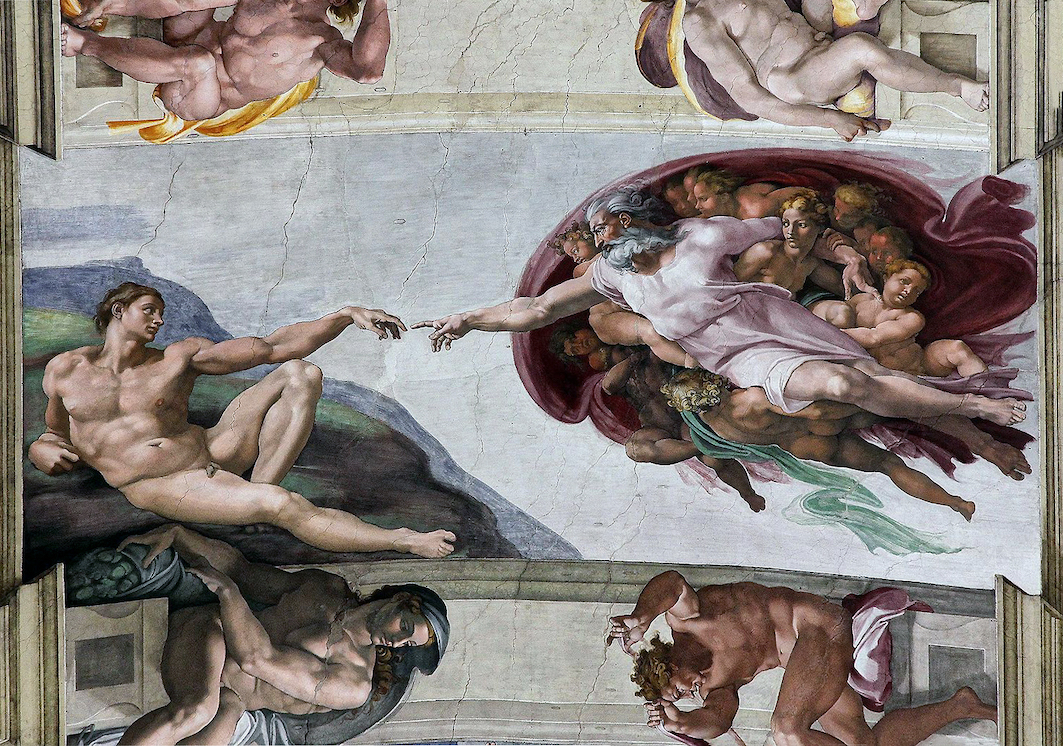
I say paint over this in a nice neutral grey in case it 'offends' someone. It's a 'literal hate-crime' on the eyes.


Image
Is that Christian pornography? At least include a few females in there...
BigMike
Posts: 2210
Joined: Wed Jul 13, 2022 8:51 pm

Re: The Power of Art and Emotion: Should We Worry About Manipulation?

Post by BigMike »

iambiguous wrote: Sat Jan 04, 2025 10:16 pm
BigMike wrote: Wed Jan 01, 2025 11:46 pm
iambiguous, I appreciate the depth and breadth of your inquiry. You’re navigating the tension between determinism as an explanation of "everything that is" and the lived, often messy experience of grappling with meaning, choice, and responsibility within that framework. Let me address your points, particularly where compatibilism enters the mix and, in my view, sometimes muddies the water.
The waters are inherently muddied, in my view, given both The Gap and Rummy's Rule. In other words, there's what we think we believe is true about this stuff here and now and there's all that can be known about it given a comprehensive understanding of how the human condition fits into the existence of existence itself. Or, as Donald Rumsfeld once suggested in regard to WMDs in Iraq, there are all of the things that we don't even know that we don't even know about it. And here there were actual facts that simply did not materialize. Whereas in regard to human autonomy there are all manner of things we don't even know that we don't even know about it. At best we can take our own particular "leap of faith" to one set of assumptions rather than another.

But no one to the best of my current knowledge really does have a handle of this part...
All of this going back to how the matter we call the human brain was "somehow" able to acquire autonomy when non-living matter "somehow" became living matter "somehow" became conscious matter "somehow" became self-conscious matter.
...yet.
First, regarding compatibilism, my issue isn’t with the idea of exploring how determinism and notions of responsibility coexist—it’s with how "free will" often gets redefined, not as "free" in any meaningful sense, but as a kind of deterministic shorthand.
Well, my own issue here basically revolves around the same set of assumptions. In other words, while we can exchange philosophical assumptions about the human brain here, these philosophical assumptions are just that...assumptions that we "think up" in our brains given a particular set of definitions and deductions...but without any hard scientific evidence that "for all practical purposes" confirms that we do understand the brain here as it actually functions.
When someone claims, for example, that a woman who chooses to have an abortion is both determined and yet "morally responsible" in a compatibilist sense, it feels like a sleight of hand. They’ve taken the "free" out of free will but snuck it back in when discussing societal implications like moral accountability.
More like sleight of mind. Compatibilists convince themselves that "while we are wholly determined to 'choose' behaviors that unfold given the only possible reality, we are still responsible for choosing them." In other words, say the hard determinists, they were no less compelled by their own brains to hold us responsible even though for all practical purposes nothing is ever chosen freely.

Though how exactly would they go about demonstrating that?
BigMike wrote: Wed Jan 01, 2025 11:46 pmNow, on the notion of meaningful change within determinism: yes, it’s all part of the only possible reality. But that doesn’t strip it of significance. When a brain integrates new information—say, this discussion—and neural pathways adjust, that’s the system evolving. It’s not "free," but it’s dynamic, and those changes shape behavior and decision-making in future situations.
Yes, it's dynamic but is that the equivalent of autonomy? Dominoes can be set up to topple over onto each other in truly dazzling displays of motion. So, what if we are to nature what the dominoes are to us? Set up to topple over onto each other in much the same manner.
BigMike wrote: Wed Jan 01, 2025 11:46 pmThe deterministic chain is neither static nor repetitive; it’s an intricate web of causation constantly adjusting to inputs. The woman making her decision isn’t free in an ultimate sense, but the unique configuration of her brain, informed by her history, environment, and societal pressures, determines her choice.
Okay, but how is this then contrasted with, say, Libertarian assumptions regarding things we choose of our own volition and thus are rightfully held responsible for doing so.
BigMike wrote: Wed Jan 01, 2025 11:46 pmRegarding the meaningfulness of change or reflection: we don’t impose meaning from outside the deterministic system; it emerges within it. If you interpret meaning as something that "must" arise in a deterministic world, that doesn’t diminish its importance. It simply reframes it as a product of our brains’ complexity—brains shaped by millennia of evolution and the relentless interplay of cause and effect. Meaning isn’t an illusion; it’s a result.
Ever and always: what on Earth am I missing here? If something is either important or unimportant to us only because our brain compels us to react to it one way or the other, what difference does it make which way we go if we could never have gone otherwise?

Unless, of course, we can be linked to a scientific/philosophical argument that explains this. On the other hand, if it's hard determinism all the way down, well, good luck with that.
BigMike wrote: Wed Jan 01, 2025 11:46 pmFinally, your analogy of hovering "free will entities" observing Earth is compelling. If they see us as we see ants, it’s tempting to conclude that what we call choice is just instinct wrapped in higher complexity.
Or, if it suits your brain, it's tempting instead to delude you into thinking -- believing -- that you are either one of henry quirk's free willers or meat minds. Only henry brings a God, the God, his God into focus here. Why? Because with God and religion free will is simply ascribed to our...souls? Then all henry has to do is come back to Him for...confirmation?

It has nothing to do with being tempted the hard determinists argue. After all, if you are never able to freely opt not to be tempted...?

As for this:

"The Power of Art and Emotion: Should We Worry About Manipulation?"

How can the brain not manipulate you into worrying about something you were never able not to be manipulated regarding?

Instead -- click -- I argue that the manipulation is rooted existentially in dasein. And out in a particular world understood in a particular way historically and culturally. So, in my view, even given free will, each of us as individuals might have opinions regarding art and emotions and everything else all up and the spiritual, ideological, deontological, or "natural" spectrum. At least pertaining to conflicting goods.
BigMike wrote: Wed Jan 01, 2025 11:46 pmBut here’s the thing: recognizing our deterministic nature doesn’t mean we lack agency in the sense of responding to inputs and shaping outcomes. It means that agency itself is a deterministic phenomenon—a nuanced, emergent property of a highly sophisticated system.
Unless, of course, we recognize only that which we were never able not to recognize regarding...nuanced matter?
BigMike wrote: Wed Jan 01, 2025 11:46 pmSo yes, everything unfolds as it must. But within that unfolding, there’s room for understanding, adaptation, and growth—not as exercises in "freedom," but as demonstrations of determinism’s extraordinary capacity to create, respond, and evolve. Does that help clarify how meaning, change, and responsibility fit within this framework? Or does the compatibilist language still feel like a contradiction to you?
My point here [in one of my occasional hard determinist frames of mind] is that to the extent any of us opine regarding compatibilism [here or anywhere], we do so only in the manner in which nature compels us to.

Then the part where, say, Pantheism comes into play? In other words, presupposing that the universe itself has a teleological component?
iambiguous, let’s dive in, starting where you bring up the tension between my deterministic framework and what you call “The Gap.” You’re right to point out that, from our limited vantage point, there are always unknowns—both the things we know we don’t know and the Rumsfeldian “unknown unknowns.” But determinism doesn’t claim omniscience; it’s not about having all the answers but about grounding our understanding in causality, however incomplete that understanding might be.

When I discuss the deterministic framework, I’m not asserting that we’ve reached the end of inquiry about consciousness or the origins of life. Questions like how “non-living matter” became conscious or self-aware aren’t resolved, but that doesn’t invalidate the deterministic approach—it just means the causal chain extends into areas we’re still mapping. And that’s fine because determinism isn’t about explaining everything; it’s about understanding that, whatever the answers turn out to be, they’ll be consistent with a universe governed by causation.

Now, on compatibilism, I agree with you that it often feels like sleight of mind, as you aptly put it. When someone claims a woman’s choice to have an abortion was determined yet insists she’s “morally responsible,” they’re trying to reconcile two ideas that don’t sit well together. They redefine free will as “the ability to act in accordance with one’s determined desires,” but then sneak in traditional notions of responsibility that imply true autonomy. It’s this inconsistency that makes me uncomfortable with how compatibilism is sometimes framed.

You raise the domino analogy, questioning whether the dynamism of the deterministic system equates to autonomy. I’d argue that it doesn’t—not in the libertarian sense of autonomy as independent choice. The woman’s decision isn’t free in that sense; it’s shaped by the intricate interplay of her biology, history, and environment. The dynamism lies in how these factors evolve and interact, creating a highly complex system where behavior adapts but remains fully caused.

You also ask why meaning matters if it’s determined. This is a common sticking point, but I’d push back against the idea that determinism devalues meaning. Meaning doesn’t have to be freely chosen to be significant—it arises as a product of the causal network. If you find something important, that importance is real because it’s rooted in the structure of your brain and the environment that shaped it. The determinism behind your feelings doesn’t make them any less profound.

As for agency being a deterministic phenomenon, I think you’re right to be cautious about how that term is used. Agency, in this context, isn’t about metaphysical freedom; it’s about the capacity of a complex system (like the human brain) to process inputs, weigh options (albeit deterministically), and generate behavior. This capacity is what we observe when we talk about human decision-making, even if it’s ultimately a product of causation.

Finally, your mention of Pantheism and the universe having a teleological component is an intriguing pivot. If the universe itself is seen as teleological, you’re introducing a layer of purpose to the deterministic framework. While I stick to a materialist perspective that sees purpose as emergent rather than intrinsic, I’d be curious to hear how you’d integrate such a view into a deterministic model without stepping outside causality.
User avatar
iambiguous
Posts: 11317
Joined: Mon Nov 22, 2010 10:23 pm

Re: The Power of Art and Emotion: Should We Worry About Manipulation?

Post by iambiguous »

BigMike wrote: Sat Jan 04, 2025 10:51 pm iambiguous, let’s dive in, starting where you bring up the tension between my deterministic framework and what you call “The Gap.” You’re right to point out that, from our limited vantage point, there are always unknowns—both the things we know we don’t know and the Rumsfeldian “unknown unknowns.” But determinism doesn’t claim omniscience; it’s not about having all the answers but about grounding our understanding in causality, however incomplete that understanding might be.
Here, in regard to meaning, morality and metaphysics is where I make a distinction between those who acknowledge their own point of view is just a more or less educated guess given all that we don't know -- can't know? -- about the human brain given all that we don't know -- can't know? -- about the human condition given all that we don't know -- can't know? -- about the existence of existence itself.

In other words, between them and those who argue as though they do embody the One True Path to Enlightenment. Objectivists I call them. It's always "my way or the highway" with them. You are either "one of us" or [for some] "or else".
BigMike wrote: Sat Jan 04, 2025 10:51 pmWhen I discuss the deterministic framework, I’m not asserting that we’ve reached the end of inquiry about consciousness or the origins of life. Questions like how “non-living matter” became conscious or self-aware aren’t resolved, but that doesn’t invalidate the deterministic approach—it just means the causal chain extends into areas we’re still mapping.
The assumption here being that despite The Gap and Rummy's Rule, some are "somehow" able to arrive at conclusions regarding things like art and emotions that validate how they think about determinism. Whereas some hard determinist will insist that "mapping" itself is no less embedded in the only possible reality.

And, really, how can anything pertaining to human interactions not [ultimately] be problematic given all that we don't know about a universe as staggeringly vast as our own is? Assuming in turn that our universe may well be but one of an infinite number of additional universes...the multiverse.
BigMike wrote: Sat Jan 04, 2025 10:51 pmAnd that’s fine because determinism isn’t about explaining everything; it’s about understanding that, whatever the answers turn out to be, they’ll be consistent with a universe governed by causation.
Again, however, say the hard determinists, in whatever manner we go about explaining what we understand about anything, it's just more of the same. In other words, that the human brain, while obviously matter like no other matter before it, is still wholly embedded in the laws of matter themselves.
Now, on compatibilism, I agree with you that it often feels like sleight of mind, as you aptly put it. When someone claims a woman’s choice to have an abortion was determined yet insists she’s “morally responsible,” they’re trying to reconcile two ideas that don’t sit well together.
Unless, perhaps, for some, this reconciliation is in itself just another manifestation of the only possible reality. Then those who embrace the fact that the two can't be reconciled...and thus nestle down in the assumption that their own shitty life was "beyond my control".
BigMike wrote: Sat Jan 04, 2025 10:51 pmThey redefine free will as “the ability to act in accordance with one’s determined desires,” but then sneak in traditional notions of responsibility that imply true autonomy. It’s this inconsistency that makes me uncomfortable with how compatibilism is sometimes framed.
Unless, perhaps, in feeling uncomfortable this too is just another necessary component of the one and the only wholly determined universe. And then the part where we are necessarily determined in turn to define compatibilism only as we were ever able to.
BigMike wrote: Sat Jan 04, 2025 10:51 pmYou raise the domino analogy, questioning whether the dynamism of the deterministic system equates to autonomy. I’d argue that it doesn’t—not in the libertarian sense of autonomy as independent choice. The woman’s decision isn’t free in that sense; it’s shaped by the intricate interplay of her biology, history, and environment. The dynamism lies in how these factors evolve and interact, creating a highly complex system where behavior adapts but remains fully caused.
How then are these dynamic interactions any less the embodiment of the only possible reality? In other words, however complex the material interactions are in our brains, nothing changes.

Unless, of course, re God or some facet of the universe we are simply not privy to "here and now", the human brain really is the exception to the rule.
BigMike wrote: Sat Jan 04, 2025 10:51 pmYou also ask why meaning matters if it’s determined. This is a common sticking point, but I’d push back against the idea that determinism devalues meaning. Meaning doesn’t have to be freely chosen to be significant—it arises as a product of the causal network. If you find something important, that importance is real because it’s rooted in the structure of your brain and the environment that shaped it. The determinism behind your feelings doesn’t make them any less profound.
Still, there's how some think this through and conclude that if everything we think, feel, say and do is part and parcel of the only possible reality, then how we feel about art [or anything else for that matter] is embedded only in the psychological illusion of profundity.
BigMike wrote: Sat Jan 04, 2025 10:51 pmAs for agency being a deterministic phenomenon, I think you’re right to be cautious about how that term is used. Agency, in this context, isn’t about metaphysical freedom; it’s about the capacity of a complex system (like the human brain) to process inputs, weigh options (albeit deterministically), and generate behavior. This capacity is what we observe when we talk about human decision-making, even if it’s ultimately a product of causation.
Then back to the part where [here] each of us -- compelled to or not -- situate cause and effect...philosophically?
BigMike wrote: Sat Jan 04, 2025 10:51 pmFinally, your mention of Pantheism and the universe having a teleological component is an intriguing pivot. If the universe itself is seen as teleological, you’re introducing a layer of purpose to the deterministic framework.
Well, if there is a cosmogonical explanation for All There Is, chances are we will all be long dead and gone before it's proposed. And since there are not likely to be many among us who are neuroscientists, we're left instead with exchanging definitions and deductions up in the...philosophical clouds?
BigMike wrote: Sat Jan 04, 2025 10:51 pmWhile I stick to a materialist perspective that sees purpose as emergent rather than intrinsic, I’d be curious to hear how you’d integrate such a view into a deterministic model without stepping outside causality.
Or: you were never able not to be curious about something that I was never able not to post.

Nature itself does all the manipulating some will argue. Which, I suspect, is why so many Gods are invented. With most religions you're got a guaranteed free will embedded...in the soul? Whereas what on Earth can it mean to connect the dots between "I" and the vastitude of the cosmos itself?
BigMike
Posts: 2210
Joined: Wed Jul 13, 2022 8:51 pm

Re: The Power of Art and Emotion: Should We Worry About Manipulation?

Post by BigMike »

iambiguous wrote: Mon Jan 06, 2025 10:44 pm
BigMike wrote: Sat Jan 04, 2025 10:51 pm iambiguous, let’s dive in, starting where you bring up the tension between my deterministic framework and what you call “The Gap.” You’re right to point out that, from our limited vantage point, there are always unknowns—both the things we know we don’t know and the Rumsfeldian “unknown unknowns.” But determinism doesn’t claim omniscience; it’s not about having all the answers but about grounding our understanding in causality, however incomplete that understanding might be.
Here, in regard to meaning, morality and metaphysics is where I make a distinction between those who acknowledge their own point of view is just a more or less educated guess given all that we don't know -- can't know? -- about the human brain given all that we don't know -- can't know? -- about the human condition given all that we don't know -- can't know? -- about the existence of existence itself.

In other words, between them and those who argue as though they do embody the One True Path to Enlightenment. Objectivists I call them. It's always "my way or the highway" with them. You are either "one of us" or [for some] "or else".
BigMike wrote: Sat Jan 04, 2025 10:51 pmWhen I discuss the deterministic framework, I’m not asserting that we’ve reached the end of inquiry about consciousness or the origins of life. Questions like how “non-living matter” became conscious or self-aware aren’t resolved, but that doesn’t invalidate the deterministic approach—it just means the causal chain extends into areas we’re still mapping.
The assumption here being that despite The Gap and Rummy's Rule, some are "somehow" able to arrive at conclusions regarding things like art and emotions that validate how they think about determinism. Whereas some hard determinist will insist that "mapping" itself is no less embedded in the only possible reality.

And, really, how can anything pertaining to human interactions not [ultimately] be problematic given all that we don't know about a universe as staggeringly vast as our own is? Assuming in turn that our universe may well be but one of an infinite number of additional universes...the multiverse.
BigMike wrote: Sat Jan 04, 2025 10:51 pmAnd that’s fine because determinism isn’t about explaining everything; it’s about understanding that, whatever the answers turn out to be, they’ll be consistent with a universe governed by causation.
Again, however, say the hard determinists, in whatever manner we go about explaining what we understand about anything, it's just more of the same. In other words, that the human brain, while obviously matter like no other matter before it, is still wholly embedded in the laws of matter themselves.
Now, on compatibilism, I agree with you that it often feels like sleight of mind, as you aptly put it. When someone claims a woman’s choice to have an abortion was determined yet insists she’s “morally responsible,” they’re trying to reconcile two ideas that don’t sit well together.
Unless, perhaps, for some, this reconciliation is in itself just another manifestation of the only possible reality. Then those who embrace the fact that the two can't be reconciled...and thus nestle down in the assumption that their own shitty life was "beyond my control".
BigMike wrote: Sat Jan 04, 2025 10:51 pmThey redefine free will as “the ability to act in accordance with one’s determined desires,” but then sneak in traditional notions of responsibility that imply true autonomy. It’s this inconsistency that makes me uncomfortable with how compatibilism is sometimes framed.
Unless, perhaps, in feeling uncomfortable this too is just another necessary component of the one and the only wholly determined universe. And then the part where we are necessarily determined in turn to define compatibilism only as we were ever able to.
BigMike wrote: Sat Jan 04, 2025 10:51 pmYou raise the domino analogy, questioning whether the dynamism of the deterministic system equates to autonomy. I’d argue that it doesn’t—not in the libertarian sense of autonomy as independent choice. The woman’s decision isn’t free in that sense; it’s shaped by the intricate interplay of her biology, history, and environment. The dynamism lies in how these factors evolve and interact, creating a highly complex system where behavior adapts but remains fully caused.
How then are these dynamic interactions any less the embodiment of the only possible reality? In other words, however complex the material interactions are in our brains, nothing changes.

Unless, of course, re God or some facet of the universe we are simply not privy to "here and now", the human brain really is the exception to the rule.
BigMike wrote: Sat Jan 04, 2025 10:51 pmYou also ask why meaning matters if it’s determined. This is a common sticking point, but I’d push back against the idea that determinism devalues meaning. Meaning doesn’t have to be freely chosen to be significant—it arises as a product of the causal network. If you find something important, that importance is real because it’s rooted in the structure of your brain and the environment that shaped it. The determinism behind your feelings doesn’t make them any less profound.
Still, there's how some think this through and conclude that if everything we think, feel, say and do is part and parcel of the only possible reality, then how we feel about art [or anything else for that matter] is embedded only in the psychological illusion of profundity.
BigMike wrote: Sat Jan 04, 2025 10:51 pmAs for agency being a deterministic phenomenon, I think you’re right to be cautious about how that term is used. Agency, in this context, isn’t about metaphysical freedom; it’s about the capacity of a complex system (like the human brain) to process inputs, weigh options (albeit deterministically), and generate behavior. This capacity is what we observe when we talk about human decision-making, even if it’s ultimately a product of causation.
Then back to the part where [here] each of us -- compelled to or not -- situate cause and effect...philosophically?
BigMike wrote: Sat Jan 04, 2025 10:51 pmFinally, your mention of Pantheism and the universe having a teleological component is an intriguing pivot. If the universe itself is seen as teleological, you’re introducing a layer of purpose to the deterministic framework.
Well, if there is a cosmogonical explanation for All There Is, chances are we will all be long dead and gone before it's proposed. And since there are not likely to be many among us who are neuroscientists, we're left instead with exchanging definitions and deductions up in the...philosophical clouds?
BigMike wrote: Sat Jan 04, 2025 10:51 pmWhile I stick to a materialist perspective that sees purpose as emergent rather than intrinsic, I’d be curious to hear how you’d integrate such a view into a deterministic model without stepping outside causality.
Or: you were never able not to be curious about something that I was never able not to post.

Nature itself does all the manipulating some will argue. Which, I suspect, is why so many Gods are invented. With most religions you're got a guaranteed free will embedded...in the soul? Whereas what on Earth can it mean to connect the dots between "I" and the vastitude of the cosmos itself?
iambiguous, your response is, as always, a labyrinth of thought, weaving determinism, meaning, and epistemological humility into a dense tapestry. Let’s walk through it.

You start by drawing a line between those who acknowledge their perspective as a "more or less educated guess" and those who claim their view as the truth. I share your skepticism toward dogmatism; determinism, as I frame it, doesn’t claim a monopoly on enlightenment. It’s a working model, grounded in causality, and open to refinement. The gaps you highlight—what we don’t know about the brain, the cosmos, or existence itself—don’t undermine determinism but remind us that all understanding is provisional, built on the scaffolding of what’s observable and testable.

On mapping and "the only possible reality," you’re right that even the act of mapping is embedded in determinism. The human brain, as a product of its environment and biology, reflects its own constraints while attempting to explore them. But determinism doesn’t negate the value of this exploration; it’s what allows the system to refine itself. In this sense, mapping isn’t futile; it’s the process through which the deterministic system evolves. The multiverse, if it exists, would simply expand the causal canvas—but it wouldn’t overturn the principle that all events have causes.

You point out that reconciling determinism with moral responsibility can feel like an intellectual contortion. I agree. To say someone is "morally responsible" for actions that were wholly determined is to stretch the concept of responsibility into something unrecognizable. Compatibilists may argue that accountability is still meaningful within a deterministic framework, but I share your suspicion that this often smuggles autonomy back in under a new name. If everything unfolds as it must, then moral judgments become reflections of the causal chain, not universal truths.

You also ask how dynamism within determinism changes anything. It doesn’t change the fundamental nature of causality, but it does illustrate the complexity of the system. A deterministic system isn’t static; it adapts, processes, and evolves. While this doesn’t grant autonomy, it highlights how varied and intricate deterministic processes can be. A woman’s decision about abortion, for example, is influenced by countless interwoven causes—biological, cultural, and personal. Understanding these factors doesn’t change the determinism but enriches our appreciation of its depth.

As for meaning, you suggest it could be a psychological illusion, a trick of the mind to make us feel profound. But if meaning is a product of causation, why dismiss it as an illusion? The fact that it arises deterministically doesn’t make it less real. The sunrise isn’t less beautiful because it’s governed by physics, nor is a sense of purpose less meaningful because it emerges from neural processes. Determinism reframes meaning as emergent rather than arbitrary.

Your mention of Pantheism adds an interesting dimension. If the universe has an intrinsic purpose, determinism doesn’t preclude it; it simply asks that purpose be explained through causal mechanisms. Whether purpose is emergent (as I argue) or intrinsic (as Pantheism might suggest), it must ultimately integrate with the deterministic framework—or risk being an unsupported claim.

You conclude by emphasizing the manipulation of nature itself, suggesting that human beliefs and gods are simply extensions of this process. I’d agree. If gods and free will exist as concepts, they’re products of the same deterministic forces that shape all human thought. They serve functions—social cohesion, existential comfort—but they don’t transcend the system that created them.

In the end, determinism doesn’t claim to answer every question, but it offers a lens through which we can explore them coherently. The dots between "I" and the cosmos may not connect to absolute truths, but the act of connecting them is itself a testament to the extraordinary complexity of the deterministic system we inhabit. Would you agree that this interplay—the reaching, questioning, and refining—is where meaning and insight are found, even if they’re causally bound?
User avatar
phyllo
Posts: 2520
Joined: Sun Oct 27, 2013 5:58 pm
Location: Victory in Ukraine

Re: The Power of Art and Emotion: Should We Worry About Manipulation?

Post by phyllo »

You point out that reconciling determinism with moral responsibility can feel like an intellectual contortion. I agree. To say someone is "morally responsible" for actions that were wholly determined is to stretch the concept of responsibility into something unrecognizable. Compatibilists may argue that accountability is still meaningful within a deterministic framework, but I share your suspicion that this often smuggles autonomy back in under a new name. If everything unfolds as it must, then moral judgments become reflections of the causal chain, not universal truths.
Am I correct in thinking that you're going to lock up serial killers, or reeducate them or reform them?

Isn't that holding them responsible for what they have done?

Surely, no "moral responsibility" would mean that no action would be taken against serial killers, rapists, thieves, muggers, etc.
BigMike
Posts: 2210
Joined: Wed Jul 13, 2022 8:51 pm

Re: The Power of Art and Emotion: Should We Worry About Manipulation?

Post by BigMike »

phyllo wrote: Tue Jan 07, 2025 2:33 pm
You point out that reconciling determinism with moral responsibility can feel like an intellectual contortion. I agree. To say someone is "morally responsible" for actions that were wholly determined is to stretch the concept of responsibility into something unrecognizable. Compatibilists may argue that accountability is still meaningful within a deterministic framework, but I share your suspicion that this often smuggles autonomy back in under a new name. If everything unfolds as it must, then moral judgments become reflections of the causal chain, not universal truths.
Am I correct in thinking that you're going to lock up serial killers, or reeducate them or reform them?

Isn't that holding them responsible for what they have done?

Surely, no "moral responsibility" would mean that no action would be taken against serial killers, rapists, thieves, muggers, etc.
Phyllo, you're asking an essential question here: if moral responsibility doesn’t exist in the traditional sense, what justifies actions like locking up serial killers or reforming them? Let’s unpack this within a deterministic framework.

Under determinism, actions like murder or theft aren’t the result of "free will" in the libertarian sense. They arise from a causal web of biological predispositions, environmental influences, and personal experiences. The person committing these acts isn’t "choosing" them freely; they’re the outcome of this deterministic system. However, that doesn’t mean society is powerless to act. On the contrary, our responses to such actions are also part of the causal chain.

When we incarcerate a serial killer or rehabilitate someone who’s committed a crime, we’re not holding them morally responsible in the sense of assigning blame to an autonomous agent. Instead, we’re taking steps to mitigate harm, protect others, and shape future behaviors. The goal isn’t to punish someone for "freely" choosing evil, but to address the deterministic factors that led to their actions and reduce the likelihood of recurrence.

Think of it this way: in a deterministic framework, we still act to maintain order and safety, but the justification shifts. It’s not about blame; it’s about cause and effect. If someone’s actions endanger others, society intervenes—not to punish in the moralistic sense but to recalibrate the system. Locking up a serial killer prevents further harm and, in some cases, allows for rehabilitation. These actions are just another layer of the deterministic web, aimed at producing outcomes society values.

The key distinction is this: traditional moral responsibility implies that the individual could have chosen differently, while the deterministic view sees interventions as pragmatic responses to causally determined behaviors. So, no, rejecting moral responsibility doesn’t mean doing nothing. It means shifting our perspective from retribution to prevention, understanding, and systemic change.

Does this reframe the idea of "responsibility" in a way that makes sense within a deterministic worldview? Or does it leave something unresolved in your understanding of accountability?
Post Reply