Alexis, the notion of imagination as a "reflecting glass or screen" is a fascinating starting point, and I can appreciate why you’d invoke this older anthropology to explore how something "outside the causal web" might interact with our minds. However, let’s first ground ourselves in the observable mechanisms at play—because even imagination, remarkable as it is, seems firmly rooted in the physical.Alexis Jacobi wrote: ↑Wed Jan 01, 2025 4:28 pmWhat is “imagination”? In the Olden System (the older anthropology and psychology) the imagination was a sort of reflecting glass or a screen. In fact, when any of us visualize (think about, see) anything, it occurs in the realm of the imagination.BigMike wrote: ↑Tue Dec 31, 2024 6:28 pm Now, as for the unseen world you describe—forces outside deterministic chains—I’ll admit this diverges from my understanding. For me, introducing influences outside the causal web raises the question: how do these influences interface with the physical world? If they leave no detectable imprint within the causal network, how do we distinguish their effects from mere imagination or the emergent properties of a complex system?
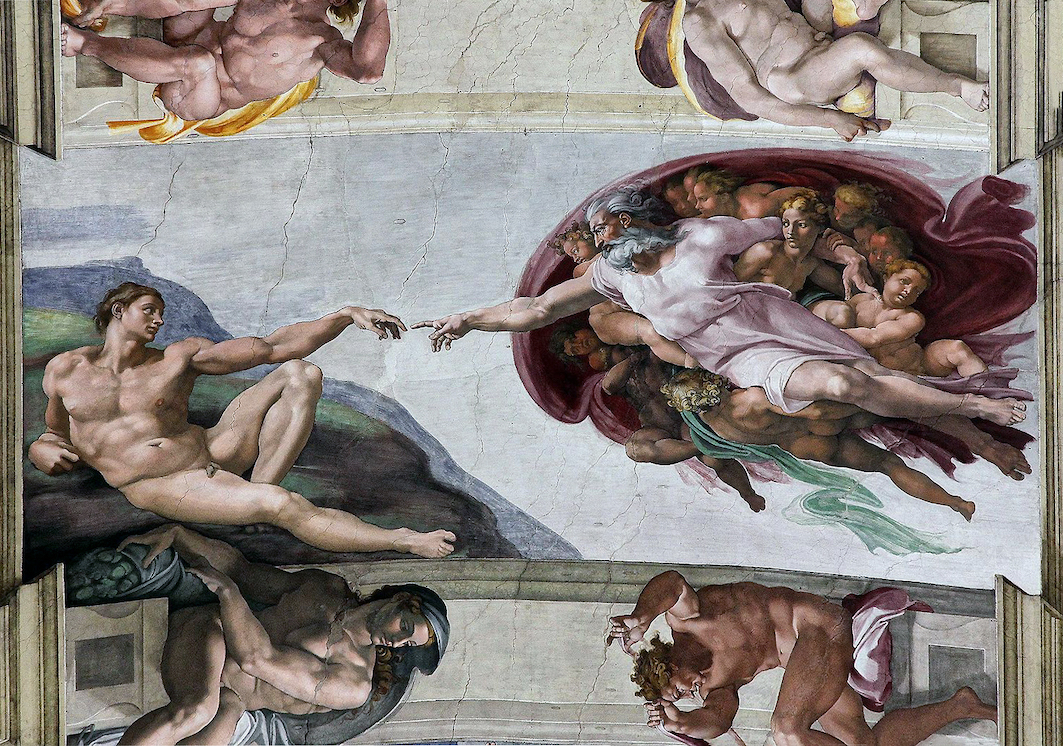
How might something “outside of the causal web” introduce •something• into the imagination, the visionary space, of man?
I know that you will refer to “memories” stored in neuronal circuits that are activated and, again, you will refer to the physical structure that must already be there …
And I am pretty sure that any depiction of an entity operating outside of physical causal chains (God, angels, disembodied intelligence) will be interpreted by you as the projection of internal (emergent, epiphenomenal) content into a picture or description that no longer reflects what is true. And in your view brain-science and neurology express a truer picture. But more than picture, rather irreducible fact.
Imagination is an emergent property of neural processes. When we visualize, recall, or conceptualize something, we’re activating a dynamic interplay of brain regions—such as the prefrontal cortex, the visual cortex, and the hippocampus. Memories stored in neuronal circuits interact with sensory inputs, emotional states, and learned associations to create that "screen" on which our thoughts and visions appear. The structure must indeed already be there, and this isn’t just my deterministic perspective—it’s what neuroscience shows us.
Now, let’s turn to your question of how "something outside of the causal web" could introduce something into this space. You’re right that I’d view any such phenomenon as a projection or interpretation of internal content. The brain has an extraordinary ability to generate richly detailed experiences without external stimuli. Hallucinogens, for instance, offer a striking example. Substances like LSD or psilocybin don’t introduce anything "from the outside"; instead, they disrupt normal neural activity, particularly in the default mode network, leading to vivid, sometimes otherworldly experiences. Users often describe these experiences as profoundly real—yet they arise entirely within the brain’s existing circuits.
This brings us to the crux of the matter: if experiences of gods, angels, or disembodied intelligence leave no detectable imprint on the physical causal chain, how can we distinguish them from imaginatory effects? The burden falls on these phenomena to demonstrate their existence within the observable framework we inhabit. Otherwise, they remain indistinguishable from the remarkable, but internally generated, phenomena we already understand.
And yet, I don’t dismiss the power of these imaginatory effects outright. Even if they are "projections," they can profoundly influence behavior, beliefs, and culture. That influence, in turn, shapes the causal chain of human history—an undeniable fact of the deterministic system.
So, what we’re left with is this: imagination, whether grounded in material causation or attributed to external forces, has real effects in the world. But until something "outside the causal web" makes itself known in a measurable way, it seems prudent to interpret such experiences as products of the brain’s immense and deterministic complexity. Would you agree that, at the very least, this framework gives us a consistent way to approach the interplay between the visionary and the material?