.
People with opinions just go around bothering each other.
Holding on to anger is like grasping a hot coal with the intent of throwing it at someone else; you are the one who gets burned.
Three things cannot be long hidden: the sun, the moon, and the truth.
You will not be punished for your anger; you will be punished by your anger.
To be idle is a short road to death and to be diligent is a way of life; foolish people are idle, wise people are diligent.
.
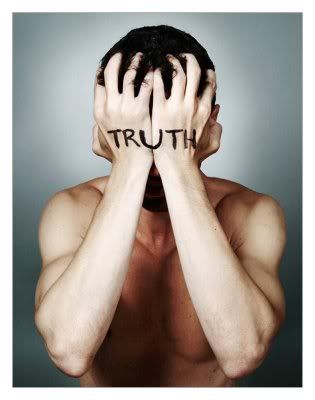
What's stopping us from seeing the truth?
-
Bill Wiltrack

- Posts: 5456
- Joined: Sat Nov 03, 2007 1:52 pm
- Location: Cleveland, Ohio, USA
- Contact:
-
Bill Wiltrack
- Posts: 5456
- Joined: Sat Nov 03, 2007 1:52 pm
- Location: Cleveland, Ohio, USA
- Contact:
Re: What's stopping us from seeing the truth?
.
.............................................
.
.............................................
.
-
Arising_uk

- Posts: 12255
- Joined: Wed Oct 17, 2007 2:31 am
-
Ron de Weijze
- Posts: 75
- Joined: Tue Jul 26, 2011 1:22 pm
- Location: Amsterdam, Netherlands
- Contact:
Re: What's stopping us from seeing the truth?
RdW - That is what we have hypotheses for that we can test, or values that we can try. ... Value is what we found out to be good and want to hold on to.
Lk4 - Im sorry: I cannot let this lay. this is a definition that gains creedence only in a non-reflective subject. Such non-reflection does gain a subject, but it does so in reflection of the object: you propose that the subject is an object amoung objects. You argue from the perspective that the subject came about from a knowable apriroi universe
RdW - From the depths of our being to the outmost periphery, we recollect and construct forms we believe, will fit the content of our world intuitively yet precisely, until we realize our dream or we realize our mistake. In reality, a part of reality reflects itself, which therefore in turn reflects or intuits itself and its environment, others or reality. You and the other intuit your and the other's intuition and realization as best as you can, so that you can co-ordinate communication. (#19)
RdW - I call it Constructive Recollection. The subject does reflect upon itself. Intuition is the subject and reality is the object:
Lk4 - It is obvious that you are attempting to 'construct' an 'proper' way of coming upon the universe so as to achieve some ethical ideal. What is recollecting? The subject: the given. The reflection you propose is limited in that it takes objectivity as the standpoint from which to propose truths. The subject then may reflect constructively. The subject may 'value' as a apirori category that we 'find out' from what? From some empty nilthat is the subject when viewed from the object. When did we 'find out' our value? How or in what way do we or can we 'hold on to' that value that we found? How can I have a condition of myself that is capable of 'finding out' what I value?
RdW - The reflection I promote is Bergson's 'duality of origin' (1932, p79). The subject or intution dynamically interacts with the object or reality, using that part of reality capable of reflecting upon itself. The form may be non-reflective but the content isn't. Material reality evolved while cultural reality acquired history. What is recollected is the intuition or reflection of reality that is valuable because it works or is functionally structured, at different levels, by independent confirmation. Cultural content deconstructed to nil applies to dependent rejection or power-distance between people, to water down and take the trauma out of its raw form of kidnapping and terror and 'stabilize' it into a closed morality of political correctness and static religion, quite the contrary of its claim.
Lk4 - The only way for this to happen if if the subject, the individual, stops investigation and orients it in a particular direction. Thus your system argues itself, as I have indicated in my above post. Because the previous statement is true (the sentence just before this), that the subject may stop (that is: may choose), this stopping is evidence that we might 'find value', since at the point of stopping, we have allowed for a uninvestigated given, and thus this given informs what we may know, grants us the Subject as an essential thing in-itself from which to posit truth.
RdW - The independent individual seeks and when found, follows independent confirmation of his intuition by realization, as is or should be common practice in more or less ancient institutions such as science, justice and journalism. Ever more precisely does his intuition describe, explain and understand reality this way, even being part of reality, itself. This is both reflective and investigative.
Lk4 - Yet this condition does not set well with those who are oriented upon the object, because the scheme itself would argue back to the vicious circle of contingency of condition and nullify what it proposes. Thus, what occurs is exactly what you have done: you have 'stopped' the cycle in order to gain a truth of the mater, a philsophical system, which only gains its truth by denying the very process by which it is supposed to have come about.
RdW - Valuing is part of the (reflected or non-reflected) empirical cycle of social action and social reaction. Independent confirmation functionally structures the mind at each level in a different way, to process all content. There is no stopping or denying anything.
Lk4 - Post-modernism is the inevitable result of our condition of knowledge, taken on a whole. Individualized knowledge, such as we might 'find' subjective value in the objective, does not wish to consider the whole, only the parts which is 'valued' by the individual: and thus your scheme denies itself.
Reality is given at all times. To divy up peices of reality and arrange them in some way is, by definition: an ideology. a thoughtful arrangement I thus term: ideological engineering.
RdW - Postmodernism experimented with the absence or deconstruction of anything that should contain truth or what could be independently confirmed. It dominated life from the 60s to recently (appearance of internet) even in science, justice and journalism. Rather than shaping up, it was easier to turn on, tune in and drop out in a world without Truth, God, Reality or Self. Internet encouraged the independent individual to find things out for himself again, turned leadership into followership and power-distance into independent confirmation.
Lk4 - Im sorry: I cannot let this lay. this is a definition that gains creedence only in a non-reflective subject. Such non-reflection does gain a subject, but it does so in reflection of the object: you propose that the subject is an object amoung objects. You argue from the perspective that the subject came about from a knowable apriroi universe
RdW - From the depths of our being to the outmost periphery, we recollect and construct forms we believe, will fit the content of our world intuitively yet precisely, until we realize our dream or we realize our mistake. In reality, a part of reality reflects itself, which therefore in turn reflects or intuits itself and its environment, others or reality. You and the other intuit your and the other's intuition and realization as best as you can, so that you can co-ordinate communication. (#19)
RdW - I call it Constructive Recollection. The subject does reflect upon itself. Intuition is the subject and reality is the object:
Lk4 - It is obvious that you are attempting to 'construct' an 'proper' way of coming upon the universe so as to achieve some ethical ideal. What is recollecting? The subject: the given. The reflection you propose is limited in that it takes objectivity as the standpoint from which to propose truths. The subject then may reflect constructively. The subject may 'value' as a apirori category that we 'find out' from what? From some empty nilthat is the subject when viewed from the object. When did we 'find out' our value? How or in what way do we or can we 'hold on to' that value that we found? How can I have a condition of myself that is capable of 'finding out' what I value?
RdW - The reflection I promote is Bergson's 'duality of origin' (1932, p79). The subject or intution dynamically interacts with the object or reality, using that part of reality capable of reflecting upon itself. The form may be non-reflective but the content isn't. Material reality evolved while cultural reality acquired history. What is recollected is the intuition or reflection of reality that is valuable because it works or is functionally structured, at different levels, by independent confirmation. Cultural content deconstructed to nil applies to dependent rejection or power-distance between people, to water down and take the trauma out of its raw form of kidnapping and terror and 'stabilize' it into a closed morality of political correctness and static religion, quite the contrary of its claim.
Lk4 - The only way for this to happen if if the subject, the individual, stops investigation and orients it in a particular direction. Thus your system argues itself, as I have indicated in my above post. Because the previous statement is true (the sentence just before this), that the subject may stop (that is: may choose), this stopping is evidence that we might 'find value', since at the point of stopping, we have allowed for a uninvestigated given, and thus this given informs what we may know, grants us the Subject as an essential thing in-itself from which to posit truth.
RdW - The independent individual seeks and when found, follows independent confirmation of his intuition by realization, as is or should be common practice in more or less ancient institutions such as science, justice and journalism. Ever more precisely does his intuition describe, explain and understand reality this way, even being part of reality, itself. This is both reflective and investigative.
Lk4 - Yet this condition does not set well with those who are oriented upon the object, because the scheme itself would argue back to the vicious circle of contingency of condition and nullify what it proposes. Thus, what occurs is exactly what you have done: you have 'stopped' the cycle in order to gain a truth of the mater, a philsophical system, which only gains its truth by denying the very process by which it is supposed to have come about.
RdW - Valuing is part of the (reflected or non-reflected) empirical cycle of social action and social reaction. Independent confirmation functionally structures the mind at each level in a different way, to process all content. There is no stopping or denying anything.
Lk4 - Post-modernism is the inevitable result of our condition of knowledge, taken on a whole. Individualized knowledge, such as we might 'find' subjective value in the objective, does not wish to consider the whole, only the parts which is 'valued' by the individual: and thus your scheme denies itself.
Reality is given at all times. To divy up peices of reality and arrange them in some way is, by definition: an ideology. a thoughtful arrangement I thus term: ideological engineering.
RdW - Postmodernism experimented with the absence or deconstruction of anything that should contain truth or what could be independently confirmed. It dominated life from the 60s to recently (appearance of internet) even in science, justice and journalism. Rather than shaping up, it was easier to turn on, tune in and drop out in a world without Truth, God, Reality or Self. Internet encouraged the independent individual to find things out for himself again, turned leadership into followership and power-distance into independent confirmation.
-
chaz wyman
- Posts: 5303
- Joined: Fri Mar 12, 2010 7:31 pm
Re: What's stopping us from seeing the truth?
It can be true, therefore it is not necessarily false.Arising_uk wrote:False, i.e. not true.Bill Wiltrack wrote:You are most quoted when not saying a thing...
You are at your most honest when you are lying.
-
Bill Wiltrack
- Posts: 5456
- Joined: Sat Nov 03, 2007 1:52 pm
- Location: Cleveland, Ohio, USA
- Contact:
Re: What's stopping us from seeing the truth?
.
Brilliant.
.
Brilliant.
.
-
chaz wyman
- Posts: 5303
- Joined: Fri Mar 12, 2010 7:31 pm
Re: What's stopping us from seeing the truth?
We do have fun!Bill Wiltrack wrote:.
Brilliant.
.
Re: What's stopping us from seeing the truth?
3jw, material evolves and culture history(s).
How to you know this? By defining reality in a particular way based on a true universal: independannnt evaluation.
How to you know this? By defining reality in a particular way based on a true universal: independannnt evaluation.
-
Ron de Weijze
- Posts: 75
- Joined: Tue Jul 26, 2011 1:22 pm
- Location: Amsterdam, Netherlands
- Contact:
Re: What's stopping us from seeing the truth?
All I do is try to describe, explain and understand my world, hoping and believing it is the same world you live in.
I believe I know this. It is my intuition of reality that I need to test/try and evaluate/value.lancek4 wrote:3jw, material evolves and culture history(s).
How to you know this? By defining reality in a particular way based on a true universal: independannnt evaluation.
- Model or
intuition or
reflection or
hypotheses or
representation or
educated guess or
subjective impression of ...
-
Ron de Weijze
- Posts: 75
- Joined: Tue Jul 26, 2011 1:22 pm
- Location: Amsterdam, Netherlands
- Contact:
Re: What's stopping us from seeing the truth?
I highly appreciate your visit, Spheres! I would like to discuss those parallels or what we agree and disagree on. Of course you can "profess to being as comfortable with larger words" as anybody can or could. Just make sure to be convinced enough to convince another too if you can. That's the sport! Your nick tells how observant you always must have been. Psychology and philosophy indeed merge with perception in the sense that they are perceptual trainings, no more, no less. Thanks again!SpheresOfBalance wrote:Hey Ron, I checked out your site and have found some parallels in my reasoning. Of course I won't profess to being as comfortable with larger words as some of those that frequent this forum, but this has nothing to do with the sensing of that which defines them. All my life I have been extremely observant, not quick to project my thoughts upon that which I've witnessed. And while I haven't been able to put my finger on it as of yet, it would seem that your education and attention has paid off. It's interesting how Psychology and Philosophy merge with perception. I will continue to explore your mind.Thanks for your contribution!
Re: What's stopping us from seeing the truth?
Rjw, so independant evalkuation equals choice, right? So you are proposing how choices are come up with?
-
Ron de Weijze
- Posts: 75
- Joined: Tue Jul 26, 2011 1:22 pm
- Location: Amsterdam, Netherlands
- Contact:
Re: What's stopping us from seeing the truth?
We are free to choose and improve our human condition by trying and valuing possible improvements in explaining and understanding our world. It starts with sensing. We always 100% sense what we sense (material reality), but that means nothing if we don't believe we know what we sense (realize), which is probably only a tiny bit of that 100%. We can hold on to that knowledge because we are born happily with memory or the ability to recollect. That 100% knowing what we know (cultural reality), however, in its turn means nothing if we don't believe we sense what we know (intuit), which again is probably only a tiny bit of that 100%. This is the empirical or experiential cycle (a bit adapted compared to the original, De Groot 1961) and I believe it is what Bergson meant referring to the 'duality of origin'. Since (by definition) evaluation or valuing implies intuiting what we realize, the freedom to sense what we sense (where it all starts), is implied in evaluation. Compare it to a heart cell, that even all on its own, spontaneously starts beating.lancek4 wrote:Rjw, so independant evalkuation equals choice, right? So you are proposing how choices are come up with?
-
SpheresOfBalance

- Posts: 5755
- Joined: Sat Sep 10, 2011 4:27 pm
- Location: On a Star Dust Metamorphosis
Re: What's stopping us from seeing the truth?
Chaz Wyman: A most brilliant fool, as his stance contradicts his stance. If in fact truth varies with each individual then we cannot argue the truth as there is no common ground on which to stand; relative in deed.
As Ron pointed out earlier, as it flew over Chaz's head.
I ask you, when is a skeptic not a skeptic?
When he's not skeptical of his skepticism.
Chaz maintains that my view of truth is invalid!
Chaz maintains that his view of truth is valid!
Chaz maintains that truth is a relative concept, having no absolute validity.
Thus Chaz's view of truth is invalid!
Chaz, the king of circular reasoning.
If two people argue that which is not real, does the argument really exist?
Hey Chaz, the truth is something that philosophy has always aspired to understand, thus it has always existed.
P.S. There you go, a little ad hominem for one that in the face of competition spouts ad hominem. So what will your next emotional outburst label me this time?
We've had fool, stupid & idiot. Change it up, I like moron or maybe imbecile? Get with it Chaz, be colorful! I really love envisioning a vein popping out on your forehead, as you scream your insults. Remember you started the immature crap and I'd prefer it to stop. All things being equal, it's your move!
As Ron pointed out earlier, as it flew over Chaz's head.
I ask you, when is a skeptic not a skeptic?
When he's not skeptical of his skepticism.
Chaz maintains that my view of truth is invalid!
Chaz maintains that his view of truth is valid!
Chaz maintains that truth is a relative concept, having no absolute validity.
Thus Chaz's view of truth is invalid!
Chaz, the king of circular reasoning.
If two people argue that which is not real, does the argument really exist?
Hey Chaz, the truth is something that philosophy has always aspired to understand, thus it has always existed.
P.S. There you go, a little ad hominem for one that in the face of competition spouts ad hominem. So what will your next emotional outburst label me this time?
We've had fool, stupid & idiot. Change it up, I like moron or maybe imbecile? Get with it Chaz, be colorful! I really love envisioning a vein popping out on your forehead, as you scream your insults. Remember you started the immature crap and I'd prefer it to stop. All things being equal, it's your move!
-
chaz wyman
- Posts: 5303
- Joined: Fri Mar 12, 2010 7:31 pm
Re: What's stopping us from seeing the truth?
Empty minded nonsense as usual.SpheresOfBalance wrote:Chaz Wyman: A most brilliant fool, as his stance contradicts his stance. If in fact truth varies with each individual then we cannot argue the truth as there is no common ground on which to stand; relative in deed.
Once again you have nothing but personal attacks. Your theory of truth is nothing but Faith.
I ask you, when is a skeptic not a skeptic?
This is yet another example of your pathetic insistence on absolutism.
There can be no one who is absolutely certain about everything, and there can be no one who is completely skeptical about everything. You need to get a grip on reality and learn some humility.
Hey Chaz, the truth is something that philosophy has always aspired to understand, thus it has always existed.
Philosophy has always sought to provide the basis for understanding the world. If you think you have found truth, then you are describing religion.
You have painted yourself into a corner with your own version of the truth and can't cope with disagreement.
People like you that have existed in positions of power end up burning people like me for telling you that the world was not the centre of the Universe.
Your arrogance is quite astounding.
Re: What's stopping us from seeing the truth?
It is almost entertaining to see you, rjw, squirming around in your net, presuming to be addressing it as if its lines would be dissloving through the assertion, but there you still are.Ron de Weijze wrote:RdW - That is what we have hypotheses for that we can test, or values that we can try. ... Value is what we found out to be good and want to hold on to.
Lk4 - Im sorry: I cannot let this lay. this is a definition that gains creedence only in a non-reflective subject. Such non-reflection does gain a subject, but it does so in reflection of the object: you propose that the subject is an object amoung objects. You argue from the perspective that the subject came about from a knowable apriroi universe
RdW - From the depths of our being to the outmost periphery, we recollect and construct forms we believe, will fit the content of our world intuitively yet precisely, until we realize our dream or we realize our mistake. In reality, a part of reality reflects itself, which therefore in turn reflects or intuits itself and its environment, others or reality. You and the other intuit your and the other's intuition and realization as best as you can, so that you can co-ordinate communication. (#19)
RdW - I call it Constructive Recollection. The subject does reflect upon itself. Intuition is the subject and reality is the object:
Lk4 - It is obvious that you are attempting to 'construct' an 'proper' way of coming upon the universe so as to achieve some ethical ideal. What is recollecting? The subject: the given. The reflection you propose is limited in that it takes objectivity as the standpoint from which to propose truths. The subject then may reflect constructively. The subject may 'value' as a apirori category that we 'find out' from what? From some empty nilthat is the subject when viewed from the object. When did we 'find out' our value? How or in what way do we or can we 'hold on to' that value that we found? How can I have a condition of myself that is capable of 'finding out' what I value?
RdW - The reflection I promote is Bergson's 'duality of origin' (1932, p79). The subject or intution dynamically interacts with the object or reality, using that part of reality capable of reflecting upon itself. The form may be non-reflective but the content isn't. Material reality evolved while cultural reality acquired history. What is recollected is the intuition or reflection of reality that is valuable because it works or is functionally structured, at different levels, by independent confirmation. Cultural content deconstructed to nil applies to dependent rejection or power-distance between people, to water down and take the trauma out of its raw form of kidnapping and terror and 'stabilize' it into a closed morality of political correctness and static religion, quite the contrary of its claim.
Lk4 - The only way for this to happen if if the subject, the individual, stops investigation and orients it in a particular direction. Thus your system argues itself, as I have indicated in my above post. Because the previous statement is true (the sentence just before this), that the subject may stop (that is: may choose), this stopping is evidence that we might 'find value', since at the point of stopping, we have allowed for a uninvestigated given, and thus this given informs what we may know, grants us the Subject as an essential thing in-itself from which to posit truth.
RdW - The independent individual seeks and when found, follows independent confirmation of his intuition by realization, as is or should be common practice in more or less ancient institutions such as science, justice and journalism. Ever more precisely does his intuition describe, explain and understand reality this way, even being part of reality, itself. This is both reflective and investigative.
Lk4 - Yet this condition does not set well with those who are oriented upon the object, because the scheme itself would argue back to the vicious circle of contingency of condition and nullify what it proposes. Thus, what occurs is exactly what you have done: you have 'stopped' the cycle in order to gain a truth of the mater, a philsophical system, which only gains its truth by denying the very process by which it is supposed to have come about.
RdW - Valuing is part of the (reflected or non-reflected) empirical cycle of social action and social reaction. Independent confirmation functionally structures the mind at each level in a different way, to process all content. There is no stopping or denying anything.
Lk4 - Post-modernism is the inevitable result of our condition of knowledge, taken on a whole. Individualized knowledge, such as we might 'find' subjective value in the objective, does not wish to consider the whole, only the parts which is 'valued' by the individual: and thus your scheme denies itself.
Reality is given at all times. To divy up peices of reality and arrange them in some way is, by definition: an ideology. a thoughtful arrangement I thus term: ideological engineering.
RdW - Postmodernism experimented with the absence or deconstruction of anything that should contain truth or what could be independently confirmed. It dominated life from the 60s to recently (appearance of internet) even in science, justice and journalism. Rather than shaping up, it was easier to turn on, tune in and drop out in a world without Truth, God, Reality or Self. Internet encouraged the independent individual to find things out for himself again, turned leadership into followership and power-distance into independent confirmation.
Your definition of post modernism confirms once again your orientation on things.
It seems that your understanding postmodernism is conspiritorial with some era, as if likw there was 'the roaring 20's', there was this phase of history and thought such as there was postmodernism. Sure we can say there is such a 'thing' in this way, but such a way of knowing completely misunderstands what it Is, not Was.
And this is why you are exactly constructing, engineering an ideology. You have moved from post-modernism as if it were a fad, as if yesterday they wore bell bottomn and today they wear skinny pants. Indeed, it is true, just like a fad, but such philosophical fads miss the point entirely, they miss philosophy and assert a methodology . You are proposing exactly what I have described: faced with the problem of knowledge you deny it and move to assert a truth. As if we can come to a new system that is better thsan the old: thus Neo-modernism. If you don't know what modernism is/was you can look up that definition too.