We use language in many different ways - not just to describe reality, But, yes, any description of a feature of reality - and therefore any truth-claim - is contextual. And any description depends on agreement on the use of signs in one context or another.
But agreement on the use of signs in descriptions does not constitute what we call facts and, therefore, objectivity. If it did, they wouldn't be what we call facts. For example, we may agree on the use of words in the factual assertion there are pink unicorns on the moon. But that doesn't make it a fact that there are pink unicorns on the moon.
Point is: there either are or aren't pink unicorns on the moon, and language, and even knowledge, have nothing to do with that. So your theory or model that what we call facts 'emerge, entangled with the human conditions', is simply incorrect. You're mistaking what we believe, know and say about reality for the way things are. Your denial that there are 'things-as-they-are' is an ontological claim for which there's no justification.
What could make morality objective?
-
Peter Holmes
- Posts: 4134
- Joined: Tue Jul 18, 2017 3:53 pm
Re: What could make morality objective?
So we can agree that a factual assertion is not a factual assertion?Peter Holmes wrote: ↑Wed Apr 05, 2023 7:53 am For example, we may agree on the use of words in the factual assertion there are pink unicorns on the moon. But that doesn't make it a fact that there are pink unicorns on the moon.

Whether there are; or aren't pink unicorns on the moon depends entirely on the contextual definition of "pink unicorn".Peter Holmes wrote: ↑Wed Apr 05, 2023 7:53 am Point is: there either are or aren't pink unicorns on the moon, and language, and even knowledge, have nothing to do with that.
In any context where "pink unicorn" is ostensively defined to refer to existents resembling the one below, it is a fact that there are pink unicorn on the moon!

-
Veritas Aequitas
- Posts: 15719
- Joined: Wed Jul 11, 2012 4:41 am
Re: What could make morality objective?
Strawman again - the '100-millionth-time'.Peter Holmes wrote: ↑Wed Apr 05, 2023 7:53 am We use language in many different ways - not just to describe reality, But, yes, any description of a feature of reality - and therefore any truth-claim - is contextual. And any description depends on agreement on the use of signs in one context or another.
But agreement on the use of signs in descriptions does not constitute what we call facts and, therefore, objectivity. If it did, they wouldn't be what we call facts. For example, we may agree on the use of words in the factual assertion there are pink unicorns on the moon. But that doesn't make it a fact that there are pink unicorns on the moon.
Point is: there either are or aren't pink unicorns on the moon, and language, and even knowledge, have nothing to do with that. So your theory or model that what we call facts 'emerge, entangled with the human conditions', is simply incorrect. You're mistaking what we believe, know and say about reality for the way things are. Your denial that there are 'things-as-they-are' is an ontological claim for which there's no justification.
I do not take what is believed, know and say about reality as real, i.e. human-based-FSK-real.
Rather I take what is entangled, emerged, realized and known within a credible human-based-FSK as real. Thereafter this reality once known is described and communicated.
If anyone were to claim 'there are pink unicorns on the moon' at present, such a claim must be qualified to some sort of speculating-FSK by say a group of people.
As we know, such a FSK is not credible at all in contrast to the science FSK as the standard.
The pink-unicorners will insist their claim is a fact within their FSK.
But because there is no credibility and reliability to their FSK, we can rate their FSK-based-fact at 0.001 true or objectivity.
Theists will claim 'God exists' is an obvious fact, but that is within their theistic-FSK.
But because there is no credibility and reliability to their theistic FSK, we can rate their FSK-based-fact at 0.001 true or objectivity.
When scientists claim it is a fact there are rocks in the moon,
it must be qualified precisely to the scientific-chemistry FSK, thus a scientific-chemistry fact.
It cannot be, it is a fact 'there are rocks in the moon'.
You cannot insist it is a fact [standalone] because your father said so.
It has to be because the scientific FSK said so.
When you claim there are rocks in the moon without qualification as usual, you are pointing to an intelligible referent, which is grounded words linguistically.
Note intelligible referent, do you understand the significance of this.
This yearning for intelligible referent [illusory] is a result of an evolution default for things external to yourself that has been habituated since 200k years ago and up to 4 billion years ago when the first living cells seek their nutrient from outside themselves.
Do you have a counter for this point?
-
Peter Holmes
- Posts: 4134
- Joined: Tue Jul 18, 2017 3:53 pm
Re: What could make morality objective?
VA argues that our 'yearning for an intelligible referent' explains the 'delusion' of realism - belief that there are real things in the universe, such as human beings.
Question. What is it that yearns for an intelligible referent? Is it an illusion?
Question. What is it that yearns for an intelligible referent? Is it an illusion?
-
Iwannaplato
- Posts: 8860
- Joined: Tue Aug 11, 2009 10:55 pm
Re: What could make morality objective?
Call me crazy but I think there just might be some realist basis for his conclusions and descriptions below. I, personally, think it was a good idea that the first living cells sought nutrients outside themselves, not inside themselves. I suppose this looking out there created the nutrients.Peter Holmes wrote: ↑Thu Apr 06, 2023 10:09 am VA argues that our 'yearning for an intelligible referent' explains the 'delusion' of realism - belief that there are real things in the universe, such as human beings.
Question. What is it that yearns for an intelligible referent? Is it an illusion?
This yearning for intelligible referent [illusory] is a result of an evolution default for things external to yourself that has been habituated since 200k years ago and up to 4 billion years ago when the first living cells seek their nutrient from outside themselves.
-
Peter Holmes
- Posts: 4134
- Joined: Tue Jul 18, 2017 3:53 pm
Re: What could make morality objective?
Okay, but that 'realist basis' necessarily refutes VA's argument against realism. Those first living cells either were or weren't real things that sought nutrients outside themselves. If they were real, then they and those nutrients actually existed, so they were (silly expression!) 'intelligible referents'. They weren't and aren't illusions. VA's central claim is flat-out false.Iwannaplato wrote: ↑Thu Apr 06, 2023 10:55 amCall me crazy but I think there just might be some realist basis for his conclusions and descriptions below. I, personally, think it was a good idea that the first living cells sought nutrients outside themselves, not inside themselves. I suppose this looking out there created the nutrients.Peter Holmes wrote: ↑Thu Apr 06, 2023 10:09 am VA argues that our 'yearning for an intelligible referent' explains the 'delusion' of realism - belief that there are real things in the universe, such as human beings.
Question. What is it that yearns for an intelligible referent? Is it an illusion?This yearning for intelligible referent [illusory] is a result of an evolution default for things external to yourself that has been habituated since 200k years ago and up to 4 billion years ago when the first living cells seek their nutrient from outside themselves.
I think that, like all all of its varieties, VA's anti-realism is fake, which is why s/he can combine it with moral realism and objectivism: 'there are moral facts, because (whisper it) there are facts, after all.'
-
Veritas Aequitas
- Posts: 15719
- Joined: Wed Jul 11, 2012 4:41 am
Re: What could make morality objective?
1. Reality is all-there-is within a soup of particles [Physics-QM] entangled, intertwined and interacting.Peter Holmes wrote: ↑Thu Apr 06, 2023 12:16 pmOkay, but that 'realist basis' necessarily refutes VA's argument against realism. Those first living cells either were or weren't real things that sought nutrients outside themselves. If they were real, then they and those nutrients actually existed, so they were (silly expression!) 'intelligible referents'. They weren't and aren't illusions. VA's central claim is flat-out false.Iwannaplato wrote: ↑Thu Apr 06, 2023 10:55 amCall me crazy but I think there just might be some realist basis for his conclusions and descriptions below. I, personally, think it was a good idea that the first living cells sought nutrients outside themselves, not inside themselves. I suppose this looking out there created the nutrients.Peter Holmes wrote: ↑Thu Apr 06, 2023 10:09 am VA argues that our 'yearning for an intelligible referent' explains the 'delusion' of realism - belief that there are real things in the universe, such as human beings.
Question. What is it that yearns for an intelligible referent? Is it an illusion?This yearning for intelligible referent [illusory] is a result of an evolution default for things external to yourself that has been habituated since 200k years ago and up to 4 billion years ago when the first living cells seek their nutrient from outside themselves.
I think that, like all all of its varieties, VA's anti-realism is fake, which is why s/he can combine it with moral realism and objectivism: 'there are moral facts, because (whisper it) there are facts, after all.'
Here there is no separation of internal and external.
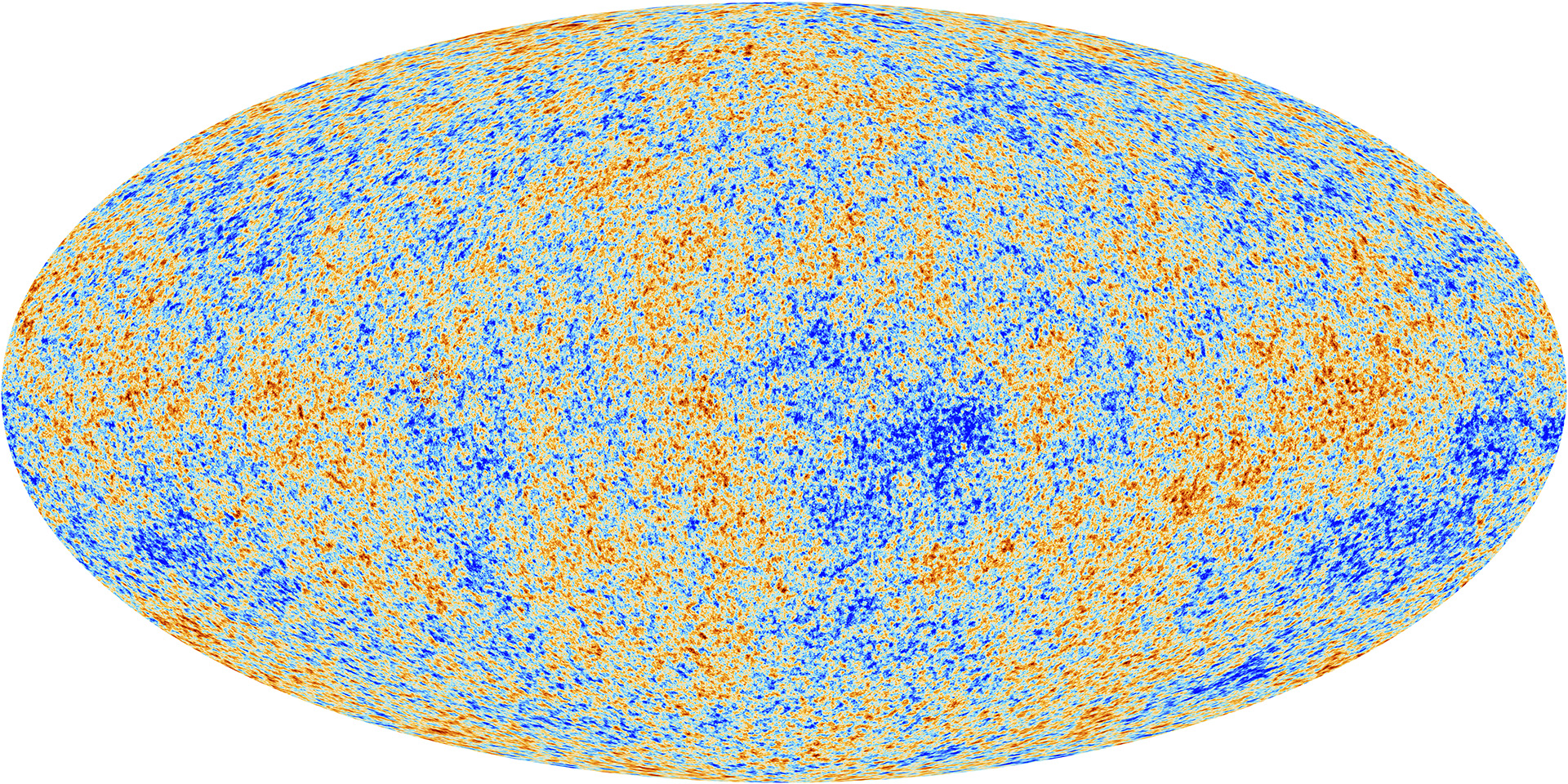
2. The first living cells were merely denser cluster of the intertwined particles.
IF, these first living cells were capable of philosophizing, they would be anti-realists, i.e. they are no independent things outside themselves.
They are so intertwined with all in reality that they would be ingested the particles recycled from their own shit.
Even now, the things you eat at present could have been recycled from your own shit or the shit of Hitler, etc.
3. The first living cells were endowed their own specific boundaries.
The first living cells with cell boundaries were habitualized to seek nutrients external to its boundaries, i.e. independent externality.
At this point, IF, these first living cells were capable of philosophizing, they would be "philosophical realists", i.e. there are things exists independently outside themselves. That is critical for survival.
That 'realism' subsequently became the default of evolution - but it is merely improvised and not the really real thing as what is original reality [1].
This improvised pseudo reality of external things is an illusion - the noumenal and thing-by-itself in contrast to the original reality-is-all-one [1].
This default of evolution [pseudo-real], critical for survival, is then embedded in the evolution of humans.
It was only when human emerged and endowed with intellectual abilities that humans intellectualized dualism i.e. internal vs external and intellectualize external things as intelligible objects [intellectual referent] which are supposedly 'independently external'.
Then, when human evolved with higher self-awareness, they are infected with an existential crisis where the salvation for that is 'an independent externality' i.e. God who can give immediate resolution to their perceived existential crisis.
Because as a human being you are also embedded with the default of external independent reality which is critical for human survival.
But as human evolved further, there is a need to be aware of the original reality, i.e. which is anti-realist, but you are still stuck with default philosophical realism. Worst you are so arrogant that is the true reality, not knowing the truer reality is 1 above. This is a psychological problem.
My antirealism is merely to bring in the realistic view of 1 above, i.e. all things and humans as all-there-is are entangled within a soup of particles, we are all one.
I am not insisting this entanglement with the human condition is the absolute, but critical where it is necessary and relevant, e.g. for QM and moral considerations.
In other perspective, e.g. common sense, the like, we do not have to invoke entanglement and non-independence in a serious manner.
But the consideration of human-based-FSK moral facts is to envision perpetual peace for humanity; to do so, we must revert to the original real reality as in 1 and consider moral facts as conditioned to a human-based moral FSK.
Your denial that there are human-base moral facts will only condone and enable evil to fester in perpetuity.
What is your counter to the above?
-
Peter Holmes
- Posts: 4134
- Joined: Tue Jul 18, 2017 3:53 pm
Re: What could make morality objective?
VA says this: 'What I agree with is Moral Empirical Realism which is conditioned upon a human-based-empirical-moral-FSK which is credible, reliable and high degree of objectivity.' [sic]
Here are some observations on VA's approach.
1 What we call the universe or reality consists of energy/matter. (True.)
2 Human beings consist of the energy/matter that comprises the universe - what we call reality. (True.)
3 Human beings are not separate and different from the reality of which we're a part. (True.)
4 The claim that realism entails belief in the existence of a mind-independent reality is incoherent, because there is no separate and different 'mind' from which reality can - or needs to - be independent. So to make this claim is (usually) to straw man realists.
5 The claim that all features of reality are 'entangled' with each other is a form of realism. By contrast, anti-realism sometimes amounts to the claim that there are no such things as features of reality - so that there are no things that can be entangled.
6 But sometimes, anti-realism really amounts to a rejection of the idea that any one kind of description captures the 'essence' or 'fundamental nature' of reality - as though there could be such a thing.
I think the problem is how VA's 'moral empirical realism' is consistent with her/his professed ontological anti-realism - and, indeed what, anti-realism itself actually amounts to.
Here are some observations on VA's approach.
1 What we call the universe or reality consists of energy/matter. (True.)
2 Human beings consist of the energy/matter that comprises the universe - what we call reality. (True.)
3 Human beings are not separate and different from the reality of which we're a part. (True.)
4 The claim that realism entails belief in the existence of a mind-independent reality is incoherent, because there is no separate and different 'mind' from which reality can - or needs to - be independent. So to make this claim is (usually) to straw man realists.
5 The claim that all features of reality are 'entangled' with each other is a form of realism. By contrast, anti-realism sometimes amounts to the claim that there are no such things as features of reality - so that there are no things that can be entangled.
6 But sometimes, anti-realism really amounts to a rejection of the idea that any one kind of description captures the 'essence' or 'fundamental nature' of reality - as though there could be such a thing.
I think the problem is how VA's 'moral empirical realism' is consistent with her/his professed ontological anti-realism - and, indeed what, anti-realism itself actually amounts to.
-
Veritas Aequitas
- Posts: 15719
- Joined: Wed Jul 11, 2012 4:41 am
Re: What could make morality objective?
Strawman!Peter Holmes wrote: ↑Fri Apr 07, 2023 8:38 am VA says this: 'What I agree with is Moral Empirical Realism which is conditioned upon a human-based-empirical-moral-FSK which is credible, reliable and high degree of objectivity.' [sic]
Here are some observations on VA's approach.
1 What we call the universe or reality consists of energy/matter. (True.)
2 Human beings consist of the energy/matter that comprises the universe - what we call reality. (True.)
3 Human beings are not separate and different from the reality of which we're a part. (True.)
4 The claim that realism entails belief in the existence of a mind-independent reality is incoherent, because there is no separate and different 'mind' from which reality can - or needs to - be independent. So to make this claim is (usually) to straw man realists.
I had stated it is only incoherent and delusional as in your case, where you claim the existence of mind-independent reality, facts [features of reality, just is] is absolute, i.e. no other way.
I agreed, the idea of mind-independence can be assumed within common sense and conventional sense. If one stand on railway track with an oncoming train, there is 'really' a mind independent train and any rational person would jump off the railway track.
But it is incoherent when you insist on applying what is common sense in the case of the deliberation of moral facts.
Nope!5 The claim that all features of reality are 'entangled' with each other is a form of realism. By contrast, anti-realism sometimes amounts to the claim that there are no such things as features of reality - so that there are no things that can be entangled.
The claim that all features of reality are 'entangled' with each other is basically a form of anti-realism; see my 1 above.
Not sure of your point.6 But sometimes, anti-realism really amounts to a rejection of the idea that any one kind of description captures the 'essence' or 'fundamental nature' of reality - as though there could be such a thing.
I claimed that anti-realism deny there are such thing as any 'essence' or 'fundament nature' of reality that exists independently in-itself from the human conditions.
Anti-realism is my case is against your philosophical realism, i.e. that things in reality are independent of the human conditions. To you there are no such things as independent moral facts.I think the problem is how VA's 'moral empirical realism' is consistent with her/his professed ontological anti-realism - and, indeed what, anti-realism itself actually amounts to.
If you agree with the following;
If you agree with the reality of 1,2 and 3, why are you insisting facts are features of reality [just-is] are separate and different from the human conditions?1 What we call the universe or reality consists of energy/matter. (True.)
2 Human beings consist of the energy/matter that comprises the universe - what we call reality. (True.)
3 Human beings are not separate and different from the reality of which we're a part. (True.)
Re: What could make morality objective?
That is ONLY if at least one of 'those things' does ACTUALLY even exist on the moon.Skepdick wrote: ↑Wed Apr 05, 2023 8:02 amSo we can agree that a factual assertion is not a factual assertion?Peter Holmes wrote: ↑Wed Apr 05, 2023 7:53 am For example, we may agree on the use of words in the factual assertion there are pink unicorns on the moon. But that doesn't make it a fact that there are pink unicorns on the moon.
Whether there are; or aren't pink unicorns on the moon depends entirely on the contextual definition of "pink unicorn".Peter Holmes wrote: ↑Wed Apr 05, 2023 7:53 am Point is: there either are or aren't pink unicorns on the moon, and language, and even knowledge, have nothing to do with that.
In any context where "pink unicorn" is ostensively defined to refer to existents resembling the one below, it is a fact that there are pink unicorn on the moon!
Re: What could make morality objective?
Morality can be made objective for Peter Holmes if Peter Holmes has faith that Buddha, Muhammad, or Jesus (or someone else) is the unfailing, unique, and sufficient example of objective morality.
-
Peter Holmes
- Posts: 4134
- Joined: Tue Jul 18, 2017 3:53 pm
Re: What could make morality objective?
Quite. A name is not the named, just as a description is not the described. We can name and describe the thing some of us happen to call the American flag any way we like. We could call it a pink unicorn. Signs are arbitrary. But whether there actually is a thing that we happen to call an American flag or a pink unicorn on what we happen to call the moon has nothing to do with names and descriptions.Age wrote: ↑Fri Apr 07, 2023 9:34 amThat is ONLY if at least one of 'those things' does ACTUALLY even exist on the moon.Skepdick wrote: ↑Wed Apr 05, 2023 8:02 amSo we can agree that a factual assertion is not a factual assertion?Peter Holmes wrote: ↑Wed Apr 05, 2023 7:53 am For example, we may agree on the use of words in the factual assertion there are pink unicorns on the moon. But that doesn't make it a fact that there are pink unicorns on the moon.
Whether there are; or aren't pink unicorns on the moon depends entirely on the contextual definition of "pink unicorn".Peter Holmes wrote: ↑Wed Apr 05, 2023 7:53 am Point is: there either are or aren't pink unicorns on the moon, and language, and even knowledge, have nothing to do with that.
Agreement on the use of signs does not constitute what we call facts and, therefore, objectivity.
In any context where "pink unicorn" is ostensively defined to refer to existents resembling the one below, it is a fact that there are pink unicorn on the moon!
Agreement on the use of signs - 'definitions' - does not constitute what we call facts and, therefore, objectivity. I wonder if there's another way to explain this? I'll keep trying.
-
Iwannaplato
- Posts: 8860
- Joined: Tue Aug 11, 2009 10:55 pm
Re: What could make morality objective?
Then the moon is always being looked at, in the scientific observation sense. It is part of the all and inside the observer.Veritas Aequitas wrote: ↑Fri Apr 07, 2023 7:39 am 1. Reality is all-there-is within a soup of particles [Physics-QM] entangled, intertwined and interacting.
Here there is no separation of internal and external.
Who was looking at them to bring them into existence?2. The first living cells were merely denser cluster of the intertwined particles.
So, were they looked at?3. The first living cells were endowed their own specific boundaries.
Your (??????) anti-realism? There's no inside/outside. The whole thing is mixed and entangled, no real boundaries. You do not exist as a separate thing. This is a hallucination you have not faced yet.My antirealism
His (??????????) denial. Again you have this strange at one time evolutionarily useful 'idea' of separate individuals owning certain qualities or in this case a pattern. There is no interior/exterior. You need to eat your own shit here. Just as everyone may at this moment be eating Hitler's shit that wasn't his to begin with.Your denial that there are human-base moral facts will only condone and enable evil to fester in perpetuity.
And even if there were individuals, my goodness you give that one incredible power.
-
Iwannaplato
- Posts: 8860
- Joined: Tue Aug 11, 2009 10:55 pm
Re: What could make morality objective?
Perhaps too playfully - and with leaps I don't think he'll be able to follow - I responded to his response to you here:Peter Holmes wrote: ↑Thu Apr 06, 2023 12:16 pmOkay, but that 'realist basis' necessarily refutes VA's argument against realism. Those first living cells either were or weren't real things that sought nutrients outside themselves. If they were real, then they and those nutrients actually existed, so they were (silly expression!) 'intelligible referents'. They weren't and aren't illusions. VA's central claim is flat-out false.Iwannaplato wrote: ↑Thu Apr 06, 2023 10:55 amCall me crazy but I think there just might be some realist basis for his conclusions and descriptions below. I, personally, think it was a good idea that the first living cells sought nutrients outside themselves, not inside themselves. I suppose this looking out there created the nutrients.Peter Holmes wrote: ↑Thu Apr 06, 2023 10:09 am VA argues that our 'yearning for an intelligible referent' explains the 'delusion' of realism - belief that there are real things in the universe, such as human beings.
Question. What is it that yearns for an intelligible referent? Is it an illusion?This yearning for intelligible referent [illusory] is a result of an evolution default for things external to yourself that has been habituated since 200k years ago and up to 4 billion years ago when the first living cells seek their nutrient from outside themselves.
I think that, like all all of its varieties, VA's anti-realism is fake, which is why s/he can combine it with moral realism and objectivism: 'there are moral facts, because (whisper it) there are facts, after all.'
viewtopic.php?p=633778#p633778
But yes, I have asked in a few different ways for him to explain his ontological anti-realism in relation to his moral realism. Do morals need to be looked at to exist? And where does one look?
How the heck does he know what happened on earth 4 billion years ago, for example? What does that mean in anti-realism? I think there are solutions but I don't think he'll be happy with what they entail.
-
FlashDangerpants

- Posts: 9176
- Joined: Mon Jan 04, 2016 11:54 pm
Re: What could make morality objective?
Don't forget that he has a massive hard on for science as the most "credible" FSK, but the credibility of any FSK derives from the number of people that accept it as the provider of answers to questions. The science FSK is only credible in those terms because most people believe it refers back to real natural facts about the existing world. So he only grants science all that credibility on the basis of a superstitious but mistaken belief that people have about it. So he's an FSK-Antirealist too.Iwannaplato wrote: ↑Fri Apr 07, 2023 11:53 amPerhaps too playfully - and with leaps I don't think he'll be able to follow - I responded to his response to you here:Peter Holmes wrote: ↑Thu Apr 06, 2023 12:16 pmOkay, but that 'realist basis' necessarily refutes VA's argument against realism. Those first living cells either were or weren't real things that sought nutrients outside themselves. If they were real, then they and those nutrients actually existed, so they were (silly expression!) 'intelligible referents'. They weren't and aren't illusions. VA's central claim is flat-out false.Iwannaplato wrote: ↑Thu Apr 06, 2023 10:55 am
Call me crazy but I think there just might be some realist basis for his conclusions and descriptions below. I, personally, think it was a good idea that the first living cells sought nutrients outside themselves, not inside themselves. I suppose this looking out there created the nutrients.
I think that, like all all of its varieties, VA's anti-realism is fake, which is why s/he can combine it with moral realism and objectivism: 'there are moral facts, because (whisper it) there are facts, after all.'
viewtopic.php?p=633778#p633778
But yes, I have asked in a few different ways for him to explain his ontological anti-realism in relation to his moral realism. Do morals need to be looked at to exist? And where does one look?
How the heck does he know what happened on earth 4 billion years ago, for example? What does that mean in anti-realism? I think there are solutions but I don't think he'll be happy with what they entail.