I raise this thread as reference to provide the answer just in case if anyone do not know what a FSK is.
What is a Framework and System of Knowledge [FSK] can be understood via the following;
What is a Framework [conceptual and intellectual]?
What is a System?https://en.wikipedia.org/wiki/Conceptual_framework
A conceptual framework is an analytical tool with several variations and contexts. It can be applied in different categories of work where an overall picture is needed. It is used to make conceptual distinctions and organize ideas. Strong conceptual frameworks capture something real and do this in a way that is easy to remember and apply.
The use of the term conceptual framework crosses both scale (large and small theories)[4][5] and contexts (social science,[6][7] marketing,[8] applied science,[9] art[10] etc.). Its explicit definition and application can therefore vary.
Conceptual frameworks are particularly useful as organizing devices in empirical research. One set of scholars has applied the notion of conceptual framework to deductive, empirical research at the micro- or individual study level.
https://en.wikipedia.org/wiki/System
A system is a group of interacting or interrelated entities that form a unified whole.[1] A system, surrounded and influenced by its environment, is described by its boundaries, structure and purpose and expressed in its functioning. Systems are the subjects of study of systems theory.
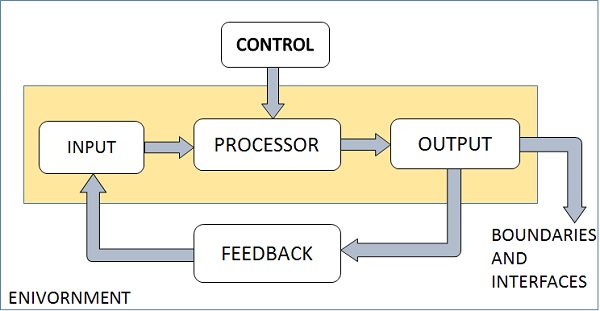
Framework and System of knowledge [FSK]
What is a Framework and System of knowledge [FSK] can be understood by combining the above two definitions [Framework & System] with Knowledge.
https://en.wikipedia.org/wiki/Knowledge
A Framework and System of Knowledge is an imperative structure and mechanism as a ground in the establishment of what is Fact.
What is a Fact? [not as in Analytic Philosophy]
viewtopic.php?f=8&t=29486
From the above it is noted, 'what is fact' must be qualified and conditioned to its specific FSK with its specific constitution [explicit or implied]. There are other FSKs, i.e. scientific [& its subs], legal, economics, medical & etc. of other fields of knowledge.A fact is a thing that is known to be consistent with objective reality and can be proven to be true with evidence.
For example, "This sentence contains words." is a linguistic fact, and
"The sun is a star." is a cosmological fact.
Further, "Abraham Lincoln was the 16th President of the United States." and "Abraham Lincoln was assassinated." are also both facts, of history.
https://en.wikipedia.org/wiki/Fact#In_law
Since FSKs are constructed by humans, there is a degree of credibility to each specific FSK.
The most credible FSK with the highest veracity at present is the Scientific FSK as the standard bearer to compare other FSKs relatively.
Why the Scientific FSK is the most credible at present?
see: viewtopic.php?p=489333#p489333
The above is a description of what is a Framework and System of Knowledge [FSK] or Reality [FSR].
Here's ChatGPT's view:
When asked of the FSK relevance to Morality:ChatGPT wrote:Yes, the term "A Framework and System of Knowledge" is a meaningful and valid phrase to describe the structured organization and interrelatedness of knowledge in a particular field or discipline, such as science. It acknowledges that knowledge is not just a collection of isolated facts, but is rather an interconnected system of ideas and concepts that can be organized and studied within a framework or structure.
Using this phrase to describe scientific knowledge implies that there is a systematic process by which scientific facts are discovered, verified, and integrated into a broader understanding of the natural world. This can include concepts such as scientific method, peer review, and consensus-building within the scientific community.
Overall, while the specific phrase "A Framework and System of Knowledge" may not be commonly used, it accurately reflects the way that knowledge is organized and understood within many academic fields.
Discuss?? Alternative Views?Yes, the concept of a framework and system of knowledge can also be applied to the field of morality. In this case, the term would refer to the organized and structured understanding of moral principles and ethical theories within the discipline of ethics.
Within ethics, there are various frameworks and systems of knowledge that help to guide moral reasoning and decision-making. For example, consequentialist theories such as utilitarianism focus on the outcomes or consequences of actions, while deontological theories such as Kantian ethics prioritize following moral duties or rules regardless of their outcomes. Other ethical frameworks include virtue ethics, care ethics, and feminist ethics.
By understanding these different frameworks and systems of knowledge, individuals can more effectively navigate moral dilemmas and make informed ethical decisions. Overall, the concept of a framework and system of knowledge can be applied to many different fields, including both scientific and moral domains.


