My preference for a pathway to a sustainable idea of Cosmos is primarily absolute idealism . I say "Cosmos" according to Alexis J's definition of cosmos, and people who don't believe in Cosmos are not going to be able to discuss metaphysics.Alexis Jacobi wrote: ↑Mon Nov 21, 2022 1:21 pmHere we are -- again -- at an interesting juncture. A recapitulation is needed. As I've said all along I am dealing with my own self, my own beliefs, my own relationship to Occidental culture, but also to existential issues, spirituality. My core question is Why do we engage in religion? What are we attempting? What are we trying to achieve? What do we hope will result from our effort? When these questions are asked they have to be answered. And in the answers, even if they are jerky and un-thorough, lie all the primary metaphysical and existential issues.Alexis Jacobi wrote: ↑Mon Nov 21, 2022 1:54 amA blasphemer is a disrespecter of a sacred truth. Either as a deliberate or as an unconscious action.
All ‘metaphysical’ and Traditional truths are of a metaphysical sort. The idea of ‘sacredness’ is a metaphysical perception. The metaphysical world is an idea world and it is invisible. Where do ‘ideas’ reside? Where do they originate?
Here is another interesting angle: if I could not or did not understand the higher, metaphysical implications of certain Christian assertions I could only ‘blaspheme’ them and my (apparent) attack on pitiable IC would be ‘blasphemous’.
Behind and beyond many Christian assertions is a metaphysical world of meaning.
I have to trace 'trajectory'. I am a product of *California radicalism*. In the course of cultural time 'they' broke with all the links to our established traditions. California can be seen as a culmination of radical cultural processes that began, strangely enough, in the Burned-Over District.
All the unusual, the radical, the inventive, the outrageous, religious interpretations, the tweaks, of standard Christian doctrine began there.
The Latter Day SaintsWestern New York was still a United States frontier during the early Erie Canal boom, and professional and established clergy were scarce. Many of the self-taught people were susceptible to enthusiasms of folk religion. Evangelists won many converts to Protestant sects, such as Congregationalists, Baptists, and Methodists. Converts in nonconformist sects became part of numerous new religious movements, all of which were founded by laypeople during the early 19th century and included the following:
The Millerites (Seventh Day Adventism)
The Fox sisters of Hydesville (spiritualism, spirit sessions, ancestor communication)
The Shakers
The Oneida Society (radical interpretations of social relations, open marriage, communally raised children)
The Social Gospel Movement (American religious-progressivism which possibly can be seen as a root of contemporary 'social justice' as a religious expression)
What I have suggested is the tracing of causation. Nothing in our present rose out of a vacuum. Even if we do not recognize it there is no one of us who is not a causal product of cultural shifts, always with radical underpinnings, that began in former times. Not the least being 1789 (the French Revolution) and 1848:
See the Oneida Community in California:The Revolutions of 1848, known in some countries as the Springtime of the Peoples or the Springtime of Nations, were a series of political upheavals throughout Europe starting in 1848. It remains the most widespread revolutionary wave in European history to date.
So, as it turned out, and as a product of California Radicalism, I was as a person thrust out in a centrifugal manner from the radical cultural matrix. Radicalism was 'normalcy'. It was normal to consider and to seek out not the conventional, not the standard, not the typical, but everything that was a twist on those things. I think to understand American post-Sixties radicalism one has to understand the trajectory I have outlined. No part of it began in a vacuum. It all has direct antecedents and they can be found by 'tracing back'.Bible communism was the governing principal of the Oneida Perfectionists, the most successful of the American utopian movements. This Christian form of collectivism—no sin, no private property, no monogamy—was transported to California in the 1880s, when the Oneida community broke up. As the historian Spencer C. Olin, Jr. explains, some of the founders of Orange County were members of this “most radical social experiment in American history.”
It was when I read Robert Bork's Slouching Toward Gomorrah that I first encountered a counter-revolutionary or reactionary idea-current. He brings out a powerful and a lucid critique of Sixties Radicalism and he shows how these *ideologies*, or moods, tended directly to undermine 'established hierarchies' in all important domains. Youth, evidently, felt justified and felt empowered to overturn things that had taken generations and indeed centuries to construct. Thus: the very foundations of the Occidental structures were attacked. Not every aspect of these radical movements was destructive of course. And some of it involved 'building' and 'restoration' in accord with genuine iterations of established valuations.
But if one takes it all 'on the whole' and one turns one's gaze to the end-result of these cultural machinations, one quickly notices that radicalism has swept through the system but essentially through the mental system of people generally. Our world, as it happens, certainly our *American world* (though this is an English forum) is in substantial disarray and disorder. It is one the verge of dis-unification. No one agrees with anyone. Everyone has been 'atomized' and cast back into their subjectivity. And from that subjectivity they 'speak' and 'talk' and 'see' and 'complain' and carry forth various forms of 'activism'.
All that I have tried to do here, very quickly, very crudely, is to point to the issue of 'causal chains'.
Curiously, Immanuel Can is here (whether he knows this or not) as a representative of an Old Order. He is the only one participating in this thread (aside from myself but I require special explanation) who has remained within the Old Order. His Order, I must say, is Radical Protestantism and it has far more to do with 1789 and 1848 than he realizes (I use these dates as symbols and as markers as well as references to real influential events), but he manifests himself here as an idea-set that clings to an Old Metaphysical Order which, for all those who write here, has lost its sense of connection to anything *real*. He therefore appears here as a sort of antithetical mad-man to those who, genuinely, feel they have broken with outmoded, useless, destructive currents which were and are involved in irreality. What he proposes, as-against what we have become as Moderns, is perceived as lunacy and retrogression by all who critique him. The critiques are *violent* and *cutting* and they are filled with an intensity, a rebellious and determining intensity which point to far more than is apparent. Why? Because without knowing it he does present himself as a 'metaphysical anchor' to people who have spun-out of the Old Order and, like the *atoms* I refer to, can do little else but declaim their *independence* for any such outmoded structures. They sense that the Old Order is or would be a *confining structure* and they cannot, even if they would wish to, manage to *fit themselves back into* the former confining idea-structures.
So they must (here I bring out the idea of necessity) beat on him mercilessly. You gotta kill the messenger, right?
When I say that it is possible to examine the metaphysical structures, and the metaphysical verities, from a perspective outside of his system (the Evangelical Christian and the Christian system generally) I do indeed refer to ideas, to 'realities' if you'll accept the term, that antecede Christianity, Judaism, the Cradle of Civilization, and inevitably the very Earth itself and even more relevantly the entire manifestation of this Cosmos:
Therefore a possibility opens: to speculate, to propose, to perceive, that realms of ideas exist, and will always exist, that supercede and also precede any particular and local manifestation, in any culture, in any time-frame, in any discreet manifestation that may have existed or that ever will exist. I went over this with Immanuel Can months ago and he showed himself absolutely closed to the idea: If In the Beginning was the word (and if we are talking about the full implication of Logos) then the implication is of an Order that exists, and must necessarily exist, outside of specific time. So that is why I say that all ideas, and all metaphysics, existed and were as real as any manifest thing, as any of those things which have become manifest in our world.cos·mos (kŏz′məs, -mŏs′, -mōs′)
n.
1. The universe regarded as an orderly, harmonious whole.
2. An ordered, harmonious whole.
3. Harmony and order as distinct from chaos.
[Middle English, from Greek kosmos, order.]
The reference, of course, is to the contrast between 'becoming' and 'being'. The world we are in 'becomes' (is becoming) but we have the capability to envision, and to hold to, ideas that are part of an invisible world of being. We can, through a revolutionary set of convictions, lose sight of that *reality* (this is where Dubious' essential declarations are located) and we can also fall back, or try to fall back, into Old Modes which have been established and function like 'shelters' or 'old houses' or, put in other terms, as lunatic asylums for people who, in their own strange way, have 'gone crazy' as a result of the centrifugal movements I have made reference to, and seek to 'fit themselves back into' structures that can no longer work. Kind of like a Hermit Crab trying to fit himself back into a house-shell he abandoned but since there is no other, and he is desperate, he must try to jam himself back into.
The alternative? A complete revision of Metaphysics. Here, the core questions come up: What am I attempting? What is it I hope to achieve? Why would I even be concerned with *metaphysics*? What is even being talked about when one makes reference to 'metaphysical anchors' and to the notions and ideas that pertain to Being (to ideas, to foundations, that are constant and indeed eternal)?
The centrifugal is countered by the centripetal.
The idea of ontic substance is a fertile("centrifugal") idea and I see no reason to dispense with it. Scepticism likewise is "centrifugal". When you marry ontic substance and scepticism you get idealism. Bishop Berkeley is extremely sceptical and an idealist however a bishop has to include God.
Regarding ontic substance it's common knowledge what Descartes's error was: he presumed his ego existed. He presumed God existed. Absolute idealists sans God can't deny that there is something going on. Even nihilists can't deny there is something going on.There are no egos, therefore the only elemental ontic substance is experience.
Happily, experience can be absolute.



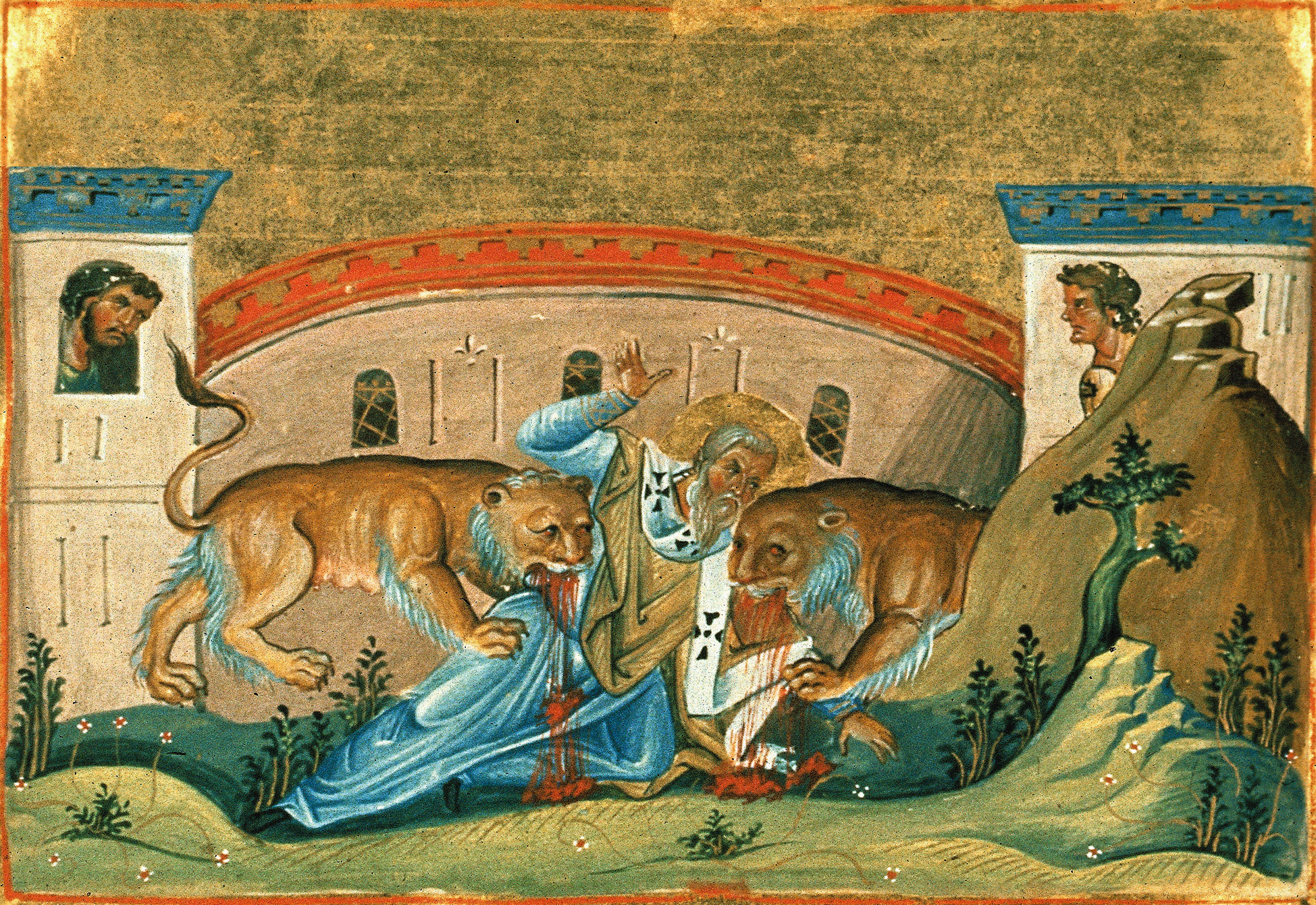

 Not a "whimper," chum. I'm not asking for...nor expecting...your sympathy. I know I won't get it. I don't expect it. I expect exactly what I get. Jesus Christ Himself told us it would be so.