Christianity

For all things philosophical.

Moderators: AMod, iMod

Harry Baird
Posts: 1085
Joined: Sun Aug 04, 2013 4:14 pm

Re: Christianity

Post by Harry Baird »

Immanuel Can wrote: Tue Nov 15, 2022 2:41 pm
Harry Baird wrote: Tue Nov 15, 2022 6:02 am If you were right, then you would be able to provide a variety of sources which affirm that (that which has come to be known as) Euthyphro's Dilemma is based on disagreements among the gods.
Well, I think any fair reading makes it abundantly obvious.
So, you can't provide even one source, let alone a variety - which, of course, was inevitably going to be the case, because you are simply wrong here, despite being unable to acknowledge as much.
Immanuel Can wrote: Tue Nov 15, 2022 2:41 pm a division between "gods" and "holy" was essential to the argument
"God[s]" and "holy" are not synonyms, and so, in this sense, a "division" between those words is not only inevitable but correct.

And, again, the sophistical "solution" to the Dilemma to which you allude is not a solution at all, but simply leads to the minor reformulation of the Dilemma that (again) I pointed out in this post.
Immanuel Can wrote: Tue Nov 15, 2022 2:41 pm You don't know my motives or my character
True, but I know your forum dynamics. There's plenty to be inferred from those if you are not trolling.
User avatar
Immanuel Can
Posts: 27612
Joined: Wed Sep 25, 2013 4:42 pm

Re: Christianity

Post by Immanuel Can »

Alexis Jacobi wrote: Tue Nov 15, 2022 11:44 pm Not that I cannot conceive of a supreme or originating deity but rather because it leads to a monopole within thinking and conceptualization that must claim possession of the god so defined.
Your sentence doesn't make sense. It says "conceptualization claims..."

I think you're up a "monopole" without a paddle. :wink:
User avatar
Alexis Jacobi
Posts: 8301
Joined: Tue Oct 26, 2021 3:00 am

Re: Christianity

Post by Alexis Jacobi »

You understand it perfectly.
Belinda
Posts: 10548
Joined: Fri Aug 26, 2016 10:13 am

Re: Christianity

Post by Belinda »

Immanuel Can wrote: Tue Nov 15, 2022 11:58 pm
Alexis Jacobi wrote: Tue Nov 15, 2022 11:44 pm Not that I cannot conceive of a supreme or originating deity but rather because it leads to a monopole within thinking and conceptualization that must claim possession of the god so defined.
Your sentence doesn't make sense. It says "conceptualization claims..."

I think you're up a "monopole" without a paddle. :wink:
A supreme or originating deity does not necessarily lead to hierarchical control by monopoly . If the supreme or organising deity is no more than just that and we are content to remain negative about any other of the deity's attributes then nobody can claim the deity's attributes for their own purposes.
User avatar
Immanuel Can
Posts: 27612
Joined: Wed Sep 25, 2013 4:42 pm

Re: Christianity

Post by Immanuel Can »

Alexis Jacobi wrote: Wed Nov 16, 2022 12:00 am You understand it perfectly.
I can only go with what you write. I don't read your mind. And what you wrote makes no sense.
User avatar
Immanuel Can
Posts: 27612
Joined: Wed Sep 25, 2013 4:42 pm

Re: Christianity

Post by Immanuel Can »

Belinda wrote: Wed Nov 16, 2022 12:05 am
Immanuel Can wrote: Tue Nov 15, 2022 11:58 pm
Alexis Jacobi wrote: Tue Nov 15, 2022 11:44 pm Not that I cannot conceive of a supreme or originating deity but rather because it leads to a monopole within thinking and conceptualization that must claim possession of the god so defined.
Your sentence doesn't make sense. It says "conceptualization claims..."

I think you're up a "monopole" without a paddle. :wink:
A supreme or originating deity does not necessarily lead to hierarchical control by monopoly .
You think he meant "monopoly"? You mean he thinks that people can't be, say, democratic, if they are Theistic? That would hardly explain the existence of the United States, for sure.

Likewise, there's nothing wrong with hierarchy -- it's just an ordering of things by criteria, which is not in any way evil. And I don't know why he would prefer, say, a "dualism" to a "monopoly." My best guess is that he just doesn't like the idea that somebody could ever be right, and others ever wrong.

And if so, that sort of attitude is a kind of an adolescent taste of a permissive society, rather than a product of mature thinking. But I can't say that's his position, because he's just not clear enough.
If the supreme or organising deity is no more than just that and we are content to remain negative about any other of the deity's attributes then nobody can claim the deity's attributes for their own purposes.
Now I'm not sure about your sentence.

"Remain negative"? Do you mean, "To know nothing"? Or do you mean to "refuse"? Or "to do something 'negative'?" I can't figure out what you're aiming for there.

But again, the abuse of something never constitutes any argument against its right use. If there is a truth about the nature of God, then to know it is the only good option. To "remain negative" artificially is devoid of value.
Belinda
Posts: 10548
Joined: Fri Aug 26, 2016 10:13 am

Re: Christianity

Post by Belinda »

Immanuel Can wrote: Wed Nov 16, 2022 12:40 am
Belinda wrote: Wed Nov 16, 2022 12:05 am
Immanuel Can wrote: Tue Nov 15, 2022 11:58 pm
Your sentence doesn't make sense. It says "conceptualization claims..."

I think you're up a "monopole" without a paddle. :wink:
A supreme or originating deity does not necessarily lead to hierarchical control by monopoly .
You think he meant "monopoly"? You mean he thinks that people can't be, say, democratic, if they are Theistic? That would hardly explain the existence of the United States, for sure.

Likewise, there's nothing wrong with hierarchy -- it's just an ordering of things by criteria, which is not in any way evil. And I don't know why he would prefer, say, a "dualism" to a "monopoly." My best guess is that he just doesn't like the idea that somebody could ever be right, and others ever wrong.

And if so, that sort of attitude is a kind of an adolescent taste of a permissive society, rather than a product of mature thinking. But I can't say that's his position, because he's just not clear enough.
If the supreme or organising deity is no more than just that and we are content to remain negative about any other of the deity's attributes then nobody can claim the deity's attributes for their own purposes.
Now I'm not sure about your sentence.

"Remain negative"? Do you mean, "To know nothing"? Or do you mean to "refuse"? Or "to do something 'negative'?" I can't figure out what you're aiming for there.

But again, the abuse of something never constitutes any argument against its right use. If there is a truth about the nature of God, then to know it is the only good option. To "remain negative" artificially is devoid of value.
Criteria always pertain to persons, and there is always a minority of elite persons at the top of hierarchies.

By "remain negative about the deity I refer to apophatic or negative theology.
apophatic
/ˌapəˈfatɪk/
adjectiveTHEOLOGY
(of knowledge of God) obtained through negating concepts that might be applied to him.
User avatar
Immanuel Can
Posts: 27612
Joined: Wed Sep 25, 2013 4:42 pm

Re: Christianity

Post by Immanuel Can »

Belinda wrote: Wed Nov 16, 2022 12:48 am Criteria always pertain to persons,
Not at all.

There are criteria for dogs and cats, and for earthquakes and diamonds and fish.
and there is always a minority of elite persons at the top of hierarchies.
Also not the case. There are hierarchies that are gradual, and hierarchies that are in increments, and most don't even pertain to persons.

I guess you must mean "governmental hierarchies," or something very limited, like that.
By "remain negative about the deity I refer to apophatic or negative theology.
apophatic
/ˌapəˈfatɪk/
adjectiveTHEOLOGY
(of knowledge of God) obtained through negating concepts that might be applied to him.
That, by itself, leaves one with no knowledge of God at all. One only knows what He is not, and God remains a void concept.

Hardly desirable, unless it were necessary. And it's not.
Gary Childress
Posts: 11753
Joined: Sun Sep 25, 2011 3:08 pm
Location: It's my fault

Re: Christianity

Post by Gary Childress »

Immanuel Can wrote: Wed Nov 16, 2022 3:13 am
Belinda wrote: Wed Nov 16, 2022 12:48 am Criteria always pertain to persons,
Not at all.

There are criteria for dogs and cats, and for earthquakes and diamonds and fish.
and there is always a minority of elite persons at the top of hierarchies.
Also not the case. There are hierarchies that are gradual, and hierarchies that are in increments, and most don't even pertain to persons.

I guess you must mean "governmental hierarchies," or something very limited, like that.
By "remain negative about the deity I refer to apophatic or negative theology.
apophatic
/ˌapəˈfatɪk/
adjectiveTHEOLOGY
(of knowledge of God) obtained through negating concepts that might be applied to him.
That, by itself, leaves one with no knowledge of God at all. One only knows what He is not, and God remains a void concept.

Hardly desirable, unless it were necessary. And it's not.
Knowledge of what something is not, counts as knowledge of that something in question.
User avatar
Immanuel Can
Posts: 27612
Joined: Wed Sep 25, 2013 4:42 pm

Re: Christianity

Post by Immanuel Can »

Gary Childress wrote: Wed Nov 16, 2022 3:21 am Knowledge of what something is not, counts as knowledge of that something in question.
It doesn't really. It gives, at most, "silhouette" type knowledge, a rough outline. You get what the space not occupied by the thing in question, but the center is all black. It's devoid of details.
Dubious
Posts: 4637
Joined: Tue May 19, 2015 7:40 am

Re: Christianity

Post by Dubious »

Alexis Jacobi wrote: Tue Nov 15, 2022 3:38 pmThe person *Immanuel Can* is not relevant to the struggle we are involved in. What we oppose is the *idea-constructs* to which he has wedded himself. Oddly, that puts me in a position of needing to argue against his metaphysical structures. These are giant assertions about what the world is and about the ruling structure that, in this metaphysics, is understood to rule the entire manifestation.
In spite of your insightful negations, you do him far too much honor. For one thing, there is no metaphysical structure to the idea that one must believe in a specific entity to be saved. It's nothing more than a demand that you must do this to achieve that resolving to a single decision to accept or not as IC has himself many times made abundantly clear. Even metaphysics requires a degree of logic to come across as viable. Where's the metaphysics in any of this?

What feels discordant to me about you is that like Don Quixote you strive against that which is essentially obsolete in the name of a specific type of metaphysic which it never really was to start with but still thoroughly acceptable to any deranged fundamentalist.

My view is this...

Anyone so controlled by extreme fundamentalism, which knows no other than itself, lacks all the essential preconditions for judging the merits of others who aren't likewise so debilitated. If someone doesn't think and only responds with glib replies denoting his inability to respond then that person, from a philosophic point of view, should be considered mentally deaf, tantamount to being brain-dead where instead of silence you get only gibberish.

Thinking doesn't glide on a monorail; it's a multilane highway allowing for detours and exits, routes taken based on one's power of deciding or arguing for the approach. No such decisions are necessary for a fundamentalist who has reached his destination, time in such a mind, having subsumed the goal, the conditions for being eschatologically deterministic, in effect, finalized.

Absolutes cannot be argued with; only the variables of uncertainty, which require a modicum of cerebral processing based on one's neuronal flexibility to resolve. A fundamentalist is a person thoroughly immunized against any such process...from whom nothing can be gleaned or learned, and as such, totally ignorable. One can't survive in a desert so barren it can't even grow a decent cactus! What's the point of contending with someone whose mind perennially remains the same as do its responses yielding nothing more than simplistic point-blank negations especially so the more viable the argument.

The IC type mind is a thorough write-off as a communication device capable of arguing on only one channel, everything extraneous being simply noise.
Alexis Jacobi wrote: Tue Nov 15, 2022 3:38 pmHere I can say with surety that the gist of the unfolding conversation will move into a difficult, a fraught, and also a dangerous zone. Simply put the rejection of Christianity is the rejection of Judaism. Now, the rejection of Judeo-Christianity definitely brings one into the zone of The Culture Wars and directly into ideological, cultural and other sorts of struggles that are playing out today.
But it also means -- that is to say that the rejection of the Cosmic Order on which the Christian vision and metaphysics is constructed means -- that you will either do without any sort of defined order and accept the *erasure of the horizon* with no replacement offered, or you will have to define a new order, a new conceptual order that will become common, accepted and even perhaps universal.
The way I see it, the rejection of Christianity is the rejection of Judaism for Gentiles which Judaism itself rejected. Judaism never needed the deformation of Christianity and certainly would have been better off had it never existed. Both Christianity and Islam, on the other hand, required a cradle called Judaism, both living abortions of its original mother, the former two themselves being in a culture war with each other but ironically historically united against that which fostered it.

We can live within a vacuum for a while ameliorated by the ghosts of beliefs called tradition which shrouds the yawning abyss underneath when no-longer upheld by actual or real belief. Tradition remains and operates as an intermediate, an anodyne, a plateau, however long it lasts among individual groups, until a new existential paradigm comes into being causing the after-glow of belief, i.e. traditions themselves to subside.

An epochal belief never disappears simply by the assertion that god is dead whose demise, in fact, is a psychic process and never simply an event. It's a development which negates, forces transitions into consciousness and born again in some new existential order of metaphysic which we are minimally aware of while it's happening. We have the imagination and the need; both will conjoin to create it. Unless globalism manifests itself completely (very unlikely), every civilization will brand itself accordingly since former beliefs, at their very center, are rarely ever completely dethroned. In that respect I regard culture wars, religious or secular as always persisting.
Alexis Jacobi wrote: Tue Nov 15, 2022 3:38 pmIt is obvious to me, and I assume it is obvious to all who write here, and it is certainly obvious to Immanuel Can (as chief representative of the Christian metaphysic) that the rejection of Judeo-Christianity has immense ramifications. But as we see (if we are paying attention to contemporary events) the cultural and the ideological battles rage right in front of us.
If the rejection of Judeo-Christianity has immense ramifications it's only because its ancient/medieval Weltanschauung, replete with abundant errors has been dismissed, at best functioning as a precursor to another, as yet unidentified stage whose locus has not yet been established. What remains contemporary for all times are the secular power plays which have never ceased to whose purpose god and its metaphysical establishment were both suborned to serve....in effect, a transcendent non-secular power serving a secular will.
Alexis Jacobi wrote: Tue Nov 15, 2022 3:38 pmSo I referred to *the infiltration of eastern ideas* in the form of Judeo-Christianity and to the prospect of *recovery by a people of those attitudes and elements that can define a new and better modality*.

For up against the gods
No man
Should measure himself.
If he raises himself
And touches the stars
With his head,
Nowhere can the insecure
Soles of his feet take grip,
And he will be the plaything
Of the winds and the clouds.
If he stands firm
On vigorous bone
On well-established,
Enduring soil,
He will reach a height
To compare himself
Only to the oak
Or the vine.
As for Goethe, though a countryman, I'm not obliged to consider him as more than he really is or appears to be. Having said that, note the last eight lines in which he affirms the lack of any metaphysical dimension to our existence. The forces of nature are the indifferent gods, for nature never judges; it only acts and reacts.

The two following poems also by Goethe are further descriptions of these non-metaphysical transitions and transformations of nature.

1. PARABASIS
Joyful many years ago
Did the Spirit use his powers
To examine and to know
How creative nature flowers.
'Tis the eternal One and All,
Variously revealed, I find :
Small the great and great the small,
Each according to its kind;
Given to change, and then duration,
Near and far, and far and near,
Shaping form, then transformation-
'Tis for wonderment I'm here.

2. EPIRRHEMA
Students of nature, make this your goal:
Heed the specimen, heed the Whole.
Nothing is inside or out,
What's within must outward sprout.
So without delay one sees
Sacred open mysteries.
Truth in semblance never shun,
Solemn sport uphold,
What's alive cannot be One,
It's always manifold.
Belinda
Posts: 10548
Joined: Fri Aug 26, 2016 10:13 am

Re: Christianity

Post by Belinda »

Immanuel Can wrote: Wed Nov 16, 2022 3:13 am
Belinda wrote: Wed Nov 16, 2022 12:48 am Criteria always pertain to persons,
Not at all.

There are criteria for dogs and cats, and for earthquakes and diamonds and fish.
and there is always a minority of elite persons at the top of hierarchies.
Also not the case. There are hierarchies that are gradual, and hierarchies that are in increments, and most don't even pertain to persons.

I guess you must mean "governmental hierarchies," or something very limited, like that.
By "remain negative about the deity I refer to apophatic or negative theology.
apophatic
/ˌapəˈfatɪk/
adjectiveTHEOLOGY
(of knowledge of God) obtained through negating concepts that might be applied to him.
That, by itself, leaves one with no knowledge of God at all. One only knows what He is not, and God remains a void concept.

Hardly desirable, unless it were necessary. And it's not.
Criteria for dogs, cats,coffee, angels, souls, soup, and so forth pertain to persons. Criteria for my dog's good behaviour include not biting people.My dog's criterion for not biting people is whether or not the person is a friend.
Briefly, criteria are held by subjects and apply to objects. 'Pertain' means pertain to either subject or object or both.

Hierarchies remain hierarchies even when the jumps in rank are undetected or undetectable. There is always an elite group or individual at the top of a social hierarchy.

Your criticism of apophatic theology is valid. But please remember I said God is defined by one function i.e. organiser and sustainer of all. There is always one function and only one definitive function. That definitive function may also be expressed as 'God is good': or 'God is just': or even 'God is the crocodile species'.
Because evil is absence of good it's impossible to define God as absence of good, absence of justice, or absence of the crocodile species respectively. Neither can anyone define God as absence of organisation and sustenance if His defining criterion is Organiser and Sustainer of all.

True as you say,"that leaves one with no knowledge of God at all". it does not follow that, in the absence of a full knowledge of God,the only recourse is to a void concept. The gaps in knowledge are filled by creative imagination which is itself a good that is a requisite of the human psyche or soul.
User avatar
Immanuel Can
Posts: 27612
Joined: Wed Sep 25, 2013 4:42 pm

Re: Christianity

Post by Immanuel Can »

Belinda wrote: Wed Nov 16, 2022 11:55 am Criteria for dogs, cats,coffee, angels, souls, soup, and so forth pertain to persons.
No, actually: many don't.
Hierarchies remain hierarchies even when the jumps in rank are undetected or undetectable.
Hierarchies often good, and always inescapable. They're not bad for being hierarchies.

A "hierarchy" happens whenever a criterion is applied to anything. You are "more feminine" than I am: that's hierarchy. Does that make you an elitist? Are you oppressing me? Have you done me an injustice? Do you owe me reparations? I am taller than you are (I can safely assume). Does that mean I'm "oppressing" you? Am I an elitist, now? But maybe you're more intelligent, creative, wise or sensitive than I. That makes you the elitist, the oppressor, since I am not equal with you in those criteria: should I pull you down to my level, then? Do you owe me to suppress what you are, in order to make me feel "equal"?

Moreover, there is absolutely no way for you and I to remain the unique people we are without hierarchy appearing between us. For every feature you have, or I have, one is above the other in hierarchy. In fact, it is utterly impossible to conceive of any two people who have ever existed who do not exist in a hierarchical order of some kind.
There is always an elite group or individual at the top of a social hierarchy.

A "social" one? You mean like a government, or an institution? Sure. That's always going to be the case. But it's not necessarily evil.
I said God is defined by one function i.e. organiser and sustainer of all.
Not Biblically, He's not. But maybe yours is a diffferent "god."
Because evil is absence of good it's impossible to define God as absence of good, absence of justice, or absence of the crocodile species respectively.
Non-sequitur.

If evil is the absence of good, it does not follow it's impossible to define God...in any terms.
True as you say,"that leaves one with no knowledge of God at all". it does not follow that, in the absence of a full knowledge of God,
Here you shift terms illegitimately.

I said, "no knowledge of God at all." You said, "true," but then "absence of full knowledge of God." The right response is, "We have NO knowlege of God that is not silhouette, external stuff: God himself would then be a huge cosmic blank in the middle of all our negations.
The gaps in knowledge are filled by creative imagination...
You mean, by making stuff up.

If we have no knowledge, we don't have "gaps." We don't have anything. And then, we just imagine nonsense.
User avatar
Alexis Jacobi
Posts: 8301
Joined: Tue Oct 26, 2021 3:00 am

Re: Christianity

Post by Alexis Jacobi »

Dubious wrote: Wed Nov 16, 2022 9:47 amIn spite of your insightful negations, you do him far too much honor. For one thing, there is no metaphysical structure to the idea that one must believe in a specific entity to be saved. It's nothing more than a demand that you must do this to achieve that resolving to a single decision to accept or not as IC has himself many times made abundantly clear. Even metaphysics requires a degree of logic to come across as viable. Where's the metaphysics in any of this?
Your post brings up many different issues. It will have to be gone through bit by bit.

I cannot but see the Christian view as being utterly and incontrovertibly wedded to a certain metaphysics. True it may be that an individual Christian believer may focus on provoking 'salvation' in someone he preaches to without regard, or great regard, to the issue of 'eternity' in a heaven-realm, or the apparent creation of the World as an extension of god's original garden and man, like Adam & Eve, as 'god's pets' (either good pets that will get a place at the hearth-fire for all eternity, or naughty pets that will fry in that fire for all time as a spectacle for god's delight). Nevertheless the worldview of the Medieval Christian, and the most relevant period of Christian history (a 1,000 year period), is totally bound up in metaphysical conceptions.

(I am less certain that Judaism was such a metaphysical religion. But I am aware that it became more so because of the influence of Christian metaphysics.)

From Immanuel's perspective, as you surely note, the metaphysical structure in the belief that one must perform a specific sort of action in the face of Jesus of Nazareth can be talked about. I find the Evangelical Christian position, or the practice, to be not a little strange. Could one, in a monotone and without any emotion at all, that is spoken like a robot, say: "Jesus, I request that You bring about the promised salvation in me now please". Would that be sufficient? Or, would one have to make the same statement with great drama and conviction, as if the drama and conviction proves that one really & truly means it? Clearly, you have to become *broken* as the Evangelicals say which means, literally, that your will (to rebel) breaks finally and you then submit (to discipleship).

But that action, within the Christian scheme, is certainly metaphysical, don't you think? It implies joining oneself to a current that takes one out of this world. And that notion, that hope, is also based in a metaphysics that 1) the earth is a lower domain, or prison-punishment and must be, or can be, transcended, and 2) that there is a higher dimension that, through a mysterious action, can instantly be attained.

Personally, I think there is a definite logic in the Christian view and the view is entirely metaphysical.

The alternative, which has been proposed as viable, is to deliberately exclude or transform the metaphysical upper and the metaphysical lower (worlds) into earth-bound metaphors.

The critical pedagogy of Paolo Friere can be understood as a rejection of the metaphysical project and the admonitions of metaphysically liberatory Christianity and the re-grounding of that religious modality strictly into social, economic, educational and cultural politics.

James Lindsay says this here:
In this episode, the last in the formal educational series covering this book, James takes up the first part of the very weird tenth chapter of The Politics of Education, wherein [Paolo] Freire discusses Liberation Theology and the Role of the Church as a parallel educational institution. In this first part of this shocking chapter, before turning to the role he envisions for churches, Freire explains the religious conversion educators must go through in order to be “true” educators. He describes it as a process of spiritual death and rebirth, literally an Easter educators and religious leaders must go through to be resurrected on the side of the oppressed. This is the religious heart of the so-called “pedagogy of the oppressed” at the center of Freire’s entire project and legacy.
Here are some other quotes from Pedagogy of the Oppressed:
The radical, committed to human liberation, does not become the prisoner of a 'circle of certainty' within which reality is also imprisoned. On the contrary, the more radical the person is, the more fully he or she enters into reality so that, knowing it better, he or she can better transform it. This individual is not afraid to confront, to listen, to see the world unveiled. This person is not afraid to meet the people or to enter into dialogue with them. This person does not consider himself or herself the proprietor of history or of all people, or the liberator of the oppressed; but he or she does commit himself or herself, within history, to fight at their side.
Freedom is acquired by conquest, not by gift. It must be pursued constantly and responsibly. Freedom is not an ideal located outside of man; nor is it an idea which becomes myth. It is rather the indispensable condition for the quest for human completion.
User avatar
Alexis Jacobi
Posts: 8301
Joined: Tue Oct 26, 2021 3:00 am

Re: Christianity

Post by Alexis Jacobi »

Image
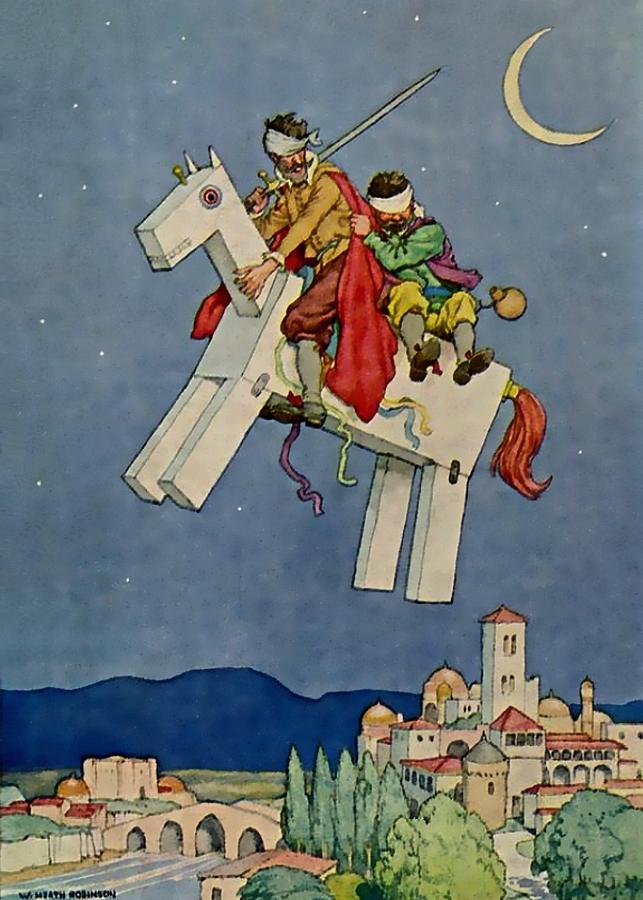
Dubious wrote: Wed Nov 16, 2022 9:47 amWhat feels discordant to me about you is that like Don Quixote you strive against that which is essentially obsolete in the name of a specific type of metaphysic which it never really was to start with but still thoroughly acceptable to any deranged fundamentalist.
Sure, I think I understand what you are getting at. But I also have become aware that you have carved out for yourself, and I could also say through discordant & dubious means, a platform of understanding (of things, of life) that pushes out of the picture all metaphysical ideas.

If I understand you correctly you are therefore saying that I seem to demonstrate that the Christian metaphysic is 'obsolete' and though I am tilting against the Christian construct like Don Quixote tilted against windmills, I am still, myself, wedded to a metaphysical explanatory structure?

And so the metaphysics that I am wedded to (to whatever degree) is distinct from the Christian metaphysics you see me as combatting, and that Christianity never had anything to do with that elaborate metaphysics you see me as promoting "as any deranged fundamentalist" might. I am not sure if my sentence is clear but it will have to do for now.

If I have got any of this right I would say that, yes, I regard Christian metaphysics as in many ways a sort of reduced form, a crude form, of far more thorough metaphysical explanations about earth and life. I find the better metaphysical descriptions in Vedanta and the Vedic-derived philosophies.
Post Reply