Alexis Jacobi wrote: ↑Wed Mar 30, 2022 4:19 am
I have a feeling that when you (since you are the one I am speaking with) are presented with these visions, these pictures, that you regard them as something like *childishly false* or perhaps whimsical is the word.
No, I wouldn't say that.
I would agree with the perspective of C.S. Lewis on other cultures, namely, that it would be wrong to think of them as simply totally false or deluded. Rather, they represent genuine attempts by human beings to articulate existential situations, intuitions, movements of conscience, basic human longings, and so forth. Unfortunately, the also contain untruths that distort them as "lenses" and make them somewhat less than fully trustworthy; but there's always work to be done in sorting out the elements they get right from those they don't.
For example, reincarnation is an attempt by the East to explain the manifest injustices of earthly life. Karma is supposed to make "just" what is very ostensibly unjust. Unfortunately, the doctrine of reincarnation also implies that whatever injustices there are in life, they can only be deserved; so it issues in caste and dharma, making progress in equality or human rights seem "irreligious." The same belief also accounts for the lack of development of labour-saving technologies in the subcontinent and the plight of the Dalits, as well.
So a good insight, wrongly resolved, has resulted in incalculable misery and injustice in places like India. That doesn't make India "childish" or stupid, or something like that: it just means they're victims of a flawed explanation for a fact that anybody in the world can recogize, which is the obvious unfairness in earthly existence.
For example ,your assertion, which expresses a mode of seeing that I share, is that time is lineal, not cyclical. I too cannot see things except in that way. It is necessary that I see in that way.
It's not a matter of "seeing," or whether you and I choose to think that way: it's a matter of truth.
Either time is cyclical,
or it's not: there is no other way it can be, logically. So let's not delude ourselves by pretending that what you and I choose to "see" is determinative of anything.
It's not.
The elaborate structure of the Vedic metaphysical dream is of a type with the Christian metaphysical dream.
No, I still don't see this.
It would be very superficial for us to just say, "Well, both are ways human being try to dream about the end." That tells us absolutely nothing about their relative claims, or about the actual truth value of either. It might well mean both add up to delusions -- but if so, the only really important question returns: what other fact are these "dreams" aspiring to articulate, i.e. what is the actual truth they are both missing?
If you were to ask me directly: Do you think either is true? Which one do you accept as truthful? I would answer: 1) I have no way nor means, by myself, to determine the truth of either,
Oh, I think you do. That is, unless you're willing to dismiss both science and logic. If you take either seriously, you know time is linear, not cyclical. So that immediately rules out the Vedas as a candidate for the truth.
2) I find it more useful to examine how each assertion functions for the one who believes it, lives in accord with what it portends to them.
Yet they "portend" very different things. So again, the question of relative truthfulness returns.
Why should I believe either one of them?
Well, for argument's sake, let's assume neither.
Then there is
something else, some truth, you should be believing. For if one or both is "aspiring" to that truth, why not go straight to the complete truth? Is that not obviously better than pretty delusions and half-truths? But if neither aspires to truth, then what is the value of studying two delusions, except to hope to predict what stupid and erroneous things other men are likely to do if they happen to be deluded by them?
That is, why should I believe that the world will be ended and time will cease?
Scientifically and empirically, we can see it will. There's no reasonable doubt.
Some say it will happen in a few years, and some say in many; but no informed person imagines the universe is eternal. Given its present trajectory, if not interrupted somehow, even a pure Materialists knows we will all eventually end up as equally-dispersed particles of random energy, in what's called "Heat Death"; after which the universe will remain silent and dead forever, since not inequality of energy will any longer exist to induce any reaction forever.
Or that the entire kosmos will be wrapped up and then human being ushered in to a Final Judgment?
That depends. If you believe something is "going on here," that the world has meaning and is the deliberate creation of God, you would. In fact, it would seem absolutely natural to you. If you assume it's not like that, then you would think that Heat Death is your end.
But one or the other will turn out to be true. And what we decide to think will not determine what will be true; it will only determine what your and my relative position to that end will be, when it comes.
But come it will...whether Judgment or Heat Death, neither will be stayed by our choice to believe in it or not.


 We don't even have a concept for such things. The only such things we know are things like numbers...which would seem to be uncaused, but have never caused anything.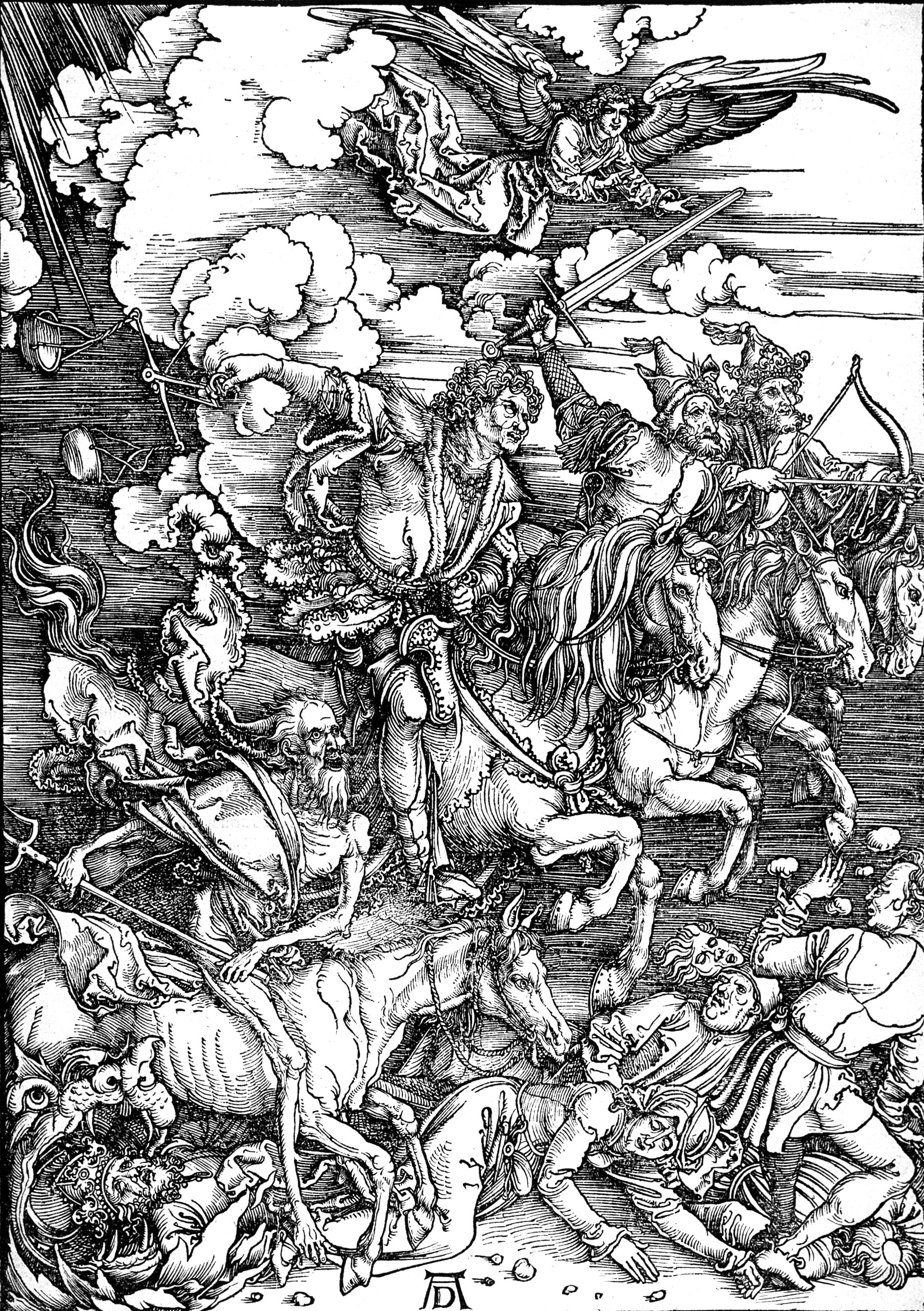
 Or doing away entirely with any language? Some type of direct receptivity of *what is* without the holographic mediator?