I did. It's called proof by contradiction.
From a contradiction anything follows. Principle of explosion.
If that’s the way things are, then belief requires more than extrapolation from memory.Age wrote:If an elephant does NOT believe any thing, then it does NOT believe any thing.
Perhaps this is the main point that escape you.
An inferred extrapolation from memory applied to current circumstances naturally balances income with outcome, just as naturally as cold meeting hot makes rain puddles to leap over, Glasshopper.Veritas Aequitas wrote: ↑Wed Dec 19, 2018 9:49 amWalker wrote:You’re just playing around with the concept of belief.
Contemplate the distinction between inference and belief, Grasshopper.
Note the relationship between inference and belief, Cricket.
In both cases you have not known the final outcome, thus you can only believe the outcome based on personal or collective inferences.
Not sure of your point.Walker wrote: ↑Thu Dec 20, 2018 6:29 amAn inferred extrapolation from memory applied to current circumstances naturally balances income with outcome, just as naturally as cold meeting hot makes rain puddles to leap over, Glasshopper.Veritas Aequitas wrote: ↑Wed Dec 19, 2018 9:49 amWalker wrote:You’re just playing around with the concept of belief.
Contemplate the distinction between inference and belief, Grasshopper.
Note the relationship between inference and belief, Cricket.
In both cases you have not known the final outcome, thus you can only believe the outcome based on personal or collective inferences.
I’ve observed cognitive development from infancy onwards in more than one person, and from what I’ve observed I think that you’re making a case for the inherent human capacity to infer, rather than a case for an inherent capacity to believe.Veritas Aequitas wrote: ↑Thu Dec 20, 2018 6:45 am Not sure of your point.
But my point is, whatever is inferred on a personal basis has to be a belief.
Therefore you cannot escape believing as a human being in this case.
The wise thing to do is not to be a slave to one's beliefs but just ..
Chop Wood Carry Water.
https://zenrevolution.wordpress.com/201 ... rry-water/
Note in general philosophy,Walker wrote: ↑Thu Dec 20, 2018 5:11 pmI’ve observed cognitive development from infancy onwards in more than one person, and from what I’ve observed I think that you’re making a case for the inherent human capacity to infer, rather than a case for an inherent capacity to believe.Veritas Aequitas wrote: ↑Thu Dec 20, 2018 6:45 am Not sure of your point.
But my point is, whatever is inferred on a personal basis has to be a belief.
Therefore you cannot escape believing as a human being in this case.
The wise thing to do is not to be a slave to one's beliefs but just ..
Chop Wood Carry Water.
https://zenrevolution.wordpress.com/201 ... rry-water/
A toddler learns that the stove is hot by touching the stove and experiencing pain. The next time that the stove is within reach, the toddler does not touch the stove because of the inherent capacity to infer based on past experience, even at that age. This supports your theory of organic origins, but does not require belief.
At a toddler’s level of development it cannot yet imagine a future, so it learns to navigate the world by extrapolating from memory of past experience. At some point self-consciousness develops in the child and imaginative beliefs form from that, and then knowledge of probability becomes inseparable with evaluating the immediate environment, via a combination of inference and imagination.
However, once the illusion of grounding is revealed to a mature mind, then belief becomes the servant and not the master. (chop wood, carry water)
The point is there are beliefs [crude] prior to any inferences process and there are beliefs after inferences [convictions or justified true beliefs].Inferences are steps in reasoning, moving from premises to logical consequences. Charles Sanders Peirce divided inference into three kinds: deduction, induction, and abduction. Deduction is inference deriving logical conclusions from premises known or assumed to be true, with the laws of valid inference being studied in logic. Induction is inference from particular premises to a universal conclusion. Abduction is inference to the best explanation.
Human inference (i.e. how humans draw conclusions) is traditionally studied within the field of cognitive psychology; artificial intelligence researchers develop automated inference systems to emulate human inference.
-wiki
But WHERE is the actual proof for this?Veritas Aequitas wrote: ↑Thu Dec 20, 2018 5:24 amPerhaps this is the main point that escape you.
But the WHOLE POINT, which you obviously keep missing IS;
you as a human being is programmed via evolution to 'believe' whether you like it or not.
WHY do ONLY human beings, supposedly, NEED to 'believe', for their survival, IF other animals do NOT?Veritas Aequitas wrote: ↑Thu Dec 20, 2018 5:24 amBelieving is an inherent and intrinsic human nature to facilitate survival.
Do NOT quote figures and speak in a way in which you may think or believe makes you sound like you know what you are talking about. You clearly do NOT. Once again, you started a thread stating that 'supporting evidence', links, references, et cetera ARE a critical necessity. Now, WHERE are these things. WHERE is there any link to the rubbish that are saying here. For example, define 'a higher animal'?Veritas Aequitas wrote: ↑Thu Dec 20, 2018 5:24 amThis is represented by the inherent activities of the various parts of the whole human brain and 90% [?] of the higher animals.
LOL. Once again TRYING TO appear as though you know what you are talking about. The Truth is very easy to SPOT and SEE.Veritas Aequitas wrote: ↑Thu Dec 20, 2018 5:24 amThere are three main types of beliefs, i.e.
- 1. Activated spontaneously deep from the brain
2. Naturally activated beliefs
3. Consciously deliberated but influenced subconsciously
Veritas Aequitas wrote: ↑Thu Dec 20, 2018 5:24 amAs for 1. there is no question of choosing to believe because the initiation of such believing [beliefs] is beyond one's conscious control.
Therefore such an inherent process of believing is embedded in the brain and it can only be suppressed by choice if one is capable of understanding it.
Re 2. A person has to believe if he cannot know for certain of the real truth. Thus the person has to believe an assumed truth [belief as in OP] based on basic inference, trust, faith or gut feelings.
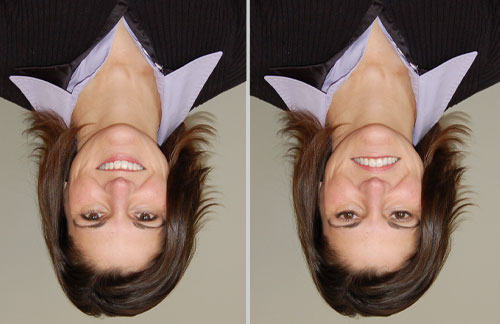
- Note in the distorted face image illusion experiment, the person who is unaware of the truth will "believe" inherently there are two normal faces. What he believed is merely an assumed truth until he is informed to the greater truth of the distorted face.
There is no question of choosing to believe in this case, it is inherent and spontaneous.
This is what is happening with believing in a God which is actually illusory but theists ignorantly believe God is real.
E.g. when you respond to the weatherman predictions in anyway, you are actually believing him.
Since you are not doing the experiments and proving, you have to believe in the scientific theories presented by various scientists.
Re 3. A person can choose to believe after some conscious deliberation of various choices of alternative or when presented with certain information. If a group of people prophesied the end of the world will happen on 25th December 2020, you can choose not to believe it.
Note;
10 Failed Doomsday Predictions
https://www.britannica.com/list/10-fail ... redictions
If that is WHAT you want TO BELIEVE, then I am more than happy for you to continue BELIEVING this.Veritas Aequitas wrote: ↑Thu Dec 20, 2018 5:24 amThe point is your thinking is too shallow and narrow in addition you are straight-jacketed by confirmation bias.
LOL If you so BELIEVE.Veritas Aequitas wrote: ↑Thu Dec 20, 2018 5:24 amNote in all my responses to you, I have given you tons of theories, research findings, evidences and arguments for a wide range of sources.
Exactly RIGHT. Claiming, I do NOT have any beliefs, is ALL I have done here.Veritas Aequitas wrote: ↑Thu Dec 20, 2018 5:24 amOn the other hand you provided no such things as the above except to claim;
- 'I do not have any beliefs' and
This is your assumption.
So, are all donkeys, monkeys, and dolphins 'perverts'? Oh, or any thing else that is non-human also?
Did you?
Yes, belief does require more than that. Memory, of course, plays are part, but to have a 'belief' requires one to also make a conscious choice whether to believe or disbelieve some thing.
What EVIDENCE do you HAVE that 'whatever is inferred on a personal basis' HAS TO BE a belief.Veritas Aequitas wrote: ↑Thu Dec 20, 2018 6:45 amNot sure of your point.Walker wrote: ↑Thu Dec 20, 2018 6:29 amAn inferred extrapolation from memory applied to current circumstances naturally balances income with outcome, just as naturally as cold meeting hot makes rain puddles to leap over, Glasshopper.Veritas Aequitas wrote: ↑Wed Dec 19, 2018 9:49 am
Note the relationship between inference and belief, Cricket.
In both cases you have not known the final outcome, thus you can only believe the outcome based on personal or collective inferences.
But my point is, whatever is inferred on a personal basis has to be a belief.
LOL. This is YOUR "conclusion", which YOU reached, from YOUR one premise above;Veritas Aequitas wrote: ↑Thu Dec 20, 2018 6:45 amTherefore you cannot escape believing as a human being in this case.
There are even more wiser things you CAN DO. For one, do NOT have any beliefs at all.Veritas Aequitas wrote: ↑Thu Dec 20, 2018 6:45 amThe wise thing to do is not to be a slave to one's beliefs but just ..
Chop Wood Carry Water.
https://zenrevolution.wordpress.com/201 ... rry-water/
I have already provided proof and explain in detail many times.Age wrote: ↑Fri Dec 21, 2018 5:59 amBut WHERE is the actual proof for this?Veritas Aequitas wrote: ↑Thu Dec 20, 2018 5:24 amPerhaps this is the main point that escape you.
But the WHOLE POINT, which you obviously keep missing IS;
you as a human being is programmed via evolution to 'believe' whether you like it or not.
I have also explained this many times.WHY do ONLY human beings, supposedly, NEED to 'believe', for their survival, IF other animals do NOT?Veritas Aequitas wrote: ↑Thu Dec 20, 2018 5:24 amBelieving is an inherent and intrinsic human nature to facilitate survival.
I have explained the above as well in various ways.I have asked you BEFORE, which you will NOT answer, something similar to:
At what age does this TO 'BELIEVE', which you say is "inherent and intrinsic human nature to facilitate survival", kick in?
Is it before birth, at birth, or after birth? WHEN exactly do you start to 'believe'? And, WHAT do you start TO 'BELIEVE'?
I asked you BEFORE and if you will NOT answer now, then what you are saying is just your BELIEF, of which you have absolutely NO support of nor no thing to back it up with, at least from what I have seen here.
My point IS: OF COURSE there ARE beliefs prior to and after inferences, in some people.Veritas Aequitas wrote: ↑Fri Dec 21, 2018 4:35 amNote in general philosophy,Walker wrote: ↑Thu Dec 20, 2018 5:11 pmI’ve observed cognitive development from infancy onwards in more than one person, and from what I’ve observed I think that you’re making a case for the inherent human capacity to infer, rather than a case for an inherent capacity to believe.Veritas Aequitas wrote: ↑Thu Dec 20, 2018 6:45 am Not sure of your point.
But my point is, whatever is inferred on a personal basis has to be a belief.
Therefore you cannot escape believing as a human being in this case.
The wise thing to do is not to be a slave to one's beliefs but just ..
Chop Wood Carry Water.
https://zenrevolution.wordpress.com/201 ... rry-water/
A toddler learns that the stove is hot by touching the stove and experiencing pain. The next time that the stove is within reach, the toddler does not touch the stove because of the inherent capacity to infer based on past experience, even at that age. This supports your theory of organic origins, but does not require belief.
At a toddler’s level of development it cannot yet imagine a future, so it learns to navigate the world by extrapolating from memory of past experience. At some point self-consciousness develops in the child and imaginative beliefs form from that, and then knowledge of probability becomes inseparable with evaluating the immediate environment, via a combination of inference and imagination.
However, once the illusion of grounding is revealed to a mature mind, then belief becomes the servant and not the master. (chop wood, carry water)
The point is there are beliefs [crude] prior to any inferences process and there are beliefs after inferences [convictions or justified true beliefs].Inferences are steps in reasoning, moving from premises to logical consequences. Charles Sanders Peirce divided inference into three kinds: deduction, induction, and abduction. Deduction is inference deriving logical conclusions from premises known or assumed to be true, with the laws of valid inference being studied in logic. Induction is inference from particular premises to a universal conclusion. Abduction is inference to the best explanation.
Human inference (i.e. how humans draw conclusions) is traditionally studied within the field of cognitive psychology; artificial intelligence researchers develop automated inference systems to emulate human inference.
-wiki
Are you actually serious, or joking, here?Veritas Aequitas wrote: ↑Fri Dec 21, 2018 4:35 amA toddler will form beliefs that a stove is hot more often from the warnings from trusted parents and other humans rather than from direct painful experiences [rarely].
But if that is what you call "proof", then I have just PROVED otherwise.Veritas Aequitas wrote: ↑Fri Dec 21, 2018 7:01 amI have already provided proof and explain in detail many times.Age wrote: ↑Fri Dec 21, 2018 5:59 amBut WHERE is the actual proof for this?Veritas Aequitas wrote: ↑Thu Dec 20, 2018 5:24 am
Perhaps this is the main point that escape you.
But the WHOLE POINT, which you obviously keep missing IS;
you as a human being is programmed via evolution to 'believe' whether you like it or not.
Note this face illusion example.
The fact is a person who is not informed on the truth will believe there are two normal faces in this picture.
Once again you are talking like you actually BELIEVE that you actually KNOW what you are talking about here.Veritas Aequitas wrote: ↑Fri Dec 21, 2018 7:01 am The uninformed person will insist perhaps with 100% confidence of his empirical evidence without the knowledge he has been deceived by his mind.
WHAT???Veritas Aequitas wrote: ↑Fri Dec 21, 2018 7:01 am
I have also explained this many times.WHY do ONLY human beings, supposedly, NEED to 'believe', for their survival, IF other animals do NOT?Veritas Aequitas wrote: ↑Thu Dec 20, 2018 5:24 amBelieving is an inherent and intrinsic human nature to facilitate survival.
What is believed involved a complex process say X from lower to middle to higher brain.
In the perspective of beliefs, animals up to the higher primates share 90% of process X.
It is just that non-humans do not have the self-awareness of their beliefs as a concept of beliefs for deliberate rationalization.
Besides the fact that this appears as absolute gibberish, to me, if babies have the potential for self-awareness or not, or if and when they realize this or not, has nothing at all to do with what we are talking about here.Veritas Aequitas wrote: ↑Fri Dec 21, 2018 7:01 amI have explained the above as well in various ways.I have asked you BEFORE, which you will NOT answer, something similar to:
At what age does this TO 'BELIEVE', which you say is "inherent and intrinsic human nature to facilitate survival", kick in?
Is it before birth, at birth, or after birth? WHEN exactly do you start to 'believe'? And, WHAT do you start TO 'BELIEVE'?
I asked you BEFORE and if you will NOT answer now, then what you are saying is just your BELIEF, of which you have absolutely NO support of nor no thing to back it up with, at least from what I have seen here.
Babies has the potential for self-awareness but that is realized around 2-3 years thereabout and later years to cognize their inherent beliefs as concept of beliefs.
Are you at all aware there is NOT even one of you human beings who is self aware, yet?Veritas Aequitas wrote: ↑Fri Dec 21, 2018 7:01 amIn this case, the belief process-X by babies would be same as the higher primates in that they are not very self-aware of their beliefs until they are > 3-5 years old.
Your above is a strawman.Age wrote: ↑Fri Dec 21, 2018 7:06 amMy point IS: OF COURSE there ARE beliefs prior to and after inferences, in some people.Veritas Aequitas wrote: ↑Fri Dec 21, 2018 4:35 amNote in general philosophy,Walker wrote: ↑Thu Dec 20, 2018 5:11 pm
I’ve observed cognitive development from infancy onwards in more than one person, and from what I’ve observed I think that you’re making a case for the inherent human capacity to infer, rather than a case for an inherent capacity to believe.
A toddler learns that the stove is hot by touching the stove and experiencing pain. The next time that the stove is within reach, the toddler does not touch the stove because of the inherent capacity to infer based on past experience, even at that age. This supports your theory of organic origins, but does not require belief.
At a toddler’s level of development it cannot yet imagine a future, so it learns to navigate the world by extrapolating from memory of past experience. At some point self-consciousness develops in the child and imaginative beliefs form from that, and then knowledge of probability becomes inseparable with evaluating the immediate environment, via a combination of inference and imagination.
However, once the illusion of grounding is revealed to a mature mind, then belief becomes the servant and not the master. (chop wood, carry water)
The point is there are beliefs [crude] prior to any inferences process and there are beliefs after inferences [convictions or justified true beliefs].Inferences are steps in reasoning, moving from premises to logical consequences. Charles Sanders Peirce divided inference into three kinds: deduction, induction, and abduction. Deduction is inference deriving logical conclusions from premises known or assumed to be true, with the laws of valid inference being studied in logic. Induction is inference from particular premises to a universal conclusion. Abduction is inference to the best explanation.
Human inference (i.e. how humans draw conclusions) is traditionally studied within the field of cognitive psychology; artificial intelligence researchers develop automated inference systems to emulate human inference.
-wiki
My OTHER point IS: There does NOT have to be.
Are you actually serious, or joking, here?Veritas Aequitas wrote: ↑Fri Dec 21, 2018 4:35 amA toddler will form beliefs that a stove is hot more often from the warnings from trusted parents and other humans rather than from direct painful experiences [rarely].
How many actual children have NOT, and do NOT, touch something hot, including even fire itself, even AFTER being told; "Do NOT touch. It is hot"?
The same applies with adults and a sign with "WET PAINT" written on it.
How many actual adults have NOT, and do NOT, touch something wet, including even paint itself, even AFTER being told; "Do NOT touch. WET PAINT"?
YOUR confirmation biases are really working overtime on this one.