What could make morality objective?

Should you think about your duty, or about the consequences of your actions? Or should you concentrate on becoming a good person?

Moderators: AMod, iMod

Peter Holmes
Posts: 4134
Joined: Tue Jul 18, 2017 3:53 pm

Re: What could make morality objective?

Post by Peter Holmes »

Ginkgo wrote:
Are you disagreeing with Kant's claim that moral behaviour can be universalized, or are you saying that the categorical imperative question begs?
I'm saying that morality must be subjective, because a moral assertion expresses a value-judgement rather than making a factual claim. So talk of universalisation or categorical imperatives, like talk of prescriptive truths, misses the point that the is-ought barrier is insuperable.

If you can cite a moral categorical imperative, or a prescriptive truth, that is not a value-judgement, please do so. Then I'll have to re-think my whole argument.
Ginkgo
Posts: 2657
Joined: Mon Apr 30, 2012 2:47 pm

Re: What could make morality objective?

Post by Ginkgo »

Peter Holmes wrote: Thu Aug 23, 2018 11:50 am Ginkgo wrote:
Are you disagreeing with Kant's claim that moral behaviour can be universalized, or are you saying that the categorical imperative question begs?
I'm saying that morality must be subjective, because a moral assertion expresses a value-judgement rather than making a factual claim. So talk of universalisation or categorical imperatives, like talk of prescriptive truths, misses the point that the is-ought barrier is insuperable.

If you can cite a moral categorical imperative, or a prescriptive truth, that is not a value-judgement, please do so. Then I'll have to re-think my whole argument.
Kant claims that the categorical imperative is apriori and can only be discovered through reason. Kant also claimed that morality cannot be discovered through experience. One cannot learn how to act by referring to subjective moral theories. This is why he made the distinction between hypothetical imperatives and categorical imperatives.

"Act only according to that maxim whereby you can at the same time, will that it should become a universal law," is an example of a non-value judgement.
Peter Holmes
Posts: 4134
Joined: Tue Jul 18, 2017 3:53 pm

Re: What could make morality objective?

Post by Peter Holmes »

Ginkgo wrote:
Kant claims that the categorical imperative is apriori and can only be discovered through reason. Kant also claimed that morality cannot be discovered through experience. One cannot learn how to act by referring to subjective moral theories. This is why he made the distinction between hypothetical imperatives and categorical imperatives.

"Act only according to that maxim whereby you can at the same time, will that it should become a universal law," is an example of a non-value judgement.
Forgive me, but this is a command - an imperative - not a judgement of any kind. If the implied judgement is that we should so act, the question is why so? In other words, the question is begged.
User avatar
Immanuel Can
Posts: 27624
Joined: Wed Sep 25, 2013 4:42 pm

Re: What could make morality objective?

Post by Immanuel Can »

Veritas Aequitas wrote: Thu Aug 23, 2018 6:08 am This change from legal to making Chattel Slavery illegal is an indication of a specific progress related to laws on slavery.
So for you, "making laws" (including laws that, statistically, the majority don't keep) is evidence of legal progress?
Underlying this change is the evolving pulse of the inherent moral drive within humanity.
And the ability to make such laws is evidence of an "inherent moral drive"?
Whether there are more 'slaves' [based on subjective definitions] now as compared to the past is not relevant to my point.
So...the real number of slaves doesn't matter? More of them, living in even worse slavery, wouldn't be evidence of moral decline? And at the end of the day, "slave" is only a subjective term?
UK modern slavery offense charges jump 27% in past year
https://edition.cnn.com/2018/08/09/uk/u ... index.html
So "British" is your synonym for "all of humankind"? :shock: Because if it's not, then a local improvement doesn't tell us anything about the human race in general, and certainly not about any moral evolution.

If that's what you mean, then I guess you're right: I did miss your point.
Veritas Aequitas
Posts: 15722
Joined: Wed Jul 11, 2012 4:41 am

Re: What could make morality objective?

Post by Veritas Aequitas »

Immanuel Can wrote: Thu Aug 23, 2018 5:22 pm
Veritas Aequitas wrote: Thu Aug 23, 2018 6:08 am This change from legal to making Chattel Slavery illegal is an indication of a specific progress related to laws on slavery.
So for you, "making laws" (including laws that, statistically, the majority don't keep) is evidence of legal progress?
Not 'ALL" laws but only laws that has some semblance to morality and ethics.
Note the enactment of laws on Chattel Slavery should have prevented a free for all on people owning slaves. One good evidence of the progress re 'Chattel Slavery' is the contrast of Chattel Slavery in the Western World.
Underlying this change is the evolving pulse of the inherent moral drive within humanity.
And the ability to make such laws is evidence of an "inherent moral drive"?
Yes I inferred that from empirical evidences.
Note the research done on morality and < one-year old babies.
Note 'Chattel Slavery' is merely one example which I think is an obvious indication of the 'inherent moral drive'.
There are others like improvement in racism, pollution, wars [lesser than the past], polygamy, drug trafficking and other evil acts that are ongoing.
Whether there are more 'slaves' [based on subjective definitions] now as compared to the past is not relevant to my point.
So...the real number of slaves doesn't matter? More of them, living in even worse slavery, wouldn't be evidence of moral decline? And at the end of the day, "slave" is only a subjective term?
Who said it doesn't matter.
The progress is at present there are laws on slavery for governments to act against compared to the free for all in the past.
UK modern slavery offense charges jump 27% in past year
https://edition.cnn.com/2018/08/09/uk/u ... index.html
So "British" is your synonym for "all of humankind"? :shock: Because if it's not, then a local improvement doesn't tell us anything about the human race in general, and certainly not about any moral evolution.

If that's what you mean, then I guess you're right: I did miss your point.
Surely you are not admitting to your above type of narrow thinking?

Given the time constraint, I just did a quickie from google.
A scan from google will inform you there are loads of people who are being caught and charged with slavery.
This is another critical point to indicate there is progress in terms of 'slavery' in general and more so on 'Chattel Slavery'.
Veritas Aequitas
Posts: 15722
Joined: Wed Jul 11, 2012 4:41 am

Re: What could make morality objective?

Post by Veritas Aequitas »

Peter Holmes wrote: Thu Aug 23, 2018 11:50 am Ginkgo wrote:
Are you disagreeing with Kant's claim that moral behaviour can be universalized, or are you saying that the categorical imperative question begs?
I'm saying that morality must be subjective, because a moral assertion expresses a value-judgement rather than making a factual claim. So talk of universalisation or categorical imperatives, like talk of prescriptive truths, misses the point that the is-ought barrier is insuperable.

If you can cite a moral categorical imperative, or a prescriptive truth, that is not a value-judgement, please do so. Then I'll have to re-think my whole argument.
Note I posted this re the Categorical Imperative.

viewtopic.php?f=7&t=24813

There are 5 Formulation of the Categorical Imperative [CI].
The above refer to the First Formulation of Universality.
As the video explained, the justification is based on reason and is self-explanatory as long as one is a human being.

Note, do not be misled by the term 'imperative.'
The CI is not meant to be prescriptive and enforceable.
The CI is merely a guide but it is grounded on pure reason [need detail discussion to justify this].

In say, Pure Geometry, the properties and qualities of a perfect triangle MUST be such and such measurements.
But such perfect measurements cannot be prescriptive and enforced upon but merely to be used as guides [Applied Geometry] to measure triangles in practice to be as close as possible to the perfect measurements.

This Pure and Applied is the same with Pure and Applied Morality and Ethics.

Note in the empirical world there is an attempt to come up with empirical universal standards for time, distances, weights, etc.
The kilogram or kilogramme (symbol: kg) is the base unit of mass in the International System of Units (SI), and is defined as being equal to the mass of the International Prototype of the Kilogram (IPK, also known as "Le Grand K" or "Big K"),[2] a cylinder of platinum-iridium alloy stored by the International Bureau of Weights and Measures at Saint-Cloud, France.
https://en.wikipedia.org/wiki/Kilogram
In the past, the 'foot' was based on the size of one person's foot, but since then there has been improvements towards higher precision.

If we can do it for empirical things why not for non-empirical matters.
It will not be easy for absolute moral values but it is not impossible to arrive at some consensus within humanity [not now but possible in the future].
Peter Holmes
Posts: 4134
Joined: Tue Jul 18, 2017 3:53 pm

Re: What could make morality objective?

Post by Peter Holmes »

Veritas Aequitas wrote:
If we can do it for empirical things why not for non-empirical matters.
It will not be easy for absolute moral values but it is not impossible to arrive at some consensus within humanity [not now but possible in the future].
I think you're still making a fundamental mistake. The crucial difference is between factual assertions about features of reality - such as colours and dimensions - which can be objectively true, given the way we use the signs involved - but which are always falsifiable - and non-factual assertions, which express judgements, beliefs or opinions.

Kant was trying to find a foundational justification for morality - but that we should seek and have such a foundation is a value-judgement - as are any moral judgements built on any foundation we agree on.

Some theists need to dismiss any secular morality (such as Kant's) - and dismiss any evidence of even tentative moral progress - because they believe that morality can be objective only if there is a god. But this is false because moral judgements must be subjective - even those of a god.
Veritas Aequitas
Posts: 15722
Joined: Wed Jul 11, 2012 4:41 am

Re: What could make morality objective?

Post by Veritas Aequitas »

Peter Holmes wrote: Fri Aug 24, 2018 8:15 am Veritas Aequitas wrote:
If we can do it for empirical things why not for non-empirical matters.
It will not be easy for absolute moral values but it is not impossible to arrive at some consensus within humanity [not now but possible in the future].
I think you're still making a fundamental mistake. The crucial difference is between factual assertions about features of reality - such as colours and dimensions - which can be objectively true, given the way we use the signs involved - but which are always falsifiable - and non-factual assertions, which express judgements, beliefs or opinions.

Kant was trying to find a foundational justification for morality - but that we should seek and have such a foundation is a value-judgement - as are any moral judgements built on any foundation we agree on.

Some theists need to dismiss any secular morality (such as Kant's) - and dismiss any evidence of even tentative moral progress - because they believe that morality can be objective only if there is a god. But this is false because moral judgements must be subjective - even those of a god.
As I had argued the idea of god is a falsehood and impossibility [albeit necessity for the majority at present], so there is no such thing as absolute moral values in the God sense at all.

Nevertheless what is claimed to absolute moral values from God are applied in real life by theists. This has some utility for humanity but it is not foolproof as evident from God's immutable moral laws that result in terrible evils and violence which is seemingly sanctioned by God as in Islam.

The point is humanity cannot give up on the Philosophy of Morality and Ethics which is an inherent drive within humanity.
Given that God's immutable absolute moral laws has failed we need to find alternative absolute moral laws that are grounded and foolproof which inevitably has to be subjective, i.e. intersubjective and based on pure reason.

There is a range of meaning to 'subjective' ranging from flimsy personal unjustified opinion, beliefs to objective knowledge.
What is objective knowledge, e.g. scientific theories are ultimately inter-subjective.
Whatever is related and conditioned to the human [subject] conditions has to be subjective.

For any Framework and System of Morality and System to work effectively there has to be fixed standards as guide, i.e. absolute moral laws. Since there is no God [as I had proven] we have no choice but to obtain absolute moral laws based on subjectivity from subjects which need to be grounded based on reason.

This is how we could make morality objective albeit it is actually inter-subjective.
Ginkgo
Posts: 2657
Joined: Mon Apr 30, 2012 2:47 pm

Re: What could make morality objective?

Post by Ginkgo »

Peter Holmes wrote: Thu Aug 23, 2018 2:43 pm Ginkgo wrote:
Kant claims that the categorical imperative is apriori and can only be discovered through reason. Kant also claimed that morality cannot be discovered through experience. One cannot learn how to act by referring to subjective moral theories. This is why he made the distinction between hypothetical imperatives and categorical imperatives.

"Act only according to that maxim whereby you can at the same time, will that it should become a universal law," is an example of a non-value judgement.
Forgive me, but this is a command - an imperative - not a judgement of any kind. If the implied judgement is that we should so act, the question is why so? In other words, the question is begged.
You asked for an example of a non-value judgement and I provided it.
Peter Holmes
Posts: 4134
Joined: Tue Jul 18, 2017 3:53 pm

Re: What could make morality objective?

Post by Peter Holmes »

Ginkgo wrote:
"Act only according to that maxim whereby you can at the same time, will that it should become a universal law," is an example of a non-value judgement.
This is a command, not an assertion expressing a judgement. Imperative and declarative clauses have different functions.
Ginkgo
Posts: 2657
Joined: Mon Apr 30, 2012 2:47 pm

Re: What could make morality objective?

Post by Ginkgo »

Peter Holmes wrote: Fri Aug 24, 2018 12:05 pm Ginkgo wrote:
"Act only according to that maxim whereby you can at the same time, will that it should become a universal law," is an example of a non-value judgement.
This is a command, not an assertion expressing a judgement. Imperative and declarative clauses have different functions.
Yes, I know it is a command, it is also an example of a non-value statement.
Peter Holmes
Posts: 4134
Joined: Tue Jul 18, 2017 3:53 pm

Re: What could make morality objective?

Post by Peter Holmes »

Ginkgo wrote:
Yes, I know it is a command, it is also an example of a non-value statement.
No, a linguistic expression can't be both a command and a statement. This is grammar 101. If you disagree, I don't see any point in continuing this.
User avatar
Immanuel Can
Posts: 27624
Joined: Wed Sep 25, 2013 4:42 pm

Re: What could make morality objective?

Post by Immanuel Can »

Veritas Aequitas wrote: Fri Aug 24, 2018 6:27 am
And the ability to make such laws is evidence of an "inherent moral drive"?
Yes I inferred that from empirical evidences.
I would then say that I find your inference unwarranted by the empirical evidence.
The progress is at present there are laws on slavery for governments to act against compared to the free for all in the past.
Again, I find this doesn't warrant your inference.

A law people don't obey, and which goes completely unenforced, but to which people feign conformity, is actually worse than no law at all, because to all the wrong they've already done and continue to do unchecked, it adds the wrong of becoming hypocrites.

They're hypocrites for continuing slavery while signing declarations that they are not going to enslave anyone anymore, and we're hypocrites for accepting their hypocrisy and becoming unconcerned about the suffering of their slaves. Meanwhile, world slavery grows worse.

The situation is not going well on any side, I would say.
Veritas Aequitas
Posts: 15722
Joined: Wed Jul 11, 2012 4:41 am

Re: What could make morality objective?

Post by Veritas Aequitas »

Immanuel Can wrote: Sat Aug 25, 2018 3:26 pm
Veritas Aequitas wrote: Fri Aug 24, 2018 6:27 am
And the ability to make such laws is evidence of an "inherent moral drive"?
Yes I inferred that from empirical evidences.
I would then say that I find your inference unwarranted by the empirical evidence.
The progress is at present there are laws on slavery for governments to act against compared to the free for all in the past.
Again, I find this doesn't warrant your inference.

A law people don't obey, and which goes completely unenforced, but to which people feign conformity, is actually worse than no law at all, because to all the wrong they've already done and continue to do unchecked, it adds the wrong of becoming hypocrites.

They're hypocrites for continuing slavery while signing declarations that they are not going to enslave anyone anymore, and we're hypocrites for accepting their hypocrisy and becoming unconcerned about the suffering of their slaves. Meanwhile, world slavery grows worse.

The situation is not going well on any side, I would say.
The above views is not from serious critical thinking and effective problem solving techniques.

In effective problem-solving one must break up the problem into its smallest units then analyze them it their respective parts with an overall view of the whole.
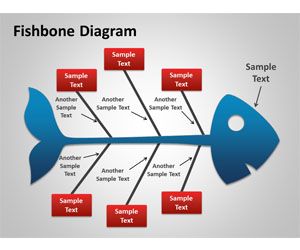
Are you familiar with the Fishbone Technique in analyzing a problem, the more complex the problem the finer the bones.

Image

You don't seem to be able to differentiate the results between no laws on Chattel Slavery and where there are laws on slavery. In addition you have to break down the effects and results in various nations, different circumstances and contexts.
User avatar
Immanuel Can
Posts: 27624
Joined: Wed Sep 25, 2013 4:42 pm

Re: What could make morality objective?

Post by Immanuel Can »

Veritas Aequitas wrote: Sun Aug 26, 2018 3:58 am You don't seem to be able to differentiate the results between no laws on Chattel Slavery and where there are laws on slavery.
I do. The latter is differentiable from the former in that it contains two sins, not just one: it contains both slavery and hypocrisy. At least the former has only one evil; that, at least we can say.
In addition you have to break down the effects and results in various nations, different circumstances and contexts.
Why? To excuse chattel slavery?

No, perhaps not: but to maintain the illusion that it does not exist, perhaps.

But you have the data: I've sent it to you before. You can wish it away, or you can excuse each individual case, if you wish; but the same would excuse ANY kind of chattel slavery, so it's a strategy I'd be inclined to avoid -- that is, if I had a genuine concern about the plight of slaves.
Post Reply