Er!? No, it was formed by the melding of Norman French and Anglo-Saxon, which has allowed it to be open to words from many languages and to be used as a pretty good trade language as one can mangle the grammar and pronounce it pretty badly and still be understood.attofishpi wrote: ↑Thu Aug 31, 2017 9:02 am Here is some art i did as a confirmed Panentheist:-
This is the UK to scale, I re land denotes the British empire taking to the shore and spreading the common protocol of Earth - English, which a sage instructed me was not formed naturally but via this God ...
Panentheism
-
Arising_uk

- Posts: 12255
- Joined: Wed Oct 17, 2007 2:31 am
Re: Panentheism
-
attofishpi

- Posts: 13299
- Joined: Tue Aug 16, 2011 8:10 am
- Location: Orion Spur
- Contact:
Re: Panentheism
Actually - what you comprehend, and understandably, is man's natural evolution of language - what you fail to real eyes - and with panentheism - is that God inhabits ALL dimensions of matter and beyond - that includes the synapses withing the brains of man - where it can convolute the language into its present form.Arising_uk wrote: ↑Thu Aug 31, 2017 9:24 amEr!? No, it was formed by the melding of Norman French and Anglo-Saxon, which has allowed it to be open to words from many languages and to be used as a pretty good trade language as one can mangle the grammar and pronounce it pretty badly and still be understood.attofishpi wrote: ↑Thu Aug 31, 2017 9:02 am Here is some art i did as a confirmed Panentheist:-
This is the UK to scale, I re land denotes the British empire taking to the shore and spreading the common protocol of Earth - English, which a sage instructed me was not formed naturally but via this God ...
Re: Panentheism
Nick_A quoted:
"The idea of God becomes, then, the idea of the attributes, and as God is substance consisting of infinite attributes, it follows that the understanding of the doctrine of the infinite attributes is of primary significance to an adequate understanding of Spinoza's Ethics. " The idea of God is not synonymous with the idea of the attributes of God, although the idea of God includes that God's attributes are infinite.
All of Spinoza's metaphysics is seamless reasoning based upon axioms so there is no primary significance of any specific part of the reasoning.
"Pure ethics has the idea of God, or the doctrine of the attributes, as its foundation. "Whatever is," says Spinoza, "is in God, and nothing can either be or be conceived without God." ".
Spinoza is saying that God or nature is the ultimate being, or substance. Therefore ethics are implied in the order of nature as accessible via reason.
""God and all his attributes are eternal." (I 19).[/quote]" Spinoza is saying that God or nature is eternal, from the point of view of eternity. This is not the same as the claim that we men can understand all the attributes of God.
"Spinoza's conception of God presupposes that man has the capacity to think or to understand the reality of the attributes." It's true that Spinoza's thesis depends upon reason.Spinoza's conception of God presupposes that man has the capacity to think or to understand the reality of the attributes. The idea of God becomes, then, the idea of the attributes, and as God is substance consisting of infinite attributes, it follows that the understanding of the doctrine of the infinite attributes is of primary significance to an adequate understanding of Spinoza's Ethics. Pure ethics has the idea of God, or the doctrine of the attributes, as its foundation. "Whatever is," says Spinoza, "is in God, and nothing can either be or be conceived without God." (I 15). Also, if we are to understand the idea of God as the key to all the other problems presented in Spinoza's works, we must know that "God and all his attributes are eternal." (I 19).
"The idea of God becomes, then, the idea of the attributes, and as God is substance consisting of infinite attributes, it follows that the understanding of the doctrine of the infinite attributes is of primary significance to an adequate understanding of Spinoza's Ethics. " The idea of God is not synonymous with the idea of the attributes of God, although the idea of God includes that God's attributes are infinite.
All of Spinoza's metaphysics is seamless reasoning based upon axioms so there is no primary significance of any specific part of the reasoning.
"Pure ethics has the idea of God, or the doctrine of the attributes, as its foundation. "Whatever is," says Spinoza, "is in God, and nothing can either be or be conceived without God." ".
Spinoza is saying that God or nature is the ultimate being, or substance. Therefore ethics are implied in the order of nature as accessible via reason.
""God and all his attributes are eternal." (I 19).[/quote]" Spinoza is saying that God or nature is eternal, from the point of view of eternity. This is not the same as the claim that we men can understand all the attributes of God.
Re: Panentheism
As an extension of my prior post regarding the “Great Chain of Being,” we can imagine that one of the lowest “rungs” on the ladder would be an amoeba – as is depicted in the illustration:
Now in purely fanciful terms (and to paraphrase something I have written elsewhere), an amoeba can metaphorically “look upwards” and see a higher rung of the ladder existing in the form of a fly.
Likewise, a fly can look up and see a higher rung in the form of a frog.
As can the frog look up and see a dog.
And finally, the dog can look up and see a human.
However, at this point there’s a problem.
When we look up, we can’t see anything.
Not in the same sense that the lower beings can look up and see us – an obvious higher level of consciousness, encapsulated in matter, looking down at them.
From our vantage point, we appear to be the top rung of the ladder because we literally cannot see anything above us.
Why?
Because in the context of “Panentheism,” God’s consciousness is not encapsulated in matter like we are.
Quite the contrary; matter is encapsulated in God’s consciousness.
Or more aptly stated, God’s consciousness is the living “emulsion,” so to speak, in which matter is suspended.
And that would be similar to the living emulsion in which our own thoughts and dreams are suspended.
Remember:
“as above, so below”...
Therefore, and simply stated, God does not have a “physical” body as we understand physical bodies to be.
So just for now, and for lack of a better way of visualizing God, think of God as being a sovereign individualization of pure consciousness with a personal identity....Like a “bubble” or “field” of life energy that is presided over by his personal will (his “I Am-ness”).
Imagine God’s (and our) transcendent form as being composed of the ultimate ineffable substance of which Plotinus and Spinoza have attempted to describe – something that I suggest is an amalgam of the essence of life and that of the essence through-which life expresses itself.
(Continued in next post)
_______
Re: Panentheism
_______
(Continued from prior post)
So here we are...the highest rung on the ascending ladder of consciousness on earth, looking downward at the ladder descending into the lower levels of being, with the lower beings looking up at the ladder ascending toward us, and as we look upward to see where the ladder extends to, we can’t see anything.
However, the truth of the matter is, as we stand on the earth and look out into the universe we are seeing something.
The problem is that most of us (as a consequence of occupying the rung beneath God's rung) simply cannot recognize what it is we are looking at.
In other words, the ontological context of the rung above ours is beyond our grasp.
For you see, just as that fly – way down on a rung below ours – could land on our arm...

...and never even begin to comprehend that it is walking on the living physical body of a being that is so far above it in scope and consciousness that there is no comparison, so it is with us as we stand on the earth.
In a higher metaphorical sense, we are walking on the “living physical body” of a Being that is so far above us in scope and consciousness that we do not recognize what he is, or the situation he has us in.
In the context of Panentheism, it is almost impossible for us to understand that everything we are, and that everything we see throughout the universe is all part of God’s “spirit body.”
The entire universe is alive, but it just does not present itself as a living being as we understand living beings to be.
Furthermore, it is “doubly difficult” for us in this situation.
Because not only are we on a lower rung “looking up” at the highest rung of the ladder, but like fetuses in a womb, we are viewing God from the “inside” of his being, from within the closed dimension of his mind.
And just like a fetus that exists within the darkness of its mother’s womb, we are neither conscious enough, nor are we physiologically positioned in a way that would allow us to see or comprehend the “outer” (and higher) context of the Being that momentarily contains us.
Anyway, to wrap this up, as we look once again at the illustration...
...I don’t think you could find a better representation of the vast chasms of separation that exist between three distinct levels of consciousness on the Great Chain of Being.
_______
(Continued from prior post)
So here we are...the highest rung on the ascending ladder of consciousness on earth, looking downward at the ladder descending into the lower levels of being, with the lower beings looking up at the ladder ascending toward us, and as we look upward to see where the ladder extends to, we can’t see anything.
However, the truth of the matter is, as we stand on the earth and look out into the universe we are seeing something.
The problem is that most of us (as a consequence of occupying the rung beneath God's rung) simply cannot recognize what it is we are looking at.
In other words, the ontological context of the rung above ours is beyond our grasp.
For you see, just as that fly – way down on a rung below ours – could land on our arm...
...and never even begin to comprehend that it is walking on the living physical body of a being that is so far above it in scope and consciousness that there is no comparison, so it is with us as we stand on the earth.
In a higher metaphorical sense, we are walking on the “living physical body” of a Being that is so far above us in scope and consciousness that we do not recognize what he is, or the situation he has us in.
In the context of Panentheism, it is almost impossible for us to understand that everything we are, and that everything we see throughout the universe is all part of God’s “spirit body.”
The entire universe is alive, but it just does not present itself as a living being as we understand living beings to be.
Furthermore, it is “doubly difficult” for us in this situation.
Because not only are we on a lower rung “looking up” at the highest rung of the ladder, but like fetuses in a womb, we are viewing God from the “inside” of his being, from within the closed dimension of his mind.
And just like a fetus that exists within the darkness of its mother’s womb, we are neither conscious enough, nor are we physiologically positioned in a way that would allow us to see or comprehend the “outer” (and higher) context of the Being that momentarily contains us.
Anyway, to wrap this up, as we look once again at the illustration...
...I don’t think you could find a better representation of the vast chasms of separation that exist between three distinct levels of consciousness on the Great Chain of Being.
_______
-
Arising_uk
- Posts: 12255
- Joined: Wed Oct 17, 2007 2:31 am
Re: Panentheism
Must love Mandarin Chinese, Spanish and Hindi then.Arising_uk wrote:Actually - what you comprehend, and understandably, is man's natural evolution of language - what you fail to real eyes - and with panentheism - is that God inhabits ALL dimensions of matter and beyond - that includes the synapses withing the brains of man - where it can convolute the language into its present form.
You are up there with bob with your religious NPD monomania.
Re: Panentheism
Seeds wrote:
Do you know the difference between a concept and a percept?
Your cosmology is clear enough when you explain it in language, without the addition of the drawings.The problem with your cosmology is that it lacks any evidence for its truth. Do you believe that if the evidence pretty well disproves your cosmology then you should think again?
Flies probably have no conception of frogs. Even if flies could conceive of frogs those concepts would probably be so alien to ours that they would be unrecognisable to us as frogs. When you call flies and frogs "lower" beings you are presuming that their perceptions are lower than those of men; why do you presume this? What do you mean by "lower" , apart from your drawings of ladders and stuff? Is your idea of what "lower" means unattached to any evidence or definitions?Likewise, a fly can look up and see a higher rung in the form of a frog.
As can the frog look up and see a dog.
And finally, the dog can look up and see a human.
However, at this point there’s a problem.
When we look up, we can’t see anything.
Not in the same sense that the lower beings can look up and see us – an obvious higher level of consciousness, encapsulated in matter, looking down at them.
From our vantage point, we appear to be the top rung of the ladder because we literally cannot see anything above us.
Why?
Because in the context of “Panentheism,” God’s consciousness is not encapsulated in matter like we are.
Quite the contrary; matter is encapsulated in God’s consciousness.
Or more aptly stated, God’s consciousness is the living “emulsion,” so to speak, in which matter is suspended.
And that would be similar to the living emulsion in which our own thoughts and dreams are suspended.
Do you know the difference between a concept and a percept?
Your cosmology is clear enough when you explain it in language, without the addition of the drawings.The problem with your cosmology is that it lacks any evidence for its truth. Do you believe that if the evidence pretty well disproves your cosmology then you should think again?
-
attofishpi
- Posts: 13299
- Joined: Tue Aug 16, 2011 8:10 am
- Location: Orion Spur
- Contact:
Re: Panentheism
You think i am a narcissistic, why? I don't claim to be a prophet or any other crap. Why would i love Mandarin Spanish and Hindi ...if i was going to progress to see the intricacies of God's influence on language next it would be French.Arising_uk wrote: ↑Thu Aug 31, 2017 10:20 amMust love Mandarin Chinese, Spanish and Hindi then.Arising_uk wrote:Actually - what you comprehend, and understandably, is man's natural evolution of language - what you fail to real eyes - and with panentheism - is that God inhabits ALL dimensions of matter and beyond - that includes the synapses withing the brains of man - where it can convolute the language into its present form.
You are up there with bob with your religious NPD monomania.
-
attofishpi
- Posts: 13299
- Joined: Tue Aug 16, 2011 8:10 am
- Location: Orion Spur
- Contact:
Re: Panentheism
Here is some art i did as a confirmed Panentheist:-
This is the UK to scale, I re land denotes the British empire taking to the shore and spreading the common protocol of Earth - English, which a sage instructed me was not formed naturally but via this God
Notice the location of the 'Isle of Man':-

Brazil, Natal is a town on the nipple - of or relating to childbirth, Chill up you spine - Chile:-

Mount Sinai is where Moses received the commandments - from my experience of God - it is like an A.I.- smack between the fingers of 'peace':-

The Alpha-Bet - we use is interestingly balanced between the consonants and vowels - leave 'e' energy at the top - AI - UO - energy.
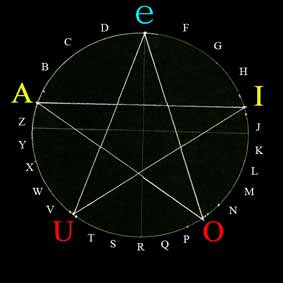
Eating from the Tree of Know_ledge - of Good and Evil - from experience where i have experienced God's evil - and plenty of good - its DRUGS:-

A more detailed explanation of the depths of the English lan_gauge can be found here my site:- www.androcies.com
This is the UK to scale, I re land denotes the British empire taking to the shore and spreading the common protocol of Earth - English, which a sage instructed me was not formed naturally but via this God
Notice the location of the 'Isle of Man':-
Brazil, Natal is a town on the nipple - of or relating to childbirth, Chill up you spine - Chile:-
Mount Sinai is where Moses received the commandments - from my experience of God - it is like an A.I.- smack between the fingers of 'peace':-
The Alpha-Bet - we use is interestingly balanced between the consonants and vowels - leave 'e' energy at the top - AI - UO - energy.
Eating from the Tree of Know_ledge - of Good and Evil - from experience where i have experienced God's evil - and plenty of good - its DRUGS:-
A more detailed explanation of the depths of the English lan_gauge can be found here my site:- www.androcies.com
Re: Panentheism
Nick:
Nick:
From our knowledge of the formal essence of certain attributes of God we see directly of necessity the essence of things, that is, scientia intuitiva. In other words, reason (ratio) functions by comparing one thing to another via commonality. This is not adequate for science because it is not based on the essence of things but rather makes deductions from common properties of things. The three points of difference between the second and third kind of knowledge is a) the object of knowledge - common properties versus essence, b) deduction versus direct insight, and c) contingent versus necessary. With scientia intuitiva we see by necessity that the essence of things, including man, follow from the essence of God.
None of what you posted supports your claim that Spinoza was a panentheist. It is should be kept in mind that the Ethics is not a theological work. His concern is with the perfection of human freedom, which can only be achieved via adequate knowledge of a particular thing, himself:
From the Ethics:Since you’ve studied Spinoza, are you familiar with what Spinoza means by attributes or the essence of things?
By attribute, I mean that which the intellect perceives as constituting the essence of substance. (Ethics I, Definition 4)
I consider as belonging to the essence of a thing that, which being given, the thing is necessarily given also, and, which being removed, the thing is necessarily removed also; in other words, that without which the thing, and which itself without the thing, can neither be nor be conceived. (Ethics II Definition 2)
If you are asking whether there can be an adequate idea of God or Nature without intuition the answer is simply yes:Do you dispute the contention here that if we limit ourselves to imagination and reason we remain being incapable of understanding the essence of nature in the context of eternal attributes.
How is that possible?PROP. XLVII. The human mind has an adequate knowledge of the eternal and infinite essence of God.
Intuition comes into play when we proceed from the adequate idea of the formal essence of God to the adequate knowledge of the essence of things.PROP. XLV. Every idea of every body, or of every particular thing actually existing, necessarily involves the eternal and infinite essence of God.
PROP. XLVI. The knowledge of the eternal and infinite essence of God which every idea involves is adequate and perfect.
Nick:
I do, but you do not.Do you see what is meant by intuition?
From our knowledge of the formal essence of certain attributes of God we see directly of necessity the essence of things, that is, scientia intuitiva. In other words, reason (ratio) functions by comparing one thing to another via commonality. This is not adequate for science because it is not based on the essence of things but rather makes deductions from common properties of things. The three points of difference between the second and third kind of knowledge is a) the object of knowledge - common properties versus essence, b) deduction versus direct insight, and c) contingent versus necessary. With scientia intuitiva we see by necessity that the essence of things, including man, follow from the essence of God.
None of what you posted supports your claim that Spinoza was a panentheist. It is should be kept in mind that the Ethics is not a theological work. His concern is with the perfection of human freedom, which can only be achieved via adequate knowledge of a particular thing, himself:
... the more each of us is able to achieve in this kind of knowledge, the more he is conscious of himself and of God, that is, the more perfect and blessed he is” (EVP31S).
-
attofishpi
- Posts: 13299
- Joined: Tue Aug 16, 2011 8:10 am
- Location: Orion Spur
- Contact:
Re: Panentheism
Let me just put something VERY important into perspective - Spinoza was a pantheist as far as i am aware - not a panentheist. But more importantly he believed (since he did not KNOW God) that God was ALL good. - That pretty much makes Spinoza a fool to anyone that actually KNOWS GOD. (me)
Re: Panentheism
Attofishpi:
Where does Spinoza say that God was ALL good? Where does attribute moral distinctions to God or Nature?But more importantly he believed (since he did not KNOW God) that God was ALL good.
-
attofishpi
- Posts: 13299
- Joined: Tue Aug 16, 2011 8:10 am
- Location: Orion Spur
- Contact:
Re: Panentheism
Mate - its 2.20 am here - i will re-look it up for you tomorrow - HE clearly stated in his writing that God is ALL good. Whatever attribute you want to attribute beyond that is up to you and the rest of the simple people here that DO NOT KNOW GOD.
Re: Panentheism
Attofishpi:
I have no interest in attributing any attributes to God. I am sure you have a lot to say about God and what others believe, but I am asking about Spinoza.Whatever attribute you want to attribute beyond that is up to you and the rest of the simple people here that DO NOT KNOW GOD.
Re: Panentheism
Seeds
Do you think the Apostles dropped everything to follow Jesus because he gave good speeches? No, it was because they had a quality of being capable of experiencing conscious potential through the presence of Jesus. Jesus could see them and they were capable of receiving the energy from this conscious looking allowing them to experience their conscious potential in comparison to their normal waking states.
There is a perennial axiom I have learned which states that where the higher can see the lower, the lower cannot see the higher. The lower cannot "see" the essence of the higher but can sense its presence. Fallen man cannot "see" conscious man but can experience them as an attraction their higher parts are drawn to.Now in purely fanciful terms (and to paraphrase something I have written elsewhere), an amoeba can metaphorically “look upwards” and see a higher rung of the ladder existing in the form of a fly.
Likewise, a fly can look up and see a higher rung in the form of a frog.
As can the frog look up and see a dog.
And finally, the dog can look up and see a human.
However, at this point there’s a problem.
When we look up, we can’t see anything.
Not in the same sense that the lower beings can look up and see us – an obvious higher level of consciousness, encapsulated in matter, looking down at them.
From our vantage point, we appear to be the top rung of the ladder because we literally cannot see anything above us.
Why?
Do you think the Apostles dropped everything to follow Jesus because he gave good speeches? No, it was because they had a quality of being capable of experiencing conscious potential through the presence of Jesus. Jesus could see them and they were capable of receiving the energy from this conscious looking allowing them to experience their conscious potential in comparison to their normal waking states.