John, you are not alone in your pessimism.
Thus I believe it is worthwhile quoting from Dr. Harris' interview with Dr. Diamandis:
"Why" asks Sam Harris, "aren’t we more aware of these positive trends?"
Peter Dianandis responds:
The simple answer is because we’re hard-wired not to notice. As the first order of business for any organism is survival, our brain privileges information that appears to threaten us. As a result, we tend to focus too much on the bad news even as the good news struggles to get through. The media is so saturated with bad news – if it bleeds, it leads – because they’re vying for the amygdala’s attention.
Furthermore, to handle the massive influx of information we process on a moment by moment basis, the brain relies on heuristics. Most of the time these work. Sometimes they fail. When they fail we call them cognitive biases. As it turns out, a lot of our cognitive biases keep us pessimistic as well. The negativity bias is a tendency to give more weight to negative information and experiences than positive ones. Confirmation bias is our tendency to search for or interpret information in ways that confirms our preconceptions—which might not be so bad on its own, but when you add the media’s focus on negative news, you have a recipe for psychological disaster. This list goes on...."
And the result unfortunately is that so many folks have been brain-washed to believe that 'the end is near.'
As to an analysis of the Optimist, the Pessimist, and the Realist, it would be helpful to read the passages on this topic in LIVING THE GOOD LIFE, pp 44-46. Here is a link to it: http://tinyurl.com/aho5cyq
Was this analysis a constructive contribution to ethical theory? I'd like to hear feedback from readers?
What did you think of that booklet? And also have you read the ABUNDANCE book yet?
John, I note you haven't yet completed the four-lesson updated course now offered on Axiogenics - a link to which I gave in a post above. It is vastly-improved over what it was back when I alluded to it in my thread here "About educated people and their understanding of values." I strongly recommend you re-read the original post HERE: viewtopic.php?f=8&t=10230.
Even Schopenhauer would want you to do it; for isn't he the one who said:
"All truth passes through three stages. First, it is ridiculed. Second, it is violently opposed. Third, it is accepted as being self-evident."
.
What does universal ethics look like?
Re: What does universal ethics look like?
Greetings, HBHegelsBagels wrote:I want to ask something and maybe this thread is the right place for it:
What must be in place conceptually before universal ethics is possible? Rational discussion requires A) a belief in reason and B) a common basis. Universal ethics therefore assumes that reason is universally uniform and universally binding, you might find some objectors to this claim, but I don't think its particularly contentious. The second is more important and that brings me to my question: What basis is assumed to be universal? Particular to ethics is the "good". One must assume there is ultimately a universal precept of "good". In other words, it must be true of every person that the assumed common notion of "good" holds for them regardless of whether they agree or are aware of it or not, so what is it?
I believe you will find an answer on pages 40-43 of Aspects of Ethics. Here is a link to it:
http://tinyurl.com/36u6gpo
The moral principles offered there apply to every human being regardless of culture, gender, blood type, etc. Human nature is part of nature and can be studied; we are value-generating creatures. Laws and systems are made for man, not man for the laws, rules, and various ideological beliefs. Existence does precede essence.
And you ask about the concept "good." It is universally so that something is good if:
it has the properties needed to fulfill its purpose (its definition, its intention.)
This, it turns out, serves as a fertile axiom from which to derive an entire system, one branch of which is Ethics. Some of the first steps at derivation are seen in this text by R. S. Hartman - "Axiology as a Science"
http://www.hartmaninstitute.org/axiologyasascience/
in which by "science" he means a consistent, coherent body of knowledge, a frame of reference, capable of arriving at testable conclusions, which can be verified by shared experience.
See, in this regard, the brief chapter "What is Science?" in the manual, ETHICS: A College Course, a link to which is here:
http://tinyurl.com/24cs9y7
It was one of my earlier papers that essayed to formalize some important notions for Ethics.
I hope this speaks to your concern.
-
Hobbes' Choice

- Posts: 8360
- Joined: Fri Oct 25, 2013 11:45 am
Re: What does universal ethics look like?
What does universal ethics look like?
Your answer....

Your answer....
-
Immanuel Can

- Posts: 30248
- Joined: Wed Sep 25, 2013 4:42 pm
Re: What does universal ethics look like?
I'm perplexed, based on the previous comments: are we looking for an ethics that is "universal" in the sense of "universally obligatory," (i.e. deontologically universal), or merely "universal" in the sense of happening to be presently approved by disparate groups around the world (phenomenologically universal)?
Why does it matter? Because they're not the same at all. Something could be the latter without being one bit of the former. However, if the former exists then the latter would be unimportant except as they happened to reflect the former.
We're equivocating the word, and so some people's suggestions are of one kind, and others are the other alternative.
I also do not understand what a "science of ethics" would look like.
Maybe prof can clear those things up.
Why does it matter? Because they're not the same at all. Something could be the latter without being one bit of the former. However, if the former exists then the latter would be unimportant except as they happened to reflect the former.
We're equivocating the word, and so some people's suggestions are of one kind, and others are the other alternative.
I also do not understand what a "science of ethics" would look like.
Maybe prof can clear those things up.
-
Immanuel Can
- Posts: 30248
- Joined: Wed Sep 25, 2013 4:42 pm
Re: What does universal ethics look like?
Hobbes:What does universal ethics look like?
Your answer....
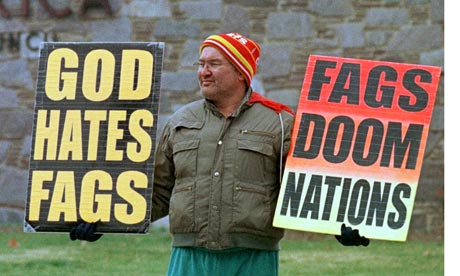
Are you saying it's *wrong* to think like a gay hater or a pulpit thumper? That seems to be your implication, though you don't say.
But if so, there is a universal ethics, according to you. It's "Don't be a gay hater or a pulpit thumper." But how would you know, if you think there's no such thing as a universal ethic?
So justify your own ethic: because if your skepticism is correct, then your indictment has no moral force either.
Re: What does universal ethics look like?
Whoever cooked this up? A howitzer is "good" because it has the properties needed to fulfill its purpose? Talking about wanting to lead astray!prof wrote: And you ask about the concept "good." It is universally so that something is good if:
it has the properties needed to fulfill its purpose (its definition, its intention.)
With regard to universal ethics, why complicate the matter?
Here is the best example for universal ethics. If you implement it you'll never have to worry again about ethics and about what is good, forever.
http://www.medjugorje.com/medjugorje-me ... mainform=1
I have the highest standards with regard to where my information is coming from. Clearly, they are universal in the absolute sense of that word, i.e., throughout all time and space. I could not possibly accept and rely on something that's inferior.
-
Hobbes' Choice
- Posts: 8360
- Joined: Fri Oct 25, 2013 11:45 am
Re: What does universal ethics look like?
Immanuel Can wrote:Hobbes:What does universal ethics look like?
Your answer....
Are you saying it's *wrong* to think like a gay hater or a pulpit thumper? That seems to be your implication, though you don't say.
But if so, there is a universal ethics, according to you. It's "Don't be a gay hater or a pulpit thumper." But how would you know, if you think there's no such thing as a universal ethic?
So justify your own ethic: because if your skepticism is correct, then your indictment has no moral force either.
I am telling you that there are many claims to universal morality. The claim that the word of god provides the sole absolute way to live, is common enough throughout history.
There are others; they all look contingent on history, culture, and the endemic assumptions of the social norms that condition the particularities of society.
I'm not pretending any "moral force". I'm just telling you the facts of history.
Your final sentence is based on a false assumption that there can be a universal morality; and this in turn is based on a completely false understanding of what morality is.
I suggest that it is based on your upbringing that suggests, through the force of societal authority that there can be a single legislative claim to the modification of human behaviour, guided either by the church or the wise old men in the government.
But history has always shown that moral law changes; generation by generation, across culture and in response to social change the the changes in power in and across class, race and other social groups.
So dream on. I'll put you with the fire-brand preacher, who just knows he's right.
-
Hobbes' Choice
- Posts: 8360
- Joined: Fri Oct 25, 2013 11:45 am
Re: What does universal ethics look like?
To Immanual Can,QMan wrote: Here is the best example for universal ethics. If you implement it you'll never have to worry again about ethics and about what is good, forever.
http://www.medjugorje.com/medjugorje-me ... mainform=1
.
Here is exactly the sort of nonsense that lies at the heart of claims to moral universality.
QMan claims that "all religions" have the key, for the reasons in the link. He immediately discludes me, as an atheist.
But there is no problem here for his way of thinking. Exceptions never matter the the pedlars of moral law.
Obviously I'm simply an anomaly and antithetical to his moral interests. That fact that this ipso facto, destroys his claim to universality seems not to bother him. Such Pariahs as me, can simply be put on the stake for burning.
Re: What does universal ethics look like?
Well if we were to imagine landing on another planet where there were beings similar to humans.there would be a battle for dominace .or an exchange of ethics .thats universal ethics.
-
Hobbes' Choice
- Posts: 8360
- Joined: Fri Oct 25, 2013 11:45 am
Re: What does universal ethics look like?
Er... no it is not.jackles wrote:Well if we were to imagine landing on another planet where there were beings similar to humans.there would be a battle for dominace .or an exchange of ethics .thats universal ethics.
Re: What does universal ethics look like?
Er yes it is.if not difine it.
Re: What does universal ethics look like?
HC, didn't know you were an Atheist (and never really bothered to think about it), so your assumption that that fact motivated some of my arguments or that it affected my attitudes and better judgment obviously has to be incorrect.Hobbes' Choice wrote:To Immanual Can,QMan wrote: Here is the best example for universal ethics. If you implement it you'll never have to worry again about ethics and about what is good, forever.
http://www.medjugorje.com/medjugorje-me ... mainform=1
.
Here is exactly the sort of nonsense that lies at the heart of claims to moral universality.
QMan claims that "all religions" have the key, for the reasons in the link. He immediately discludes me, as an atheist.
But there is no problem here for his way of thinking. Exceptions never matter the the pedlars of moral law.
Obviously I'm simply an anomaly and antithetical to his moral interests. That fact that this ipso facto, destroys his claim to universality seems not to bother him. Such Pariahs as me, can simply be put on the stake for burning.
Let me tell you what I think about atheists. It may surprise you (because I don't know if you ever did pick up a bible and read it, even just out of curiosities sake). I am jealous of atheists. The reason is, whether you know it or not, that there is a 100 to 1 probability that God loves you much more than me. You heard about the parable of the lost son. So, anyone who at any time decides to give God more of a chance in their life then they have done so far will have the red carpet rolled out for them, while I will have to use the side entrance. How do you think that makes me feel?
Also, if you had just taken a little time reading some of the material on the Medjugorje website, you would have come across the fact that the Blessed Mother deals with the Pariah issue (she deals with a lot of things that are important to any human being on a very personal level). She says that it is of utmost importance that we learn to love ourselves first because without that we cannot love God or our neighbor (truly a motherhood statement, isn't it?). And, surprise, surprise, she says, by the way, if you have problems with that issue, ask her and she will place you under the mantle of her protection so that you will succeed.
Now, all this is really good ethical stuff, don't you agree? And, really, we do not need much more than that and if it was implemented by everyone as the Blessed Mother suggests, it would absolutely get rid of all the problems in any age and time and we would be on the path to internal and therefore also to external heavenly peace.
Re: What does universal ethics look like?
Greetings, ImmanuelImmanuel Can wrote:I'm perplexed, based on the previous comments: are we looking for an ethics that is "universal" in the sense of "universally obligatory," (i.e. deontologically universal), or merely "universal" in the sense of happening to be presently approved by disparate groups around the world (phenomenologically universal)?
Why does it matter? Because they're not the same at all. Something could be the latter without being one bit of the former. ...
We're equivocating the word, and so some people's suggestions are of one kind, and others are the other alternative.
I also do not understand what a "science of ethics" would look like.
Maybe prof can clear those things up.
It is the latter, not the former; it is: eventually approved by disparate groups around the world.
As I understand it, it's like a constitution for the peoples of the planet yet it is distinct from a set of human rights. Healthcare, in the USA, is achieving the status of a human right, for example, or it will in the next few years - if all goes well.
A coherent, reliable discipline of Ethics will gain acceptance as it suggests new technologies and/or modes of media that serve to spread and facilitate the adoption of morality - as defined in the system. Read the text of ETHICS: A College Course by M. C. Katz - which you can google. Or, click here: http://tinyurl.com/24cs9y7
And study the document A Unified Theory of Ethics http://tinyurl.com/27pzhbf which is a theory in four Parts. [As a literary device, it is in dialog form; no need to keep track of the characters in the story, though.....] The last part, Part Four, entitled "Aspects of Ethics"- http://tinyurl.com/36u6gpo - has listed at the end of it some of the moral principles derived by the system: they follow from the axioms and the definitions. Your experiencing of the soundness of these principles, as well as the experience of many, many others will serve as confirmation. The predictions it makes will in time be verified.
This is not being a "moralist." I'm not one, nor are you, nor Hobbes Choice. Every individual's autonomy and individuality is encouraged by the theory. Everyone is free to comply or to not comply with any part of the theory if they so choose. ...just as they can ignore what we know about Physics, or about nutrition, or Psychology.
As a matter of fact, there are plenty of physical scientists who are not happy with how Physics currently understand "gravity." And there are plenty of Biologists who have competing theories of evolution, but they all believe in evolution. And much of physical theory (especially some findings of Quantum Theory) is counter-intuitive to the 'man in the street.'
We, for the most part, have a moral intuition. It is lately know as the conscience. Some have a more-educated conscience than others. As Ethics builds and gets a reputation as a reliable body of useful information, it can be taught in classrooms, it can be included in textbooks, its formulas can be written on blackboards the world over. People can learn. Education can become more efficient. Its content can become more vital to contributing to a quality life for all.
Have you read my earlier posts here, such as the one on value creation? Have you read up on a few of the myriad applications of the theory, such as the one entitled What Is Ethics? and "The Beautiful Simplicity of Ethical Concepts." Or the one about Ends and Means.
Questions? Discussion?
-
Hobbes' Choice
- Posts: 8360
- Joined: Fri Oct 25, 2013 11:45 am
Re: What does universal ethics look like?
Allow me to dump your drivel in the nearest circular floor located metal filing bin.QMan wrote:HC, didn't know you were an Atheist (and never really bothered to think about it), so your assumption that that fact motivated some of my arguments or that it affected my attitudes and better judgment obviously has to be incorrect.Hobbes' Choice wrote:To Immanual Can,QMan wrote: Here is the best example for universal ethics. If you implement it you'll never have to worry again about ethics and about what is good, forever.
http://www.medjugorje.com/medjugorje-me ... mainform=1
.
Here is exactly the sort of nonsense that lies at the heart of claims to moral universality.
QMan claims that "all religions" have the key, for the reasons in the link. He immediately discludes me, as an atheist.
But there is no problem here for his way of thinking. Exceptions never matter the the pedlars of moral law.
Obviously I'm simply an anomaly and antithetical to his moral interests. That fact that this ipso facto, destroys his claim to universality seems not to bother him. Such Pariahs as me, can simply be put on the stake for burning.
Let me tell you what I think about atheists. It may surprise you (because I don't know if you ever did pick up a bible and read it, even just out of curiosities sake). I am jealous of atheists. The reason is, whether you know it or not, that there is a 100 to 1 probability that God loves you much more than me. You heard about the parable of the lost son. So, anyone who at any time decides to give God more of a chance in their life then they have done so far will have the red carpet rolled out for them, while I will have to use the side entrance. How do you think that makes me feel?
PLONK.
Re: What does universal ethics look like?
Universal means nonlocal.it means ethics that dont just applie in a particular locality on earth or any where else in the universe.in other words ethics are nonlocal as in not attached to a particular event.but are general through timespace.