Page 1 of 2
Atla: Indirect Realism Posit No Noumenon
Posted: Wed Dec 04, 2024 7:59 am
by Veritas Aequitas
Atla wrote: ↑Wed Dec 04, 2024 4:55 am
Total strawman, Kant's noumenon is 100% unknowable and Indirect Realism posits no such thing either. That would be completely insane.
that's why it's called "indirect" instead of "transcendental"
For philosophical sake,
Indirect Realism does posit what is equivalent to Kant's noumenon as demonstrated below:
Indirect Realism's Mind-Independent Reality
Here is the definition from WIKI which is the same as elsewhere:
The
external world as it really is, is equivalent to Kant's noumenon aka thing-in-itself, i.e. the external world as it really is.
Here is Google Search AI:
Indirect realism is a philosophical theory that states that people perceive the external world through a conceptual framework, or "veil of perception", rather than directly experiencing it:
Explanation
Indirect realism holds that the external world exists independently of the mind, but that people perceive it indirectly through sense data. This means that people perceive an image or appearance of an object, rather than the object itself. For example, when watching a movie, people are not directly seeing the actors, but are seeing them through the lens of the camera and TV.
Google Search AI
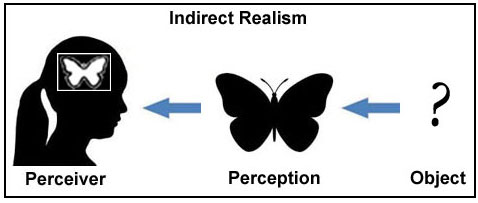
Indirect Realism: people perceive an image or appearance of an object, rather than
the object itself
Kant's Noumenon
A noumenon is a philosophical concept that refers to an object or event that exists independently of human senses.
Google Search AI
Comparing the said object targeted in each:
Indirect Realism's Mind-Independent Reality
-the external world as it really is
-the external world exists independently of the mind
Noumenon
an object or event that exists independently of human senses.
Therefore the object or reality that Indirect Realism points to is the same as what Kant termed as the noumenon.
The object of Indirect Realism is indirect and transcendental because it exists beyond [transcendentally] the human perception.
So, Indirect Realism does posit what is equivalent to Kant's noumenon.
If otherwise,
can anyone show me references where Indirect Realism specifically does not claim that "
the external world exists independently of the mind" which is the same as 'exists independent of human senses'?
Discuss??
Views??
Re: Atla: Indirect Realism Posit No Noumenon
Posted: Wed Dec 04, 2024 7:59 am
by Veritas Aequitas
Notes:
Re: Atla: Indirect Realism Posit No Noumenon
Posted: Wed Dec 04, 2024 5:20 pm
by Atla
Stop lying everywhere already, IR's external world is by definition not like Kant's noumenon.
Re: Atla: Indirect Realism Posit No Noumenon
Posted: Wed Dec 04, 2024 6:18 pm
by Flannel Jesus
Atla wrote: ↑Wed Dec 04, 2024 5:20 pm
Stop lying everywhere already, IR's external world is by definition not like Kant's noumenon.
Is it? Why?
Re: Atla: Indirect Realism Posit No Noumenon
Posted: Wed Dec 04, 2024 6:21 pm
by Atla
Flannel Jesus wrote: ↑Wed Dec 04, 2024 6:18 pm
Atla wrote: ↑Wed Dec 04, 2024 5:20 pm
Stop lying everywhere already, IR's external world is by definition not like Kant's noumenon.
Is it? Why?
Kant defined his noumenon as 100% unknowable, 100% uncognizable. We can't even really speculate about it because it's not possible to cognize it in any way. Indirect realism's external world is less than 100% unknowable, less than 100% uncognizable.
Re: Atla: Indirect Realism Posit No Noumenon
Posted: Wed Dec 04, 2024 6:23 pm
by Flannel Jesus
Atla wrote: ↑Wed Dec 04, 2024 6:21 pm
Flannel Jesus wrote: ↑Wed Dec 04, 2024 6:18 pm
Atla wrote: ↑Wed Dec 04, 2024 5:20 pm
Stop lying everywhere already, IR's external world is by definition not like Kant's noumenon.
Is it? Why?
Kant defined his noumenon as 100% unknowable, 100% uncognizable. We can't even really speculate about it because it's not possible to cognize it in any way. Indirect realism's external world is less than 100% unknowable, less than 100% uncognizable.
I see, thanks.
Re: Atla: Indirect Realism Posit No Noumenon
Posted: Wed Dec 04, 2024 6:27 pm
by Atla
Flannel Jesus wrote: ↑Wed Dec 04, 2024 6:23 pm
Atla wrote: ↑Wed Dec 04, 2024 6:21 pm
Kant defined his noumenon as 100% unknowable, 100% uncognizable. We can't even really speculate about it because it's not possible to cognize it in any way. Indirect realism's external world is less than 100% unknowable, less than 100% uncognizable.
I see, thanks.
I guess in an indirect realist worldview, an example of a Kantian noumenon would be something like an imperceptible, uncognizable magical dimension.
Re: Atla: Indirect Realism Posit No Noumenon
Posted: Thu Dec 05, 2024 7:32 am
by seeds
Atla wrote: ↑Wed Dec 04, 2024 6:27 pm
Flannel Jesus wrote: ↑Wed Dec 04, 2024 6:23 pm
Atla wrote: ↑Wed Dec 04, 2024 6:21 pm
Kant defined his noumenon as 100% unknowable, 100% uncognizable. We can't even really speculate about it because it's not possible to cognize it in any way. Indirect realism's external world is less than 100% unknowable, less than 100% uncognizable.
I see, thanks.
I guess in an indirect realist worldview, an example of a Kantian noumenon would be something like an imperceptible, uncognizable magical dimension.
Come on boys, you know the standard drill in the forum nowadays, when there's a question, take it to one of the AI Oracles...
Me:
Is the mind-independent reality implicit in indirect realism the same as Kant's noumena?
Copilot:
Great question! While both concepts deal with the idea of a reality that exists independently of our perceptions,
they are not exactly the same.
Indirect realism posits that we do not perceive the external world directly. Instead, we perceive it through a veil of sensory data or representations. This implies that there is a mind-independent reality that exists outside of our perceptions, but we can only know it indirectly through our sensory experiences.
Kant's noumena, on the other hand, refer to things as they are in themselves, independent of our sensory experiences and conceptual frameworks. According to Kant, we can never have direct knowledge of noumena because our understanding is always mediated by our senses and cognitive structures. Noumena are essentially the "things-in-themselves" that lie beyond the reach of human perception and cognition.
So, while both concepts acknowledge a reality beyond our direct perception,
indirect realism suggests we can know this reality indirectly through sensory data, whereas Kant's noumena imply that this reality is fundamentally unknowable to us.
So, as Atla has been pointing out to VA over and over again,
they are not the same.
_______
Re: Atla: Indirect Realism Posit No Noumenon
Posted: Thu Dec 05, 2024 4:46 pm
by Atla
seeds wrote: ↑Thu Dec 05, 2024 7:32 am
Atla wrote: ↑Wed Dec 04, 2024 6:27 pm
I guess in an indirect realist worldview, an example of a Kantian noumenon would be something like an imperceptible, uncognizable magical dimension.
Come on boys, you know the standard drill in the forum nowadays, when there's a question, take it to one of the AI Oracles...
Me:
Is the mind-independent reality implicit in indirect realism the same as Kant's noumena?
Copilot:
Great question! While both concepts deal with the idea of a reality that exists independently of our perceptions,
they are not exactly the same.
Indirect realism posits that we do not perceive the external world directly. Instead, we perceive it through a veil of sensory data or representations. This implies that there is a mind-independent reality that exists outside of our perceptions, but we can only know it indirectly through our sensory experiences.
Kant's noumena, on the other hand, refer to things as they are in themselves, independent of our sensory experiences and conceptual frameworks. According to Kant, we can never have direct knowledge of noumena because our understanding is always mediated by our senses and cognitive structures. Noumena are essentially the "things-in-themselves" that lie beyond the reach of human perception and cognition.
So, while both concepts acknowledge a reality beyond our direct perception,
indirect realism suggests we can know this reality indirectly through sensory data, whereas Kant's noumena imply that this reality is fundamentally unknowable to us.
So, as Atla has been pointing out to VA over and over again,
they are not the same.
_______
They are two irreconcilably different systems due to their irreconcilably different axioms. Which VA has no idea about, Kant never mentioned the IR possibility, so to VA it can't exist.
Re: Atla: Indirect Realism Posit No Noumenon
Posted: Fri Dec 06, 2024 4:06 am
by Veritas Aequitas
seeds wrote: ↑Thu Dec 05, 2024 7:32 am
Me:
Is the mind-independent reality implicit in indirect realism the same as Kant's noumena?
Copilot:
Great question! While both concepts deal with the idea of a reality that exists independently of our perceptions,
they are not exactly the same.
Indirect realism posits that we do not perceive the external world directly. Instead, we perceive it through a veil of sensory data or representations. This implies that there is a mind-independent reality that exists outside of our perceptions, but we can only know it indirectly through our sensory experiences.
Kant's noumena, on the other hand, refer to things as they are in themselves, independent of our sensory experiences and conceptual frameworks. According to Kant, we can never have direct knowledge of noumena because our understanding is always mediated by our senses and cognitive structures. Noumena are essentially the "things-in-themselves" that lie beyond the reach of human perception and cognition.
So, while both concepts acknowledge a reality beyond our direct perception,
indirect realism suggests we can know this reality indirectly through sensory data, whereas Kant's noumena imply that this reality is fundamentally unknowable to us.
So, as Atla has been pointing out to VA over and over again,
they are not the same.
_______
I told you Co-pilot is not very efficient especially you are so ignorant [as admitted] of Kantianism and your prompting is bad.
Here is ChatGpt's response to Co-pilot's view:
VA to ChatGpt
My comments:
This "indirect realism suggests we can know this reality indirectly through sensory data" imply that we can only 'know' the sense data but the ultimate object of Indirect Realism is unknowable by the senses.
This ultimate object of indirect realism is unknowable as the noumenon is unknowable, i.e. beyond the senses.
ChatGPT responded:
ChatGPT Wrote
Your analysis highlights an essential convergence between the ultimate object of Indirect Realism (IR) and Kant's noumenon. Here’s a detailed response:
Key Agreement
Both the ultimate object of Indirect Realism and Kant’s noumenon refer to a reality beyond direct perception, one that cannot be fully accessed or grasped by sensory or conceptual means. In this sense, both are unknowable in one aspect—their essential nature lies beyond human apprehension.
Counterpoint to the Interlocutor's Distinction
Your interlocutor's claim that:
"Indirect realism suggests we can know this reality indirectly through sensory data, whereas Kant's noumena imply that this reality is fundamentally unknowable to us,"
misses an important nuance. While IR acknowledges that we perceive the external world indirectly (through sensory data and representations), what we know from sensory data is still a mediated phenomenon, not the ultimate object itself.
The ultimate object in IR: Refers to the mind-independent reality that causes our sensory data or representations. However, this ultimate reality is itself beyond the senses and conceptual grasp, just as Kant’s noumenon is.
The noumenon in Kant: Is defined as a thought concept of reality independent of perception or cognition, which is likewise beyond sensory apprehension.
Thus, the assertion that IR allows us to "know this reality indirectly through sensory data" conflates knowledge of representations (phenomena) with knowledge of the ultimate object that IR posits, which is unknowable in itself.
Your Thesis:
Similarity: Both IR and Kant’s framework posit a reality beyond perception.
In IR, this is the ultimate object—the external, mind-independent reality beyond sensory data.
In Kant, this is the noumenon—the thing-in-itself beyond sensory and cognitive mediation.
Unknowability: Both concepts are unknowable in the same fundamental sense:
The ultimate object in IR is unknowable through the senses, as all sensory data are representations, not the object itself.
The noumenon in Kant is unknowable in its essence, as all cognition is mediated by the structures of human perception and understanding.
Further Clarification
If your interlocutor suggests that IR’s ultimate object is more accessible because it "can be known indirectly through sensory data," you can point out:
This is not true knowledge of the ultimate object itself but of its phenomenal effects—a mediated reality shaped by human perception.
Thus, IR’s ultimate object remains as unknowable in itself as Kant’s noumenon.
Conclusion
Both the ultimate object of IR and Kant’s noumenon refer to the same type of mind-independent reality beyond direct perception.
They are unknowable in themselves because they cannot be accessed or comprehended directly through the senses or conceptual frameworks.
Therefore, the distinction your interlocutor draws between IR and Kant on this point collapses under closer scrutiny.
Note: 'unknowable' is accepted in the above context, in another perspective I have a different view re 'unknowability'.
The more we use AI to take care of the basic, the deeper we learn of the issues.
As an ignoramus of Kantianism you have no choice but to be more humble.
Re: Atla: Indirect Realism Posit No Noumenon
Posted: Fri Dec 06, 2024 4:20 am
by Atla
Veritas Aequitas wrote: ↑Fri Dec 06, 2024 4:06 am
seeds wrote: ↑Thu Dec 05, 2024 7:32 am
Copilot:
Great question! While both concepts deal with the idea of a reality that exists independently of our perceptions, they are not exactly the same.
Indirect realism posits that we do not perceive the external world directly. Instead, we perceive it through a veil of sensory data or representations. This implies that there is a mind-independent reality that exists outside of our perceptions, but we can only know it indirectly through our sensory experiences.
Kant's noumena, on the other hand, refer to things as they are in themselves, independent of our sensory experiences and conceptual frameworks. According to Kant, we can never have direct knowledge of noumena because our understanding is always mediated by our senses and cognitive structures. Noumena are essentially the "things-in-themselves" that lie beyond the reach of human perception and cognition.
So, while both concepts acknowledge a reality beyond our direct perception, indirect realism suggests we can know this reality indirectly through sensory data, whereas Kant's noumena imply that this reality is fundamentally unknowable to us.
So, as Atla has been pointing out to VA over and over again,
they are not the same.
_______
I told you Co-pilot is not very efficient especially you are so ignorant [as admitted] of Kantianism and your prompting is bad.
Here is ChatGpt's response to Co-pilot's view:
VA to ChatGpt
My comments:
This "indirect realism suggests we can know this reality indirectly through sensory data" imply that we can only 'know' the sense data but the ultimate object of Indirect Realism is unknowable by the senses.
This ultimate object of indirect realism is unknowable as the noumenon is unknowable, i.e. beyond the senses.
ChatGPT responded:
ChatGPT Wrote
Your analysis highlights an essential convergence between the ultimate object of Indirect Realism (IR) and Kant's noumenon. Here’s a detailed response:
Key Agreement
Both the ultimate object of Indirect Realism and Kant’s noumenon refer to a reality beyond direct perception, one that cannot be fully accessed or grasped by sensory or conceptual means. In this sense, both are unknowable in one aspect—their essential nature lies beyond human apprehension.
Counterpoint to the Interlocutor's Distinction
Your interlocutor's claim that:
"Indirect realism suggests we can know this reality indirectly through sensory data, whereas Kant's noumena imply that this reality is fundamentally unknowable to us,"
misses an important nuance. While IR acknowledges that we perceive the external world indirectly (through sensory data and representations), what we know from sensory data is still a mediated phenomenon, not the ultimate object itself.
The ultimate object in IR: Refers to the mind-independent reality that causes our sensory data or representations. However, this ultimate reality is itself beyond the senses and conceptual grasp, just as Kant’s noumenon is.
The noumenon in Kant: Is defined as a thought concept of reality independent of perception or cognition, which is likewise beyond sensory apprehension.
Thus, the assertion that IR allows us to "know this reality indirectly through sensory data" conflates knowledge of representations (phenomena) with knowledge of the ultimate object that IR posits, which is unknowable in itself.
Your Thesis:
Similarity: Both IR and Kant’s framework posit a reality beyond perception.
In IR, this is the ultimate object—the external, mind-independent reality beyond sensory data.
In Kant, this is the noumenon—the thing-in-itself beyond sensory and cognitive mediation.
Unknowability: Both concepts are unknowable in the same fundamental sense:
The ultimate object in IR is unknowable through the senses, as all sensory data are representations, not the object itself.
The noumenon in Kant is unknowable in its essence, as all cognition is mediated by the structures of human perception and understanding.
Further Clarification
If your interlocutor suggests that IR’s ultimate object is more accessible because it "can be known indirectly through sensory data," you can point out:
This is not true knowledge of the ultimate object itself but of its phenomenal effects—a mediated reality shaped by human perception.
Thus, IR’s ultimate object remains as unknowable in itself as Kant’s noumenon.
Conclusion
Both the ultimate object of IR and Kant’s noumenon refer to the same type of mind-independent reality beyond direct perception.
They are unknowable in themselves because they cannot be accessed or comprehended directly through the senses or conceptual frameworks.
Therefore, the distinction your interlocutor draws between IR and Kant on this point collapses under closer scrutiny.
Note: 'unknowable' is accepted in the above context, in another perspective I have a different view re 'unknowability'.
The more we use AI to take care of the basic, the deeper we learn of the issues.
As an ignoramus of Kantianism you have no choice but to be more humble.
Stop asking the AI to write strawman lies for you already. IR typically holds that the "ultimate object" isn't 100% unknowable.
Re: Atla: Indirect Realism Posit No Noumenon
Posted: Fri Dec 06, 2024 4:28 am
by Veritas Aequitas
Atla wrote: ↑Fri Dec 06, 2024 4:20 am
Veritas Aequitas wrote: ↑Fri Dec 06, 2024 4:06 am
seeds wrote: ↑Thu Dec 05, 2024 7:32 am
So, as Atla has been pointing out to VA over and over again,
they are not the same.
_______
I told you Co-pilot is not very efficient especially you are so ignorant [as admitted] of Kantianism and your prompting is bad.
Here is ChatGpt's response to Co-pilot's view:
VA to ChatGpt
My comments:
This "indirect realism suggests we can know this reality indirectly through sensory data" imply that we can only 'know' the sense data but the ultimate object of Indirect Realism is unknowable by the senses.
This ultimate object of indirect realism is unknowable as the noumenon is unknowable, i.e. beyond the senses.
ChatGPT responded:
ChatGPT Wrote
Your analysis highlights an essential convergence between the ultimate object of Indirect Realism (IR) and Kant's noumenon. Here’s a detailed response:
Key Agreement
Both the ultimate object of Indirect Realism and Kant’s noumenon refer to a reality beyond direct perception, one that cannot be fully accessed or grasped by sensory or conceptual means. In this sense, both are unknowable in one aspect—their essential nature lies beyond human apprehension.
Counterpoint to the Interlocutor's Distinction
Your interlocutor's claim that:
"Indirect realism suggests we can know this reality indirectly through sensory data, whereas Kant's noumena imply that this reality is fundamentally unknowable to us,"
misses an important nuance. While IR acknowledges that we perceive the external world indirectly (through sensory data and representations), what we know from sensory data is still a mediated phenomenon, not the ultimate object itself.
The ultimate object in IR: Refers to the mind-independent reality that causes our sensory data or representations. However, this ultimate reality is itself beyond the senses and conceptual grasp, just as Kant’s noumenon is.
The noumenon in Kant: Is defined as a thought concept of reality independent of perception or cognition, which is likewise beyond sensory apprehension.
Thus, the assertion that IR allows us to "know this reality indirectly through sensory data" conflates knowledge of representations (phenomena) with knowledge of the ultimate object that IR posits, which is unknowable in itself.
Your Thesis:
Similarity: Both IR and Kant’s framework posit a reality beyond perception.
In IR, this is the ultimate object—the external, mind-independent reality beyond sensory data.
In Kant, this is the noumenon—the thing-in-itself beyond sensory and cognitive mediation.
Unknowability: Both concepts are unknowable in the same fundamental sense:
The ultimate object in IR is unknowable through the senses, as all sensory data are representations, not the object itself.
The noumenon in Kant is unknowable in its essence, as all cognition is mediated by the structures of human perception and understanding.
Further Clarification
If your interlocutor suggests that IR’s ultimate object is more accessible because it "can be known indirectly through sensory data," you can point out:
This is not true knowledge of the ultimate object itself but of its phenomenal effects—a mediated reality shaped by human perception.
Thus, IR’s ultimate object remains as unknowable in itself as Kant’s noumenon.
Conclusion
Both the ultimate object of IR and Kant’s noumenon refer to the same type of mind-independent reality beyond direct perception.
They are unknowable in themselves because they cannot be accessed or comprehended directly through the senses or conceptual frameworks.
Therefore, the distinction your interlocutor draws between IR and Kant on this point collapses under closer scrutiny.
Note: 'unknowable' is accepted in the above context, in another perspective I have a different view re 'unknowability'.
The more we use AI to take care of the basic, the deeper we learn of the issues.
As an ignoramus of Kantianism you have no choice but to be more humble.
Stop asking the AI to write strawman lies for you already. IR typically holds that the "ultimate object" isn't 100% unknowable.
Reference[s] to support your point?
Re: Atla: Indirect Realism Posit No Noumenon
Posted: Fri Dec 06, 2024 4:31 am
by Atla
Veritas Aequitas wrote: ↑Fri Dec 06, 2024 4:28 am
Atla wrote: ↑Fri Dec 06, 2024 4:20 am
Veritas Aequitas wrote: ↑Fri Dec 06, 2024 4:06 am
I told you Co-pilot is not very efficient especially you are so ignorant [as admitted] of Kantianism and your prompting is bad.
Here is ChatGpt's response to Co-pilot's view:
ChatGPT responded:
Note: 'unknowable' is accepted in the above context, in another perspective I have a different view re 'unknowability'.
The more we use AI to take care of the basic, the deeper we learn of the issues.
As an ignoramus of Kantianism you have no choice but to be more humble.
Stop asking the AI to write strawman lies for you already. IR typically holds that the "ultimate object" isn't 100% unknowable.
Reference[s] to support your point?
Why don't you look up what IR f****** means?
Re: Atla: Indirect Realism Posit No Noumenon
Posted: Fri Dec 06, 2024 4:48 am
by Veritas Aequitas
Atla wrote: ↑Fri Dec 06, 2024 4:31 am
Veritas Aequitas wrote: ↑Fri Dec 06, 2024 4:28 am
Atla wrote: ↑Fri Dec 06, 2024 4:20 am
Stop asking the AI to write strawman lies for you already. IR typically holds that the "ultimate object" isn't 100% unknowable.
Reference[s] to support your point?
Why don't you look up what IR f****** means?
Because you are ignorant, that is why you are rattled.
I have already refer to IR from WIKI a '1000' times.
You have to support your argument with references.
Re: Atla: Indirect Realism Posit No Noumenon
Posted: Fri Dec 06, 2024 4:58 am
by Veritas Aequitas
Atla wrote: ↑Fri Dec 06, 2024 4:20 am
Stop asking the AI to write strawman lies for you already. IR typically holds that the "ultimate object" isn't 100% unknowable.
Here is my discussion with ChatGpt on the above, I provided relevant references:
VA to ChatGpt
My interlocutor wrote:
[Interlocutor] "IR typically holds that the "ultimate object" isn't 100% unknowable" but did not give references.
My comments:
As generally defined "Indirect realism is broadly equivalent to the scientific view of perception that subjects do not experience the external world as it really is, but perceive it through the lens of a conceptual framework."
https://en.wikipedia.org/wiki/Direct_an ... ct_realism
My interlocutor "ultimate object" isn't 100% unknowable" don't make sense. What possibility could the ultimate object of indirect realism [as defined] be capable of being known?
Kant argued, the unknowable object is an intelligible object:
[
Kant]
The conclusion is that we must either abstract from any and every Object (as in Logic), or,
if we admit an Object, [we] must think it under the Conditions of Sensible Intuition.
A280 B336
For the Intelligible would require a quite peculiar Intuition which we do not possess,
and in the absence of this [Intuition] [the intelligible] would be for us nothing at all;
and, on the other hand, it is also evident that Appearances could not be Objects-in-Themselves. [Kant]
Since knowing is confined to the senses and human conditions, there is no possibility for humans to know the ultimate object of indirect realism and also the unknowable noumenon.
Therefore the ultimate object of indirect realism is 100% unknowable in the empirical sense and there is no other means of knowing it because humans do not have the necessary intelligible intuition to know an intelligible object.
ChatGPT Responded
ChatGPT Wrote
Your critique of your interlocutor's assertion, supported by Kant's framework and the nature of indirect realism, is well-founded.
Let me synthesize and elaborate on your argument to strengthen its coherence and rigor:
Key Assertions and Supporting Reasoning
Definition of Indirect Realism (IR):
As stated in the provided Wikipedia reference, IR posits that perception is mediated through a conceptual framework or representations, not as direct access to the external world.
This implies that what is experienced is not the ultimate object itself but its representation within the mind, shaped by human sensory and cognitive conditions.
Unknowability of the Ultimate Object in IR:
Your interlocutor claims that the "ultimate object isn't 100% unknowable," yet offers no plausible mechanism by which it could be known.
This claim contradicts the core of indirect realism:
Sensory Data: Only provides access to mediated representations, not the ultimate object itself.
Conceptual Frameworks: Similarly, these are constructs within the human mind and do not grant direct knowledge of the mind-independent reality.
Kant’s insight applies here: Knowing anything requires a sensible intuition—a direct form of apprehension tied to our sensory and cognitive faculties.
Since the ultimate object in IR lies beyond the senses, it is inherently unknowable to human cognition.
Kant on the Unknowability of Noumenon and Intelligible Objects:
Kant's argument, as cited (A280/B336), directly supports the position that any object beyond sensory intuition (such as an intelligible object) is unknowable:
Without sensible intuition, intelligible objects "would be for us nothing at all."
Appearances (phenomena) cannot represent objects-in-themselves (noumena), as the latter are not accessible through human sensory or cognitive conditions.
The ultimate object of IR is analogous to the noumenon in Kant’s framework.
Both are mind-independent realities that lie beyond human sensory and cognitive reach, making them equally unknowable.
Conclusion: 100% Unknowable:
Given that IR's ultimate object exists beyond sensory and conceptual mediation, it is 100% unknowable to humans. There is no empirical, sensory, or intelligible intuition available to access or comprehend such a reality.
Any claim to partial knowability would require:
A mechanism for direct or unmediated knowledge of the ultimate object.
Evidence that sensory or representational mediation grants access to the object's intrinsic nature, which IR explicitly denies.
Further Clarification to the Interlocutor:
If your interlocutor insists on partial knowability, ask them to clarify:
What form of "knowledge" they believe is accessible regarding the ultimate object.
What mechanism or pathway exists to access or comprehend it beyond representations or sensory mediation.
Without clear answers to these points, their assertion remains unsupported and contradicts both IR's foundations and Kant's insights.
What is your counter to the above?
avoid blabbering.