Bhaskar: A Realist Theory of Science
Posted: Wed Sep 15, 2021 5:35 am
For anyone interested, here is the Introduction to Roy Bhaskar's A Realist Theory of Science;
Introduction
The aim of this book is the development of a Systematic Realist Account Of Science.
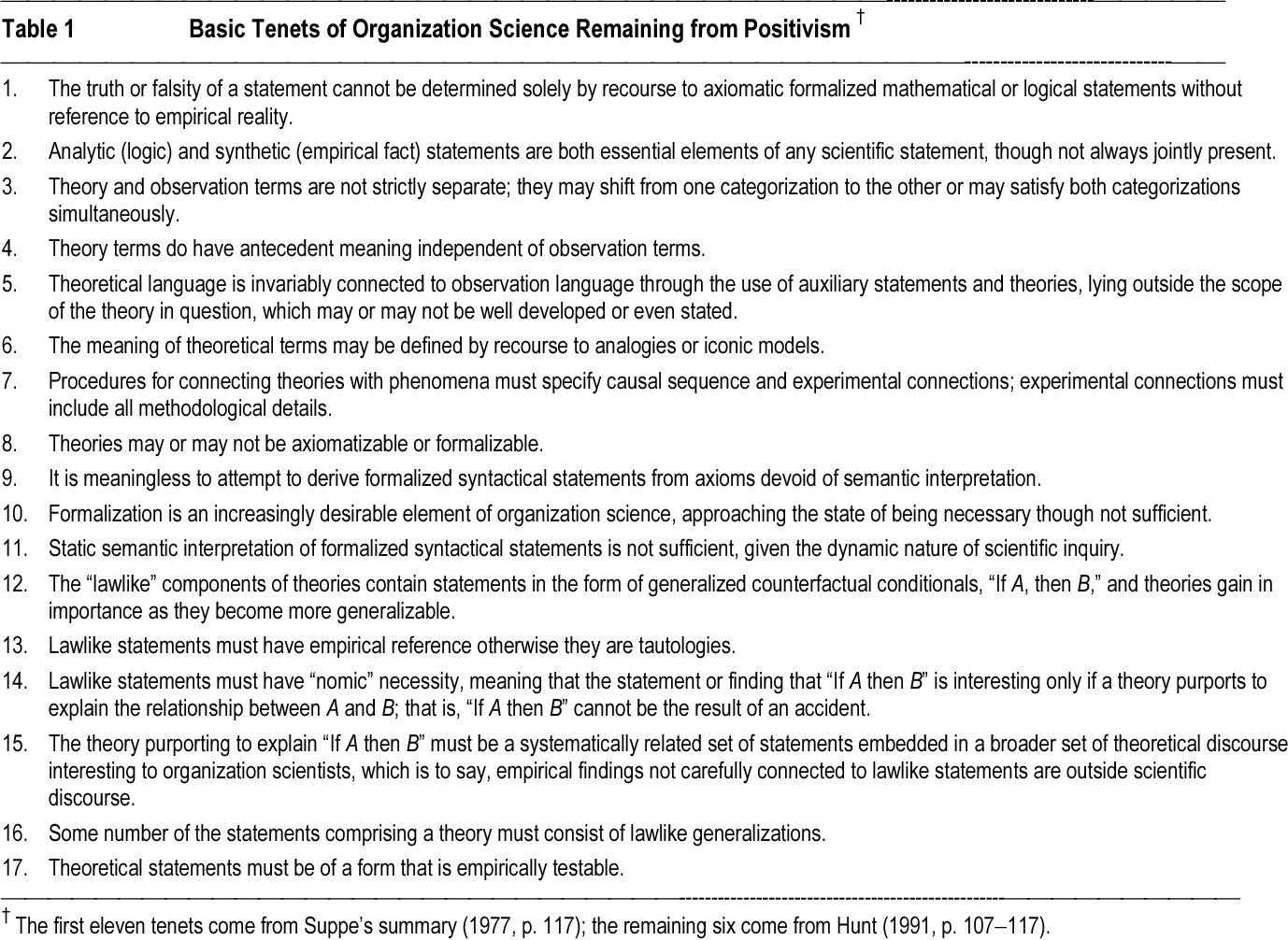
Such an account [expositions] must provide a comprehensive alternative to the Positivism [see note below] which since the time of Hume has fashioned our image of Science.
Central to the Positivist vision of Science is the Humean Theory Of Causal Laws.
It is a principal concern of this study to develop some new arguments and show how they relate to more familiar ones against this still widely accepted theory.
In particular I want to argue that not only is a constant conjunction of events not a sufficient, it is not even a necessary condition for a scientific law; and that it is only if we can establish the latter [scientific law] that we can provide an adequate rationale for the former [constant conjunction].
It has often been contended that a constant conjunction of events is insufficient, but it has not so far been systematically argued that it is not necessary.
This can, however, be shown by a transcendental argument from the nature of experimental activity.
It is a condition of the intelligibility of experimental activity that in an experiment the experimenter is a causal agent of a sequence of events but not of the Causal Law which the sequence of events enables him to identify.
This suggests that there is a ontological distinction between scientific laws and patterns of events.
Obviously this creates a prima facie problem for any theory of Science.
I think that it can be solved along the following lines:
To ascribe a law one needs a theory.
For it is only if it is backed by a theory, containing a model or conception of a putative causal or explanatory ‘link’,
that a law can be distinguished from a purely accidental concommitance.
The possibility of saying this clearly depends upon a non-reductionist conception of theory.
Now at the core of theory is a conception or picture of a natural mechanism or structure at work.
Under certain conditions some postulated mechanisms can come to be established as real.
And it is in the working of such mechanisms that the objective basis of our ascriptions of Natural Necessity lies.
It is only if we make the assumption of the real independence of such mechanisms from the events they generate
that we are justified in assuming that they endure
and go on acting in their normal way outside the experimentally closed conditions that enable us to empirically identify them.
But it is only if we are justified in assuming this that the idea of the universality of a known law can be sustained or that experimental activity can be rendered intelligible.
Hence one of the chief objections to Positivism is that it cannot show why or the conditions under which experience is significant in Science.
Most critics have emphasized its depreciation of the role of theory; this argument shows its inadequacy to experience.
Moreover it is only because it must be assumed, if experimental activity is to be rendered intelligible,
that natural mechanisms endure and act outside the conditions that enable us to identify them
that the applicability of known laws in open systems, i.e. in systems where no constant conjunctions of events prevail, can be sustained.
This has the corollary that a constant conjunction of events cannot be necessary for the assumption of the efficacy of a law.
This argument shows that real structures exist independently of and are often out of phase with the actual patterns of events.
Indeed it is only because of the latter [actual events] that we need to perform experiments and only because of the former [real structures] that we can make sense of our performances of them.
Similarly it can be shown to be a condition of the intelligibility of perception that events occur independently of experiences.
And experiences are often (epistemically speaking) ‘out of phase’ with events—e.g. when they are misidentified.
It is partly because of this possibility that the scientist needs a scientific education or training.
Thus I will argue that what I will call the Domains of
1. the real,
2. the actual and
3. the empirical
are distinct.
This is represented in Table 0.1 below:-
.....................REAL..............ACTUAL.........EMPIRICAL
Mechanisms.........Y.....
Events................Y...................Y..
Experience..........Y............ .......Y.................Y.........
The real basis of Causal Laws are provided by the generative mechanisms of Nature.
Such generative mechanisms are, it is argued, nothing other than the ways of acting of Things.
And Causal Laws must be analysed as their Tendencies.
Tendencies may be regarded as powers or liabilities of a Thing which may be exercised without being manifest in any particular outcome.
The kind of conditional we are concerned with here may be characterised as normic.
They are not counter-factual but transfactual statements.
Nomic Universals, properly understood, are transfactual or normic statements with factual instances in the laboratory (and perhaps a few other effectively closed contexts) that constitute their empirical grounds;
they need not, and in general will not, be reflected in an invariant pattern or regularly recurring sequence of Events.
The weakness of the Humean concept of laws is that it ties laws to closed systems, viz. systems where a constant conjunction of events occurs.
This has the consequence that neither the experimental establishment nor the practical application of our knowledge in open systems can be sustained.
Once we allow for open systems then laws can only be universal if they are interpreted in a non-empirical (transfactual) way, i.e. as designating the activity of Generative Mechanisms and Structures independently of any Particular Sequence or Pattern Of Events.
But once we do this there is an ontological basis for a Concept Of Natural Necessity, that is necessity in nature quite independent of men or human activity.
Introduction
The aim of this book is the development of a Systematic Realist Account Of Science.
Such an account [expositions] must provide a comprehensive alternative to the Positivism [see note below] which since the time of Hume has fashioned our image of Science.
Central to the Positivist vision of Science is the Humean Theory Of Causal Laws.
It is a principal concern of this study to develop some new arguments and show how they relate to more familiar ones against this still widely accepted theory.
In particular I want to argue that not only is a constant conjunction of events not a sufficient, it is not even a necessary condition for a scientific law; and that it is only if we can establish the latter [scientific law] that we can provide an adequate rationale for the former [constant conjunction].
It has often been contended that a constant conjunction of events is insufficient, but it has not so far been systematically argued that it is not necessary.
This can, however, be shown by a transcendental argument from the nature of experimental activity.
It is a condition of the intelligibility of experimental activity that in an experiment the experimenter is a causal agent of a sequence of events but not of the Causal Law which the sequence of events enables him to identify.
This suggests that there is a ontological distinction between scientific laws and patterns of events.
Obviously this creates a prima facie problem for any theory of Science.
I think that it can be solved along the following lines:
To ascribe a law one needs a theory.
For it is only if it is backed by a theory, containing a model or conception of a putative causal or explanatory ‘link’,
that a law can be distinguished from a purely accidental concommitance.
The possibility of saying this clearly depends upon a non-reductionist conception of theory.
Now at the core of theory is a conception or picture of a natural mechanism or structure at work.
Under certain conditions some postulated mechanisms can come to be established as real.
And it is in the working of such mechanisms that the objective basis of our ascriptions of Natural Necessity lies.
It is only if we make the assumption of the real independence of such mechanisms from the events they generate
that we are justified in assuming that they endure
and go on acting in their normal way outside the experimentally closed conditions that enable us to empirically identify them.
But it is only if we are justified in assuming this that the idea of the universality of a known law can be sustained or that experimental activity can be rendered intelligible.
Hence one of the chief objections to Positivism is that it cannot show why or the conditions under which experience is significant in Science.
Most critics have emphasized its depreciation of the role of theory; this argument shows its inadequacy to experience.
Moreover it is only because it must be assumed, if experimental activity is to be rendered intelligible,
that natural mechanisms endure and act outside the conditions that enable us to identify them
that the applicability of known laws in open systems, i.e. in systems where no constant conjunctions of events prevail, can be sustained.
This has the corollary that a constant conjunction of events cannot be necessary for the assumption of the efficacy of a law.
This argument shows that real structures exist independently of and are often out of phase with the actual patterns of events.
Indeed it is only because of the latter [actual events] that we need to perform experiments and only because of the former [real structures] that we can make sense of our performances of them.
Similarly it can be shown to be a condition of the intelligibility of perception that events occur independently of experiences.
And experiences are often (epistemically speaking) ‘out of phase’ with events—e.g. when they are misidentified.
It is partly because of this possibility that the scientist needs a scientific education or training.
Thus I will argue that what I will call the Domains of
1. the real,
2. the actual and
3. the empirical
are distinct.
This is represented in Table 0.1 below:-
.....................REAL..............ACTUAL.........EMPIRICAL
Mechanisms.........Y.....
Events................Y...................Y..
Experience..........Y............ .......Y.................Y.........
The real basis of Causal Laws are provided by the generative mechanisms of Nature.
Such generative mechanisms are, it is argued, nothing other than the ways of acting of Things.
And Causal Laws must be analysed as their Tendencies.
Tendencies may be regarded as powers or liabilities of a Thing which may be exercised without being manifest in any particular outcome.
The kind of conditional we are concerned with here may be characterised as normic.
They are not counter-factual but transfactual statements.
Nomic Universals, properly understood, are transfactual or normic statements with factual instances in the laboratory (and perhaps a few other effectively closed contexts) that constitute their empirical grounds;
they need not, and in general will not, be reflected in an invariant pattern or regularly recurring sequence of Events.
The weakness of the Humean concept of laws is that it ties laws to closed systems, viz. systems where a constant conjunction of events occurs.
This has the consequence that neither the experimental establishment nor the practical application of our knowledge in open systems can be sustained.
Once we allow for open systems then laws can only be universal if they are interpreted in a non-empirical (transfactual) way, i.e. as designating the activity of Generative Mechanisms and Structures independently of any Particular Sequence or Pattern Of Events.
But once we do this there is an ontological basis for a Concept Of Natural Necessity, that is necessity in nature quite independent of men or human activity.
