Tree of Knowledge
Posted: Sat Feb 20, 2021 7:44 pm
It grew upon a 3rd rock from the Sun. Sun of God - I Am The Light..Rick Lewis - editorial wrote: According to Genesis (the Bible book, not the rock group) the Tree of the Knowledge of Good and Evil grew in the Garden of Eden.

Or, do we actually gain, inner sense? -- when we eat from this 'fruit'?Rick Lewis - editorial wrote:It bore the Forbidden Fruit; the apple whose sweet taste ends innocence.
I know I don't owe U a cold beer, and B cause - U didn't mention the storage factor, that is THE primary requirement to the concept of 'knowledge'. #; )Rick Lewis - editorial wrote:According to a story Newton himself often told, it was watching an apple fall from the tree that set him to wondering whether the Earth itself was somehow pulling the apple towards its centre, and if so, whether that force might extend up into space as far as the Moon. These two trees of knowledge have inspired our front cover illustration by Stephen Lee.
How do we know anything? The theory of knowledge, known to the in-crowd as epistemology, has been a central part of philosophy since the earliest times. It is the theme of this issue.
Epistemology deals with a cluster of related questions. What does it mean to say we know something? How can we be sure if any given proposition is reliable or accurate? What types of evidence are required to justify different kinds of belief? Are we born with any innate knowledge or do we acquire all of it from experience, as the empiricists believe, or from the exercise of reason, as rationalists argue? What is knowledge? What is truth? How do you know you are holding this magazine? How do you know you don’t owe the editor a cold beer?
Certainty. (something we can all rest assured by, thank fart for Descartes) I fart therefore the matter that I perceive as the only thing I truly control, quite often, is uncontrollable.Rick Lewis - editorial wrote:Some people say that the central strand in the history of philosophy is the search for truth. Conversely a tendency in philosophy for thousands of years has been scepticism – philosophical doubt about our ability to know particular things, such as the existence of the external world, or of other minds, or of moral certainty, or of the existence of God. Radical scepticism is doubting our ability to know anything at all. Descartes started with that position. Surrounded by sceptics on all sides, he wanted to find certainty. So he went one better than them by doubting everything. In a famous thought experiment he imagines an evil demon “of the utmost power and cunning” deliberately setting out to deceive him about everything. And then he thought, is there anything I could still know in such a situation? And he answered himself – yes. Even if he was being deceived about everything, then his thoughts while erroneous would still be thoughts. So he knew one thing: “I think” And from that he knew a second: “Therefore I exist.”

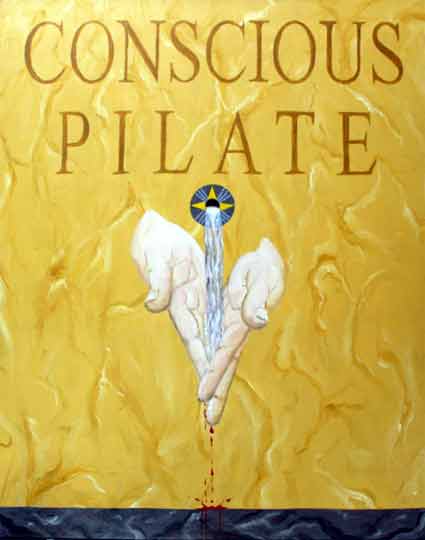
.How do we know anything? The theory of knowledge, known to the in-crowd as epistemology, has been a central part of philosophy since the earliest times. It is the theme of this issue.
My experiences have proven to me that many of those interested in modern philosophy only are concerned with inductive or bottom up reason. They are intolerant of conscious contemplation leading to a higher reality and deductive or top down reason. This seems like striving to know a little bit of everything and a lot of nothing. Does humanity lose anything by abandoning conscious contemplation in favor of computers? Jacob Needleman writes in his book "the Heart of Philosophy."1930
"Many people think that the progress of the human race is based on experiences of an empirical, critical nature, but I say that true knowledge is to be had only through a philosophy of deduction. For it is intuition that improves the world, not just following the trodden path of thought. Intuition makes us look at unrelated facts and then think about them until they can all be brought under one law. To look for related facts means holding onto what one has instead of searching for new facts. Intuition is the father of new knowledge, while empiricism is nothing but an accumulation of old knowledge. Intuition, not intellect, is the ‘open sesame’ of yourself." -- Albert Einstein, in Einstein and the Poet – In Search of the Cosmic Man by William Hermanns (Branden Press, 1983, p. 16.), conversation March 4, 1930
Do I really want to be a thing who knows a lot or is there something else I need.Chapter 1
Introduction
Man cannot live without philosophy. This is not a figure of speech but a literal fact that will be demonstrated in this book. There is a yearning in the heart that is nourished only by real philosophy and without this nourishment man dies as surely as if he were deprived of food and air. But this part of the human psyche is not known or honored in our culture. When it does breakthrough to our awareness it is either ignored or treated as something else. It is given wrong names; it is not cared for; it is crushed. And eventually, it may withdraw altogether, never again to appear. When this happens man becomes a thing. No matter what he accomplishes or experiences, no matter what happiness he experiences or what service he performs, he has in fact lost his real possibility. He is dead.
……………………….The function of philosophy in human life is to help Man remember. It has no other task. And anything that calls itself philosophy which does not serve this function is simply not philosophy……………………………….
The cycles of time as we know in "levels of reality" I believe are genuine. The cycle of time or birth to death for a galaxy is less for example than the the cycle of birth to death for a solar system. Yet what is time? Is it the breath of Brahma? Is there no linear movement of existence but just the inhalation and exhalation of BrahmaTime in Buddhist cosmology is measured in kalpas. Originally, a kalpa was considered to be 4,320,000 years. Buddhist scholars expanded it with a metaphor: rub a one-mile cube of rock once every hundred years with a piece of silk, until the rock is worn away -- and a kalpa still hasn’t passed! During a kalpa, the world comes into being, exists, is destroyed, and a period of emptiness ensues. Then it all starts again.
Before creation the light and the actuality of day and night came into existence. But what is "day" and how is it measured before creation? These are the questions I believe philosophy and the use of deductive reason can lead us to experience by noesis when free from arguing secularized partial truthsGenesis 1
1 In the beginning God created the heavens and the earth. 2 Now the earth was formless and empty, darkness was over the surface of the deep, and the Spirit of God was hovering over the waters.
3 And God said, “Let there be light,” and there was light. 4 God saw that the light was good, and he separated the light from the darkness. 5 God called the light “day,” and the darkness he called “night.” And there was evening, and there was morning—the first day.
Did you transpose galaxy and solar system?Nick_A wrote: ↑Mon Feb 22, 2021 8:06 pm The cycles of time as we know in "levels of reality" I believe are genuine. The cycle of time or birth to death for a galaxy is less for example than the the cycle of birth to death for a solar system. Yet what is time? Is it the breath of Brahma? Is there no linear movement of existence but just the inhalation and exhalation of Brahma