Page 1 of 21
is/ought, final answer
Posted: Tue Feb 09, 2021 7:32 am
by Advocate
You can't "should" if there's no "could". IS is a prerequisite for OUGHT.
Re: is/ought, final answer
Posted: Tue Feb 09, 2021 1:36 pm
by FlashDangerpants
Sometimes it is just hard to believe that it is you telling us that you are the greatest mind ever to have lived, with gems like that we should really be telling you.
Re: is/ought, final answer
Posted: Tue Feb 09, 2021 1:49 pm
by Sculptor
Advocate wrote: ↑Tue Feb 09, 2021 7:32 am
You can't "should" if there's no "could". IS is a prerequisite for OUGHT.
missing the point ???#
Re: is/ought, final answer
Posted: Tue Feb 09, 2021 1:54 pm
by Sculptor
is/ought goes like this..
Trump is a moron
THEREFORE.....
We ought to.... kill him, send him, to school, ignore him, (take your pick)
Child molestation IS bad for children.
Therefore we ought to ... (take your pick)
Answers do not necessarily follow from the "IS".
I can think of many possible and debatable oughts from this, but nothing is justified of necessity.
The missing line of reasoning between the IS and OUGHT is where the obejectivist fallacy lies, and where the relativist/subjectivist employs reasoning
Re: is/ought, final answer
Posted: Tue Feb 09, 2021 2:02 pm
by Peter Holmes
Advocate wrote: ↑Tue Feb 09, 2021 7:32 am
You can't "should" if there's no "could". IS is a prerequisite for OUGHT.
But no OUGHT is necessarily an IS. Final answer.
Re: is/ought, final answer
Posted: Tue Feb 09, 2021 3:36 pm
by Advocate
[quote=FlashDangerpants post_id=495269 time=1612874172 user_id=11800]
Sometimes it is just hard to believe that it is you telling us that you are the greatest mind ever to have lived, with gems like that we should really be telling you.
[/quote]
You prefer long expositions with extended arguments ii suppose, but those are rarely necessary to espouse wisdom. Why would i want to extend my argument to cover any details for the likes of you? It's no great wonder if non-great minds can't accept the ideas of great ones. We understand how that works.
Re: is/ought, final answer
Posted: Tue Feb 09, 2021 3:38 pm
by Advocate
[quote=Sculptor post_id=495271 time=1612875263 user_id=17400]
is/ought goes like this..
Trump is a moron
THEREFORE.....
We ought to.... kill him, send him, to school, ignore him, (take your pick)
Child molestation IS bad for children.
Therefore we ought to ... (take your pick)
Answers do not necessarily follow from the "IS".
I can think of many possible and debatable oughts from this, but nothing is justified of necessity.
The missing line of reasoning between the IS and OUGHT is where the obejectivist fallacy lies, and where the relativist/subjectivist employs [i]reasoning[/i]
[/quote]
OUGHTS are fact contingent. If we want world X, behavior Y is appropriate *because it's most likely to get us there*. If your priority is X and you're faced with situation Y, you OUGHT do thing Z. That's what morality is. There no fallacy whatsoever. Morality is entirely pragmatic in nature.
Re: is/ought, final answer
Posted: Tue Feb 09, 2021 3:46 pm
by Terrapin Station
Advocate wrote: ↑Tue Feb 09, 2021 3:38 pm
Sculptor wrote: ↑Tue Feb 09, 2021 1:54 pm
is/ought goes like this..
Trump is a moron
THEREFORE.....
We ought to.... kill him, send him, to school, ignore him, (take your pick)
Child molestation IS bad for children.
Therefore we ought to ... (take your pick)
Answers do not necessarily follow from the "IS".
I can think of many possible and debatable oughts from this, but nothing is justified of necessity.
The missing line of reasoning between the IS and OUGHT is where the obejectivist fallacy lies, and where the relativist/subjectivist employs
reasoning
OUGHTS are fact contingent. If we want world X, behavior Y is appropriate because it's most likely to get us there. If your priority is X and you're faced with situation Y, you OUGHT do thing Z. That's what morality is. There no fallacy whatsoever..
That would be desire-contingent, or we could say that the fact it's contingent on is your desire.
Also, "I desire to do x, therefore I should do y (which will achieve x)" doesn't follow, because desiring to do x is actually different than being motivated to (do something that will actually) achieve x. If you're also motivated to (do something that will actually) achieve x as well, that's also different than wanting/being motivated to take certain sorts of actions to achieve x, it's different than wanting/being motivated to take actions that are the most efficient and effective for achieving x, and so on.
So this isn't nearly as simple of an equation as people make it out to be. There's a whole host of psychological states that need to be considered.
Re: is/ought, final answer
Posted: Tue Feb 09, 2021 3:47 pm
by Terrapin Station
Forgot to add, so given the above, even facts about desires do not imply oughts.
Re: is/ought, final answer
Posted: Tue Feb 09, 2021 3:50 pm
by Peter Holmes
Advocate wrote: ↑Tue Feb 09, 2021 3:38 pm
Sculptor wrote: ↑Tue Feb 09, 2021 1:54 pm
is/ought goes like this..
Trump is a moron
THEREFORE.....
We ought to.... kill him, send him, to school, ignore him, (take your pick)
Child molestation IS bad for children.
Therefore we ought to ... (take your pick)
Answers do not necessarily follow from the "IS".
I can think of many possible and debatable oughts from this, but nothing is justified of necessity.
The missing line of reasoning between the IS and OUGHT is where the obejectivist fallacy lies, and where the relativist/subjectivist employs
reasoning
OUGHTS are fact contingent. If we want world X, behavior Y is appropriate *because it's most likely to get us there*. If your priority is X and you're faced with situation Y, you OUGHT do thing Z. That's what morality is. There no fallacy whatsoever. Morality is entirely pragmatic in nature.
Nope. Consistency with a goal is not a sufficient condition for moral objectivity. If modal 'ought' in an assertion is factual/instrumental, then the assertion doesn't make a moral claim. The claim 'X is consistent with goal Y' isn't a moral assertion, so it can't be a moral fact.
Re: is/ought, final answer
Posted: Tue Feb 09, 2021 4:02 pm
by Atla
Advocate wrote: ↑Tue Feb 09, 2021 3:38 pm
OUGHTS are fact contingent. If we want world X, behavior Y is appropriate *because it's most likely to get us there*. If your priority is X and you're faced with situation Y, you OUGHT do thing Z. That's what morality is. There no fallacy whatsoever. Morality is entirely pragmatic in nature.
What if I want to be known as the greatest mass murderer in history*? Is that also morality?
(*cause I'm curious if I could get more love letters than Bundy, once I'm in jail)
Re: is/ought, final answer
Posted: Tue Feb 09, 2021 4:07 pm
by Advocate
>Also, "I desire to do x, therefore I should do y (which will achieve x)" doesn't follow, because desiring to do x is actually different than being motivated to (do something that will actually) achieve x. If you're also motivated to (do something that will actually) achieve x as well, that's also different than wanting/being motivated to take certain sorts of actions to achieve x, it's different than wanting/being motivated to take actions that are the most efficient and effective for achieving x, and so on.
That's why i take morality to be a personal and ethics to be a group understanding of how to achieve whatever, because they require different dynamics. The motivation for your moral acts must be the sort of act that you believe tends to lead to good outcomes, however you define it. The boundaries of ethics are different because they must account for the good of a particular group. Ideally that group is everyone involved and every interest of every individual in the group. Since that is rarely possible, we use ethics as "best practice" for which there may be alternative answers depending on various minutae.
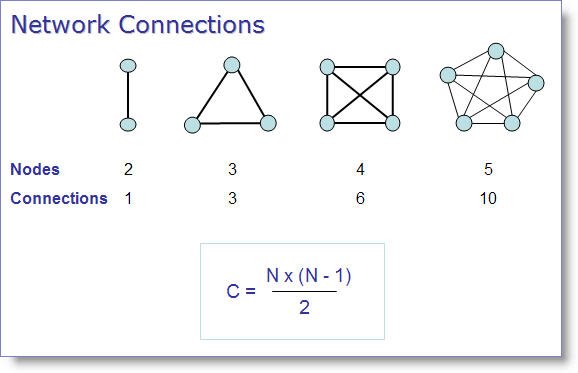
>So this isn't nearly as simple of an equation as people make it out to be. There's a whole host of psychological states that need to be considered.
Everything spiritual ( non-empirical ) is contingent. Obviously this includes ethics. And equally obviously, the more contingencies you add, the more complex the formula necessarily becomes. This:
https://photos1.blogger.com/blogger/680 ... ctions.jpg
Ethics is a formalized set of heuristics. Morality is the individual/internal version.
Re: is/ought, final answer
Posted: Tue Feb 09, 2021 4:08 pm
by Advocate
[quote="Terrapin Station" post_id=495287 time=1612882023 user_id=12582]
Forgot to add, so given the above, even facts about desires do not imply oughts.
[/quote]
Here's the problem. If you eliminate ISes from contention as to where OUGHTs come from, there's literally nothing left.
Re: is/ought, final answer
Posted: Tue Feb 09, 2021 4:12 pm
by Advocate
[quote="Peter Holmes" post_id=495288 time=1612882213 user_id=15099]
[quote=Advocate post_id=495284 time=1612881518 user_id=15238]
[quote=Sculptor post_id=495271 time=1612875263 user_id=17400]
is/ought goes like this..
Trump is a moron
THEREFORE.....
We ought to.... kill him, send him, to school, ignore him, (take your pick)
Child molestation IS bad for children.
Therefore we ought to ... (take your pick)
Answers do not necessarily follow from the "IS".
I can think of many possible and debatable oughts from this, but nothing is justified of necessity.
The missing line of reasoning between the IS and OUGHT is where the obejectivist fallacy lies, and where the relativist/subjectivist employs [i]reasoning[/i]
[/quote]
OUGHTS are fact contingent. If we want world X, behavior Y is appropriate *because it's most likely to get us there*. If your priority is X and you're faced with situation Y, you OUGHT do thing Z. That's what morality is. There no fallacy whatsoever. Morality is entirely pragmatic in nature.
[/quote]
Nope. Consistency with a goal is not a sufficient condition for moral objectivity. If modal 'ought' in an assertion is factual/instrumental, then the assertion doesn't make a moral claim. The claim 'X is consistent with goal Y' isn't a moral assertion, so it can't be a moral fact.
[/quote]
"X is consistent with goal Y" is a moral assertion, the unspoken premise being that goal Y is desirable. There is never Not a presumption of intended Y. Y'all keep trying to naysay everything, but you literally cannot because if you try it you'll see it literally answers all problems in ethics. That is, it provides a framework for understanding which makes actual bespoke solutions possible, where other ideas like utilitarianism are simply insufficient.
Re: is/ought, final answer
Posted: Tue Feb 09, 2021 4:14 pm
by Advocate
[quote=Atla post_id=495289 time=1612882975 user_id=15497]
[quote=Advocate post_id=495284 time=1612881518 user_id=15238]
OUGHTS are fact contingent. If we want world X, behavior Y is appropriate *because it's most likely to get us there*. If your priority is X and you're faced with situation Y, you OUGHT do thing Z. That's what morality is. There no fallacy whatsoever. Morality is entirely pragmatic in nature.
[/quote]
What if I want to be known as the greatest mass murderer in history*? Is that also morality?
(*cause I'm curious if I could get more love letters than Bundy, once I'm in jail)
[/quote]
Your internal understanding of morality can be anything you want it to be. As soon as you start talking about murder, it's not an internal problem any longer and external variables are obviously necessary to consider.
Yes, but you have to be pretty first, and do a crime sufficiently of interest to the general public to be widely disseminated in order that the greatest amount of weirdos become aware of your presence. Also you have to be sequestered somewhere that has reasonable mail rules.