Hoo boy...R.W. Inge wrote:Quite logically the new spirit is in revolt against what it called intellectualism, which means the application of the dry light of reason to the problems of human life. It wishes to substitute for reason what some of its philosophers call instinct, but which should be rather be called sentiment or emotion. There is no reconciliation between this view of life and Hellenism. For science is the oldest and dearest child of the Greek spirit. … The new spirit is especially bitter against the Stoical ethics, which as we have seen were taken over, with the Platonic metaphysics, by Christianity. Stoicism teaches men to venerate and obey natural law; to accept with proud equanimity the misfortunes of life; to be beneficent, but to inhibit the emotion of pity; to be self-reliant and self-contained; to practice self-denial for the sake of self-conquest; to regard this life as a stern school of moral discipline. All this is simply detestable to the new spirit, which is sentimental, undisciplined, and hedonistic. It remembers the hardness of Puritanism, and has no admiration for its virtues
Christian apology by a non-Christian
-
Gustav Bjornstrand

- Posts: 682
- Joined: Thu Jul 18, 2013 2:25 pm
Re: Christian apology by a non-Christian
Re: Christian apology by a non-Christian
We're talking about religion in this thread, Christianity in particular. The core assertion of Christianity is that God is in the real world. And so I ask why we are looking in books, ideas, symbols, theology etc. Would you care to answer?So, in your view, the only use for philosophy is to determine not to do any further philosophy beyond that determination.
Why should Christians look for God in books, when the core assertion of Christianity is that God exists in the real world? Why does this question not apply to Christianity in general, and not just crazy old hippies???The mistake is that a personal philosophy just has to "work" for you, and you are free to define what that means for yourself, but when you extend it universally, you have to have good *reasons* for that, and yours, frankly, aren't (good).
My conclusions, your conclusions, their conclusions, any conclusions, all symbols, not the real world. We already know that God exists in conclusions. How is the inquiry advanced by looking there?I've explained why: it is, in my view, impossible to live without having philosophical/theological/spiritual beliefs of *some* sort - some sort of "worldview" - and, because different people have different experiences, and different access to different evidence about different spiritual facts, not everybody is going to come to the same philosophical/theological/spiritual conclusions as you.
I decline to acknowledge that, because whatever the experience, no such knowing exists. Such experiences raise interesting questions for sure, but do not answer them.I gave you an example of someone's near-death experience, and I find it interesting that you refused to acknowledge that indeed this would put that person in a position of knowing - knowing things of a spiritual/theological nature.
Knowledge is the wrong means. It's very understandable to think that it is, for it is the right means in so many other arenas, but it is not an aid here, but an obstacle. A hungry person does not want a photo of an apple (symbols/knowledge), they want to eat the apple.Is this not a good (partial) explanation of why differences of opinion on these matters does not mean that genuine knowledge is impossible?
Knowledge is thought. Thought is what is causing the experience of separation which gives rise to religion, the quest for re-unification, getting back to God etc. Theologists are trying to use an inherently divisive medium to achieve the desired unity, an epic case of tool bias.
This is the classic error of theology, and it arises because as we've seen all over this forum, philosophers limit their interest to the content of thought, ignoring the nature of thought.
Because they could care less about the properties of the medium they are working in, they don't see it's inherently divisive nature, and thus it doesn't occur to them that an inherently divisive medium is probably not the best tool for approaching the unity which is at the heart of the religious inquiry.
Please stop doing the Gustav, that is, trying to avoid a reasonable challenge you don't know to meet by labeling it as a merely personal affair which can thus be dismissed. Gustav has already claimed this dodge as his personal property, so if you wish to dodge, you need to cook up your own dodge.That said, I am not at all in violent disagreement with your personal philosophy.

1) Christianity says God exists in the real world.
2) Tell us why you think we should look elsewhere?
3) I will keep typing this until you answer or walk away.
Because they are not listening.As far as your later posts go: of course, if God is speaking to me, and I am not listening, then this is a problem. But why should this mean that philosophical and theological thought are useless?
In other words, you are going to talk over God, because you know better than he how the encounter ought to go. That is your right to choose of course. I'm not saying what you personally should do, only clarifying what it is you would be doing if you took that path.If God is speaking to me, I am going to be wondering what type of God He is, what He requires of me, and what His plans are - I might even ask Him if I have the opportunity - and if I find out, I might very well want to tell other people what I have discovered: all of that is very much the domain of theology.
As an alternative, I propose that whether we are talking love or silence, the core of religion is a process of surrender.
"Me" is the primary obstacle. Christians dilute "me" with love, which is brilliantly simple, if more than a little challenging. In the East they dilute "me" by lowering the volume of what the "me" is made of. In both cases, thousands of years of experience and wisdom from East and West, the act of surrender is what they arrived at.
Theologists are always trying to build, build, build.
Wrong direction. Theologists can be very intelligent and articulate while racing in the wrong direction, but it is still the wrong direction.
Jesus said...
"Die to be reborn."
Die = Surrender.
Re: Christian apology by a non-Christian
Applying the dry light of reason to intellectualism within the realm of religion reveals that intellectualism is by it's very nature in conflict with the fundamental goals of religion.Quite logically the new spirit is in revolt against what it called intellectualism, which means the application of the dry light of reason to the problems of human life.
Applying the dry light of reason to intellectualism within the realm of science reveals that it is science that will empower us to achieve our self extermination.
PLEASE NOTE: Each of these assertions can be heartily defended using only the dry light of reason. If a reader thinks they have a more enlightened reason than what's been expressed above, bring it forward, and we'll find out.
-
Gustav Bjornstrand
- Posts: 682
- Joined: Thu Jul 18, 2013 2:25 pm
Re: Christian apology by a non-Christian
Felasco wrote:We're talking about religion in this thread, Christianity in particular.
The reason why it is easy to 'make points' against you, at almost every turn, is that you are working with an incorrect definition of Christianity. You seem to have (permit me to say) 'concocted' a sort of caricature of Christianity, which also appears to be a group of your own personal choices. I have already spoken about this and there is no need to repeat it. But if indeed we are talking about Christianity, one must understand just exactly what Christianity was (in those early days), what it become, and then too what it is now.Applying the dry light of reason to intellectualism within the realm of religion reveals that intellectualism is by it's very nature in conflict with the fundamental goals of religion.
Christianity is a unique blending between an unusual and quite original Judean testament (the Gospels of Mark and Matthew) of a strange and unlikely prophet, but significantly expressed through an Hellenic lens of philosophy and 'rational thought'. One must place emphasis on the Greek (rational, philosophical) aspect to be true and honest.
Your notion therefor of the 'real world' (as opposed to symbolic or worlds mediated by doctrine, etc.) is a false category that is particular to your personal views. (And I still do not get what you mean by the 'real world').
Because of the Greek rational connection, Christianity is able and capable of speaking in rational, discursive terms---which it has done from its beginning, and one need only refer to St Paul---and so too Christianity is intimately linked with Platonism, which again is discursive, analytical, wide-ranging and totally philosophical.
I have the sense that you are stressing an almost Dionysian sort of 'experience'. Perhaps being *overcome* by the God as were the maenads? This is an aspect of religious mysticism, and certainly has links to Christianity, but it is solely an aspect.
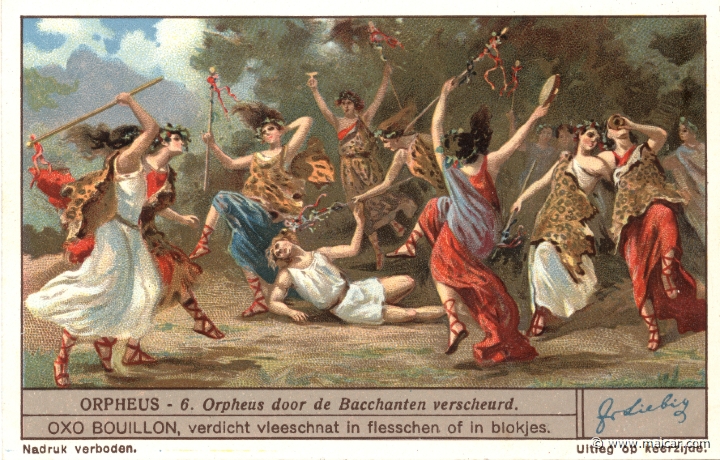
Are the Judean prophets Dionysian 'madmen'? In a sense they are:
But the 'Christian spirit' is quite distinct, at least taken on the whole.1 Samuel 10:5–6 wrote:After that thou shalt come to the hill of God, where is the garrison of the Philistines; and it shall come to pass, when thou art come thither to the city, that thou shalt meet a band of prophets coming down from the high place with a psaltery, and a timbrel, and a pipe, and a harp, before them; and they will be prophesying. And the spirit of the LORD will come mightily upon thee, and thou shalt prophesy with them, and shalt be turned into another man.
Re: Christian apology by a non-Christian
There are a thousand interpretations of Christianity, and no way to settle which is the correct one. It is the endless pursuit of the impossible which fuels much of theology, an essentially impractical enterprise. From the mystical perspective, it is the experience that matters, not what we call it.The reason why it is easy to 'make points' against you, at almost every turn, is that you are working with an incorrect definition of Christianity.
This is not Christianity or religion, but history class. I don't dispute it can be interesting in an academic sort of way.But if indeed we are talking about Christianity, one must understand just exactly what Christianity was (in those early days), what it become, and then too what it is now.
Ok, whatever you say, I cede the definitions of things, the creation of labels, to you.Christianity is a unique blending between an unusual and quite original Judean testament (the Gospels of Mark and Matthew) of a strange and unlikely prophet, but significantly expressed through an Hellenic lens of philosophy and 'rational thought'. One must place emphasis on the Greek (rational, philosophical) aspect to be true and honest.
The word Gustav is a symbol. The living breathing guy sitting in the chair in front of the computer is the "real world".(And I still do not get what you mean by the 'real world').
Ok, whatever you say....Because of the Greek rational connection, Christianity is able and capable of speaking in rational, discursive terms---which it has done from its beginning, and one need only refer to St Paul---and so too Christianity is intimately linked with Platonism, which again is discursive, analytical, wide-ranging and totally philosophical.
Thank um, God, that Jesus was not a college professor, or Christianity would have died out in 45AD.I have the sense that you are stressing an almost Dionysian sort of 'experience'. Perhaps being *overcome* by the God as were the maenads? This is an aspect of religious mysticism, and certainly has links to Christianity, but it is solely an aspect.
-
Gustav Bjornstrand
- Posts: 682
- Joined: Thu Jul 18, 2013 2:25 pm
Re: Christian apology by a non-Christian
Then perhaps it is not possible to know anything about anything at all, if it is all open to 'interpretation'? But one thing seems likely: if 'interpretation' is clouded or tinged with sentiment or whimsy, or some sort of personal will, or ignorance, or lack of any base except in the subjective, then any concrete definiteness will forever recede away. If that is the case, one can make anything whatever one wants it to be.Felasco wrote:There are a thousand interpretations of Christianity, and no way to settle which is the correct one. It is the endless pursuit of the impossible which fuels much of theology, an essentially impractical enterprise.
I don't want to make too much more of an issue of this with you. The reason I find this interesting and revealing is 1) I think you are totally right for yourself and you can make any sort of interpretation you wish, even a 'wrong' one, but that you are largely wrong about the specifics of 'the Christian religion' as can be historically known, and 2) because the mindset that you have is predominant, has a good deal of influence in culture, in thought, and is highly questionable.
That certainly is true.From the mystical perspective, it is the experience that matters, not what we call it.
-
Harry Baird
- Posts: 1085
- Joined: Sun Aug 04, 2013 4:14 pm
Re: Christian apology by a non-Christian
Felasco,
In fact, I do have a sense of philosophical futility: the futility of you and I communicating on this subject any further. However, I will put in a last word just to respond to your repeated challenge, and then I will let it rest, unless anything particularly new comes up. I don't think there's anything more that I can say than I've already said, and probably the same is true on your end.
Of course, if we are to search for a real thing, we will search for it in the real world. Why would anybody dispute that? But it seems to me that what you are saying is that once we have found it (if we ever do), we are not to speak of it, not to try to understand it, not to try to communicate our experience of it to others. All of this is to you is "futile" philosophy/theology. I very much beg to differ. If I discover something important about God in the real world, it is completely reasonable for me to try to understand for myself and communicate what I have discovered to others, just as if an astronomer discovers an inhabited planet in another solar system, it is completely reasonable for him/her to communicate to and discuss with others his/her finding. Science and theology/philosophy are simply two (three) related fields of knowledge about the universe. Granted, philosophy and theology are more contested fields, but this does not mean that correct answers are impossible. I think the real heart of the matter is that *you do not believe in God*, at least, not in the same sort of God that I (and, dare I say, in his own way, Gustav) believe in, and so, to you, knowledge of that God is impossible (because such knowledge does not, in your view, exist). And yet, even this is in its own way its own sort of little "theology": the "theology" that God does not exist...
You are welcome to your own last word. Thanks for the discussion.
In fact, I do have a sense of philosophical futility: the futility of you and I communicating on this subject any further. However, I will put in a last word just to respond to your repeated challenge, and then I will let it rest, unless anything particularly new comes up. I don't think there's anything more that I can say than I've already said, and probably the same is true on your end.
Of course, if we are to search for a real thing, we will search for it in the real world. Why would anybody dispute that? But it seems to me that what you are saying is that once we have found it (if we ever do), we are not to speak of it, not to try to understand it, not to try to communicate our experience of it to others. All of this is to you is "futile" philosophy/theology. I very much beg to differ. If I discover something important about God in the real world, it is completely reasonable for me to try to understand for myself and communicate what I have discovered to others, just as if an astronomer discovers an inhabited planet in another solar system, it is completely reasonable for him/her to communicate to and discuss with others his/her finding. Science and theology/philosophy are simply two (three) related fields of knowledge about the universe. Granted, philosophy and theology are more contested fields, but this does not mean that correct answers are impossible. I think the real heart of the matter is that *you do not believe in God*, at least, not in the same sort of God that I (and, dare I say, in his own way, Gustav) believe in, and so, to you, knowledge of that God is impossible (because such knowledge does not, in your view, exist). And yet, even this is in its own way its own sort of little "theology": the "theology" that God does not exist...
You are welcome to your own last word. Thanks for the discussion.
Re: Christian apology by a non-Christian
The church is supposed to guide the believer into having a religious experience. But most organized religions shield and protect the believer from having a religious experience, by encouraging them to 'be religious'. Acting in a religious manner is not the same as having a religious or spiritual experience. Real Buddhism attempts to guide the believer to such an experience, western religions do not. Acting religious, and doing good deeds, are substituted for having an honest experience of the Deity. This is why most churches have failed and do not achieve their purpose.
Re: Christian apology by a non-Christian
Ok, no problem Harry.In fact, I do have a sense of philosophical futility: the futility of you and I communicating on this subject any further.
We've only touched the beginning of the subject, but ok, there's no law requiring us to go further.I don't think there's anything more that I can say than I've already said, and probably the same is true on your end.
I hope you will understand that if I were to limit my posts to those things readers could easily agree with, I would be a dull poster indeed. I feel like I'm not making much of a contribution unless I'm at least trying to explore beyond the boundaries of the group consensus, and in the setting of this forum that consensus is that philosophy/theology/thought etc are what matters.
The challenge for any writer is that if we color safely within the group consensus lines we tend to be boring, and if we venture beyond the lines, readers tend to get confused, upset etc. It's a delicate business threading that needle, and I don't claim to have mastered it, nor that I ever will.
All I can say is that the fact that you are frustrated shows that you are entering unfamiliar territory where the possibility of a learning adventure exists. Do with that what you wish of course.
You would have to ask Harry and Gustav, I don't know.Of course, if we are to search for a real thing, we will search for it in the real world. Why would anybody dispute that?
I don't know how to explain it any better in the very little to no time you have allotted me, apologies. Perhaps another day?But it seems to me that what you are saying is that once we have found it (if we ever do), we are not to speak of it, not to try to understand it, not to try to communicate our experience of it to others.
Agree about the astronomer, but this is not science we are discussing.If I discover something important about God in the real world, it is completely reasonable for me to try to understand for myself and communicate what I have discovered to others, just as if an astronomer discovers an inhabited planet in another solar system, it is completely reasonable for him/her to communicate to and discuss with others his/her finding.
You are making a very common and totally understandable assumption that the processes of reason/science, using observation as a means to the end of theories and conclusions, is the appropriate technique for this effort as well.
What the real world evidence shows is that that method of pursuing the religious inquiry has already been tried relentlessly for thousands of years, and the result has been endless ideological conflict including violence and war, and that none of the major assertions involved have been proven or disproven.
There is an alternative (within the field of religion) to using observation as a means to theories and conclusions. It is to value observation for itself.
This fundamental paradigm shift can open up an entire new realm for exploration. This opening can be very exciting, or very threatening, depending on the explorer. I'm just trying to open that door, and am happy to leave it to the reader to decide whether they wish to walk through it, as that's not really any of my business.
I agree. But now we are back to looking for God in books, words, symbols etc. You are assuming that knowledge MUST be the goal of the inquiry. I propose that while such an assumption is entirely understandable, it is also fundamentally irrational, given that there is no evidence that such knowledge is obtainable.Science and theology/philosophy are simply two (three) related fields of knowledge about the universe.
Theists always think I'm an atheist, and atheists are always sure I must be a closet theist. They can't conceive of anything outside the theist/atheist paradigm, and thus assume I must be one or the other.I think the real heart of the matter is that *you do not believe in God*, at least, not in the same sort of God that I (and, dare I say, in his own way, Gustav) believe in, and so, to you, knowledge of that God is impossible (because such knowledge does not, in your view, exist). And yet, even this is in its own way its own sort of little "theology": the "theology" that God does not exist...
What I am instead is someone who has used reason to climb off the Theist/Atheist Merry-Go-Round to nowhere. That merry-go-round goes endlessly around in circles giving the impression of movement, and the carnival music is fun, but if one stands back just a few feet it can be seen the merry-go-round is actually stationary.
The phrase "religious inquiry" implies a journey, an adventure, an exploration, movement, not going round and round in the same little circle until the end of time.
Thanks again Harry, wishing you the very best of luck. May your code always compile!
-
Gustav Bjornstrand
- Posts: 682
- Joined: Thu Jul 18, 2013 2:25 pm
Re: Christian apology by a non-Christian
As you-all might guess I get a lot of inquiries and comments through the PM option on this forum. In fact the sheer volume received in an average week renders it almost impossible to respond in any depth to each and every one. Often I try to respond to these PMs, more or less, by interweaving responses in my postings on-thread. Recently though, I got a PM from one Natasha Valeriya Topolski (who was kind enough to send along her photo) which inspired me to respond 'on-forum'.
We are encouraged by Mahatma-Felasco to 'get real with the real world' and it is proving a tough lesson, especially perhaps for Harry. It comes easier for me...
I was 'borned' in Västerbotten Municipality in the north of Sweden located to the east of Lapland. My mother was a Laplander seer and divinator who brought my father, Gustav Alexander Dahlquist Bjornstrand, under her charmed spell. Gustav Alexander was famous at that time for his novel 'En Man Går Galen' which was read throughout Sweden and subsequently translated into 14 different languages, including Swahili. I was educated, classically of course, but was thrown out of university in my 3rd for insubordination and smartalecry. Being very clever of speech however, and of dubious ethics, in 1760 I took up chicanery and went on the road. (My 14 sisters, I do want to stress, completed their University studies and all become doctors, railroad engineers, advocates, journalists and went on to mould Swedish culture and the world in fundamental and enduring ways). I have been traveling 'up and down your earth' since that time and, yes, have witnessed inexplicable wonders often too strange to tell.
In 1854, just after my 113th birthday, I had in that phase a nifty wood production business in Asunción, Paraguay which I had won in a rigged poker game against a compulsive Jewish trader and gambler named Esteban Moises Weisenheimer whose family had escaped the Spanish persecutions many years before. I had a fleet of barges and used them to float down Quebracho or 'axe-breaker' wood from the upper regions of the Rio Paraguay. We made railroad ties which---and this was my idea---we transported to N. America by ship. Naturally, I made a fortune. A veritable lluvia de oro. I was married to a Paraguayan noblewoman: Eliza Fernanda Alonso Lopez de Asuncion, and myself went by the name Gustavo Rodriguez San Solano Lopez, Grandee. Together we had a fine son named Joachim Efraim de San Solano-Lopez who had effectively taken over the business with zealousness and thrift. I was ready to retire to my my inner land of intellectual and literary somersaults and devised a retreat to my wife's ancestral seat in Caazapá, both a city and a district of Paraguay.
This region, known as 'La tierra del paje' (the land of sorcery) is fabled in Paraguayan history and, as you will guess, for its strange magics and enchantments. The Guarani Indians are a superstitious lot and the founder of Paraguay, Friar Luiz de Bolaños, became syncretistically transformed in their legends and sorcery practices into a local spirit-god of sorts. He was said to have created with a touch of a magic 'palo' the still-famous Ykua Bolaños: a fountain of magical water upwelling from the telluric depths of the Earth. He was also said to have been a master of the visionary use of Ka'a guajakapa, a mysterious and potent hallucinogenic sorcerer's weed similar perhaps to whatever Felasco has been nibbling on for the last 40 years. Predicably the Ka'a guajakapa grows only near the sacred waters of the Ykua Bolaños, and as it turned out the Ykua Bolaños was located right at the center of my noble wife's ancestral seat.
So, we left Asunción and began a new life on Caazapá. I divided my time between my library and long walks in the surrounding countryside. Our Guarani housekeeper Esmeralda who had lived in the region all her life, after listening to me recount how I had cheated old Esteban Moises Weisenheimer out of his logging business, and so many other tales of braggadocio, chuckled to herself and called me sỹí. I asked my wife what it meant and she told me that it referred to 'slippery rocks in a river bed' that were easy to slip on and also that it referred to a local fox which had mythological significance to the Guarani of the region. She said that in the Indian legends the fox mother will take her young to drink from the waters of Ykua Bolanños and the Indians regarded all foxes as magic and enchanted creatures and held them in great respect. As it turned out there were quite a number of these sỹí living around our home and in order to build a corral and a new barn for the horses I had to clear out a section of land where a family of foxes had their lair. Esmeralda came to me one evening, almost pleading, very worried and excited, wringing her hands, and said that in order to do this I HAD to call in a Guarani sorcerer who would communicate with the fox-peoples, explain to them that we meant no harm, and would mediate a series of offerings that were required to keep the peace. Well, I pooh-poohed all of this and went about my plans. "Negotiate with foxes indeed!' and I snickered to myself. We cleared the area, built a new stables and everything was just fine.
Some months later my wife and son left with Esmeralda to spend some days in Asunción and I was left alone in the house. I must confess that I had not (yet) become the deeply and profoundly arch-ethical and ur-monogamous man that I am now and looked forward to my wife's departure so to carry on in some dalliances with the daughters of the local aristocracy. One evening walking about the extensive grounds, which I had not yet fully explored, I was amazed to see a gorgeous young woman---perhaps 17 or 18---bathing in a small clear stream. I watched her for sometime and when she had dressed herself I approached and spoke with her. 'My dear child', I said, 'how beautiful you are! I am quite certain I have fallen in love with you! Please, come back with me to my manor!'. She blushed and said 'No, no, that is not possible, but please, come back with me to my home and I will introduce you to my family! My name is Aguará, Aguará Silvana de Alamilla'. (Which name I had never heard and this only mystified and enchanted me all the more).
We walked a little ways and came directly to a mansion with gardens and servants and bustle of activity and waving banners and women in crinoline and men in fine coats with tails. I was stupefied! How could there have been such a residence so close and I not been aware of it? Puzzled as I was I put these thoughts aside and was introduced to her parents and shown the house. I spent the afternoon with these marvelous people and I stayed the night. To my wonder and to my delight, at three in the morning, I was summoned to my ladylove's scented bed and we 'knew' each other in ways I'd be embarrassed to relate.
So intoxicated was I with my delightful lady that I seemed to have totally forgotten my own family! I remembered them as if in a distant dream, and every moment spent with my love seemed to blot out the memory, make it more and more vague. I was deeply in love! Soon, my lady became pregnant and I looked glowingly forward to the day when we'd have a fine son.
Now, back at my homestead of course my wife and son had returned from Asunción and discovered I'd gone missing. Very worried, they combed the estate looking for me and then inquired among the neighbors on the surrounding fincas, to no avail. They saw that I had not packed any bags and had left only with the clothes I would normally wear around the estate. Some days went by. It was assumed I had wandered into the forest, or been bitten by a poisonous snake. Or perhaps I had gone mad and was wandering in the forest chattering like a monkey?
Back in 'my world', of course, I was happily (re)married to my lovely Aguará and we now had a child! Oh the delights! He toddled about, Aguará laughed her full laugh, we'd swim naked in the mystic waters, and then we'd cavort like two children in the primeval garden! Weeks and months passed. Then years. My boy was almost 13 years old!
But back at my 'real home' my wife and son and Esmeralda (of whom I now had no memory) had brought in a Guarani shaman who ingested ka'a guajakapa weed and went into a deep trance, invoking Friar Luis de Balaños for spiritual help in locating me, and if I could not be found then just my bones which could be given a decent and Christian burial. The ritual went on all night and into the morning.
As it happened, I was sitting one fine morning in the garden of my beloved Aguará's mansion noshing on a bit of Chipa-Guazu when I noticed a strange little man dressed in a friar's get-up with tonsure coming toward me menacingly with a stick. I could hear Aguará humming in the upstairs bedroom and my beloved son was in the parlor reading an atlas. 'What in the name of heaven is this? Who in the devil are you?!' I asked, affronted. The little friar said nothing and came abruptly at to me and started to beat me with his stick! Whack whack whack, mercilessly. Then he chased me through the garden and somehow we were both under the foundation of the house in a crawlspace. Finally with no place to run and smarting from the blows I was forced to crawl out from under the foundation, muddied and with torn clothes, and lo! I found myself not far from my 'real home' (located of course in 'the real world')
My memory returned ever so vaguely and I called out to my wife and son. I saw my (true) wife and my (true) son coming to the door and Esmeralda and the little Guarani sorcerer following behind. They stared at me in shock. Later they told me they saw me down on all fours, sullied and ragged, howling and barking and running back and forth.
Now it should all become clear. I had of course offended the fox-peoples of those enchanted lands and they had surely got their revenge. In my mind I was gone for 13 full years, had married, had a son. But in fact I had been gone only 13 days and had been 'living' in the foundation of a small outbuilding on the north end of our property! I'd lived with my fox-bride in a burrow and eaten small rodents, fruit, carrion, lizards, birds eggs and snails and thought I was eating delicacies!
In those first few days and before I had fully recovered my senses I told my very own son: 'Boy, don't be hurt, but I have another son who is Number One. You are now Number Two! I plan for the two of you to meet but can't saw exactly when!' To my faithful wife I said 'Woman, you are good and pure, but I have taken a young wife who has bore me a fine son! Soon, we will all live together and I wish for no discord!'
When finally I came back to myself, I admit I was deeply embarrassed. The enchanted foxes had played a very clever little trick on me and taught me a lesson I was never to forget. We continued to live in that ancestral seat and every month or so I'd solemnly bring offering of lamb-meat to the fox-peoples, promising never to disturb them without explaining why and negotiating some accord.
Well, Natasha, there you have it. The strangest of strange stories from the strange and mysterious life of Gustav Bjornstrand, otherwise known as Gustavo Rodriguez San Solano Lopez, Grandee de Paraguay.

We are encouraged by Mahatma-Felasco to 'get real with the real world' and it is proving a tough lesson, especially perhaps for Harry. It comes easier for me...
Thank you dear Natasha for your kind PM. Be assured it will be impossible now to drive you ever from my dreams...Natasha Valeriya Topolski wrote:I must to tell you that I am biggest fan of yours in all Vladivostok and do the possible to spread Gospel of Gustav. Myself and my beest [sic] girlfriends have curiosity which we hoping you take time to answers. If you have 273 years old we calculate your birthdate in 1741 and we are curious to where might you have be borned? You seem a man with great and varied experience in life. My little sister Dominika has asked me to ask you: What theSTRANGEST EXPERIENCE of life so have lived you so far? :::many hugs and kissings::: Remember us in your dreams dear Gustafshki!
I was 'borned' in Västerbotten Municipality in the north of Sweden located to the east of Lapland. My mother was a Laplander seer and divinator who brought my father, Gustav Alexander Dahlquist Bjornstrand, under her charmed spell. Gustav Alexander was famous at that time for his novel 'En Man Går Galen' which was read throughout Sweden and subsequently translated into 14 different languages, including Swahili. I was educated, classically of course, but was thrown out of university in my 3rd for insubordination and smartalecry. Being very clever of speech however, and of dubious ethics, in 1760 I took up chicanery and went on the road. (My 14 sisters, I do want to stress, completed their University studies and all become doctors, railroad engineers, advocates, journalists and went on to mould Swedish culture and the world in fundamental and enduring ways). I have been traveling 'up and down your earth' since that time and, yes, have witnessed inexplicable wonders often too strange to tell.
In 1854, just after my 113th birthday, I had in that phase a nifty wood production business in Asunción, Paraguay which I had won in a rigged poker game against a compulsive Jewish trader and gambler named Esteban Moises Weisenheimer whose family had escaped the Spanish persecutions many years before. I had a fleet of barges and used them to float down Quebracho or 'axe-breaker' wood from the upper regions of the Rio Paraguay. We made railroad ties which---and this was my idea---we transported to N. America by ship. Naturally, I made a fortune. A veritable lluvia de oro. I was married to a Paraguayan noblewoman: Eliza Fernanda Alonso Lopez de Asuncion, and myself went by the name Gustavo Rodriguez San Solano Lopez, Grandee. Together we had a fine son named Joachim Efraim de San Solano-Lopez who had effectively taken over the business with zealousness and thrift. I was ready to retire to my my inner land of intellectual and literary somersaults and devised a retreat to my wife's ancestral seat in Caazapá, both a city and a district of Paraguay.
This region, known as 'La tierra del paje' (the land of sorcery) is fabled in Paraguayan history and, as you will guess, for its strange magics and enchantments. The Guarani Indians are a superstitious lot and the founder of Paraguay, Friar Luiz de Bolaños, became syncretistically transformed in their legends and sorcery practices into a local spirit-god of sorts. He was said to have created with a touch of a magic 'palo' the still-famous Ykua Bolaños: a fountain of magical water upwelling from the telluric depths of the Earth. He was also said to have been a master of the visionary use of Ka'a guajakapa, a mysterious and potent hallucinogenic sorcerer's weed similar perhaps to whatever Felasco has been nibbling on for the last 40 years. Predicably the Ka'a guajakapa grows only near the sacred waters of the Ykua Bolaños, and as it turned out the Ykua Bolaños was located right at the center of my noble wife's ancestral seat.
So, we left Asunción and began a new life on Caazapá. I divided my time between my library and long walks in the surrounding countryside. Our Guarani housekeeper Esmeralda who had lived in the region all her life, after listening to me recount how I had cheated old Esteban Moises Weisenheimer out of his logging business, and so many other tales of braggadocio, chuckled to herself and called me sỹí. I asked my wife what it meant and she told me that it referred to 'slippery rocks in a river bed' that were easy to slip on and also that it referred to a local fox which had mythological significance to the Guarani of the region. She said that in the Indian legends the fox mother will take her young to drink from the waters of Ykua Bolanños and the Indians regarded all foxes as magic and enchanted creatures and held them in great respect. As it turned out there were quite a number of these sỹí living around our home and in order to build a corral and a new barn for the horses I had to clear out a section of land where a family of foxes had their lair. Esmeralda came to me one evening, almost pleading, very worried and excited, wringing her hands, and said that in order to do this I HAD to call in a Guarani sorcerer who would communicate with the fox-peoples, explain to them that we meant no harm, and would mediate a series of offerings that were required to keep the peace. Well, I pooh-poohed all of this and went about my plans. "Negotiate with foxes indeed!' and I snickered to myself. We cleared the area, built a new stables and everything was just fine.

Some months later my wife and son left with Esmeralda to spend some days in Asunción and I was left alone in the house. I must confess that I had not (yet) become the deeply and profoundly arch-ethical and ur-monogamous man that I am now and looked forward to my wife's departure so to carry on in some dalliances with the daughters of the local aristocracy. One evening walking about the extensive grounds, which I had not yet fully explored, I was amazed to see a gorgeous young woman---perhaps 17 or 18---bathing in a small clear stream. I watched her for sometime and when she had dressed herself I approached and spoke with her. 'My dear child', I said, 'how beautiful you are! I am quite certain I have fallen in love with you! Please, come back with me to my manor!'. She blushed and said 'No, no, that is not possible, but please, come back with me to my home and I will introduce you to my family! My name is Aguará, Aguará Silvana de Alamilla'. (Which name I had never heard and this only mystified and enchanted me all the more).
We walked a little ways and came directly to a mansion with gardens and servants and bustle of activity and waving banners and women in crinoline and men in fine coats with tails. I was stupefied! How could there have been such a residence so close and I not been aware of it? Puzzled as I was I put these thoughts aside and was introduced to her parents and shown the house. I spent the afternoon with these marvelous people and I stayed the night. To my wonder and to my delight, at three in the morning, I was summoned to my ladylove's scented bed and we 'knew' each other in ways I'd be embarrassed to relate.
So intoxicated was I with my delightful lady that I seemed to have totally forgotten my own family! I remembered them as if in a distant dream, and every moment spent with my love seemed to blot out the memory, make it more and more vague. I was deeply in love! Soon, my lady became pregnant and I looked glowingly forward to the day when we'd have a fine son.
Now, back at my homestead of course my wife and son had returned from Asunción and discovered I'd gone missing. Very worried, they combed the estate looking for me and then inquired among the neighbors on the surrounding fincas, to no avail. They saw that I had not packed any bags and had left only with the clothes I would normally wear around the estate. Some days went by. It was assumed I had wandered into the forest, or been bitten by a poisonous snake. Or perhaps I had gone mad and was wandering in the forest chattering like a monkey?
Back in 'my world', of course, I was happily (re)married to my lovely Aguará and we now had a child! Oh the delights! He toddled about, Aguará laughed her full laugh, we'd swim naked in the mystic waters, and then we'd cavort like two children in the primeval garden! Weeks and months passed. Then years. My boy was almost 13 years old!
But back at my 'real home' my wife and son and Esmeralda (of whom I now had no memory) had brought in a Guarani shaman who ingested ka'a guajakapa weed and went into a deep trance, invoking Friar Luis de Balaños for spiritual help in locating me, and if I could not be found then just my bones which could be given a decent and Christian burial. The ritual went on all night and into the morning.
As it happened, I was sitting one fine morning in the garden of my beloved Aguará's mansion noshing on a bit of Chipa-Guazu when I noticed a strange little man dressed in a friar's get-up with tonsure coming toward me menacingly with a stick. I could hear Aguará humming in the upstairs bedroom and my beloved son was in the parlor reading an atlas. 'What in the name of heaven is this? Who in the devil are you?!' I asked, affronted. The little friar said nothing and came abruptly at to me and started to beat me with his stick! Whack whack whack, mercilessly. Then he chased me through the garden and somehow we were both under the foundation of the house in a crawlspace. Finally with no place to run and smarting from the blows I was forced to crawl out from under the foundation, muddied and with torn clothes, and lo! I found myself not far from my 'real home' (located of course in 'the real world')
My memory returned ever so vaguely and I called out to my wife and son. I saw my (true) wife and my (true) son coming to the door and Esmeralda and the little Guarani sorcerer following behind. They stared at me in shock. Later they told me they saw me down on all fours, sullied and ragged, howling and barking and running back and forth.
Now it should all become clear. I had of course offended the fox-peoples of those enchanted lands and they had surely got their revenge. In my mind I was gone for 13 full years, had married, had a son. But in fact I had been gone only 13 days and had been 'living' in the foundation of a small outbuilding on the north end of our property! I'd lived with my fox-bride in a burrow and eaten small rodents, fruit, carrion, lizards, birds eggs and snails and thought I was eating delicacies!
In those first few days and before I had fully recovered my senses I told my very own son: 'Boy, don't be hurt, but I have another son who is Number One. You are now Number Two! I plan for the two of you to meet but can't saw exactly when!' To my faithful wife I said 'Woman, you are good and pure, but I have taken a young wife who has bore me a fine son! Soon, we will all live together and I wish for no discord!'
When finally I came back to myself, I admit I was deeply embarrassed. The enchanted foxes had played a very clever little trick on me and taught me a lesson I was never to forget. We continued to live in that ancestral seat and every month or so I'd solemnly bring offering of lamb-meat to the fox-peoples, promising never to disturb them without explaining why and negotiating some accord.
Well, Natasha, there you have it. The strangest of strange stories from the strange and mysterious life of Gustav Bjornstrand, otherwise known as Gustavo Rodriguez San Solano Lopez, Grandee de Paraguay.
Re: Christian apology by a non-Christian
Darn it Gustav, stop PMing with my imaginary girlfriend!
Thanks to another visit to the woods, I've come to a less polarized view of the relationship between the mystical and theological.
In the woods I visit there are fallen trees on the ground all over the place, sort of like piles of unburied dead bodies, an ever present reminder of the reality of death.
From the limited perspective of the individual life form it is of course our job to strive to survive, and in that role we embrace the perspective Life=Good, Death=Bad.
From the wider perspective, life/death is seen as a holistic system, where death is required for renewal and change, ie. life. From this wider perspective it makes no sense to label life=good and death=bad, because it becomes obvious that life and death are partners within a system where each depend upon the other. Unless the old tree dies and falls, there would be no room for the sprouting acorn to develop.
Perhaps it could be said that the mystical and theological represent different points along the life/death cycle of the religious inquiry, on either the personal or social level.
I still think the theological is a process of decay, corruption and eventual death of a religious inquiry. Perhaps the current state of Christianity in it's European heartland serves as the most readily available example.
The theological is a process of decay because by it's nature theology is an argument with the natural unfolding of the life/death cycle which applies to all things.
As example, as the Christian tree rose from a sapling in to a strong oak, people gathered around and marveled at it's beauty, and in their enthusiasm decided this is the "one true tree" which is the final answer to everything, and so this tree should live forever etc. It's not just Christianity that does this of course, this is just an example of how conclusions of any kind are an argument with the endless "all things must pass" process of reality.
However, without such a process of death and decay at work we'd all still be worshiping Thor, and there would have been no room for newer religions which are better adapted to our era to spring from the ground.
As I ardently wave the flag of the Mystical Jihad, I too am trying to promote just one pole of the life/death cycle, as if it were possible that the poles could be separated. Ah, we know where this bias for division comes from now, don't we? Yes?
The Mystic Jihadi insists that the life/death cycle be stopped at that magical moment when the acorn first pushes a fresh green leaf above the ground. Oh dear, just another argument with reality, just another form of human foolishness.
The evidence of thousands of years very clearly shows that it is inevitable that the theological trees will grow from the mystical acorns and reach for an imaginary permanence. As these ideological trees grow taller and stronger they are, as are we all, heading for that moment when they begin to become brittle and rot, and the moment when they die and tumble over to the ground.
And when that happens, there will be a period of time where the sunlight reaches the forest floor, and the acorn can send up new mystical sprouts. Such mystical moments arrive in the lives of both individuals and societies, and they arrive when it is time for them to arrive, not, um, when Sri Baba Bozo says it's time.
As is usual within the human realm, our great debate has been built upon the illusion that we have control over the endless turning of the wheels of eternal change.
Thanks to another visit to the woods, I've come to a less polarized view of the relationship between the mystical and theological.
In the woods I visit there are fallen trees on the ground all over the place, sort of like piles of unburied dead bodies, an ever present reminder of the reality of death.
From the limited perspective of the individual life form it is of course our job to strive to survive, and in that role we embrace the perspective Life=Good, Death=Bad.
From the wider perspective, life/death is seen as a holistic system, where death is required for renewal and change, ie. life. From this wider perspective it makes no sense to label life=good and death=bad, because it becomes obvious that life and death are partners within a system where each depend upon the other. Unless the old tree dies and falls, there would be no room for the sprouting acorn to develop.
Perhaps it could be said that the mystical and theological represent different points along the life/death cycle of the religious inquiry, on either the personal or social level.
I still think the theological is a process of decay, corruption and eventual death of a religious inquiry. Perhaps the current state of Christianity in it's European heartland serves as the most readily available example.
The theological is a process of decay because by it's nature theology is an argument with the natural unfolding of the life/death cycle which applies to all things.
As example, as the Christian tree rose from a sapling in to a strong oak, people gathered around and marveled at it's beauty, and in their enthusiasm decided this is the "one true tree" which is the final answer to everything, and so this tree should live forever etc. It's not just Christianity that does this of course, this is just an example of how conclusions of any kind are an argument with the endless "all things must pass" process of reality.
However, without such a process of death and decay at work we'd all still be worshiping Thor, and there would have been no room for newer religions which are better adapted to our era to spring from the ground.
As I ardently wave the flag of the Mystical Jihad, I too am trying to promote just one pole of the life/death cycle, as if it were possible that the poles could be separated. Ah, we know where this bias for division comes from now, don't we?
Yes?The Mystic Jihadi insists that the life/death cycle be stopped at that magical moment when the acorn first pushes a fresh green leaf above the ground. Oh dear, just another argument with reality, just another form of human foolishness.
The evidence of thousands of years very clearly shows that it is inevitable that the theological trees will grow from the mystical acorns and reach for an imaginary permanence. As these ideological trees grow taller and stronger they are, as are we all, heading for that moment when they begin to become brittle and rot, and the moment when they die and tumble over to the ground.
And when that happens, there will be a period of time where the sunlight reaches the forest floor, and the acorn can send up new mystical sprouts. Such mystical moments arrive in the lives of both individuals and societies, and they arrive when it is time for them to arrive, not, um, when Sri Baba Bozo says it's time.
As is usual within the human realm, our great debate has been built upon the illusion that we have control over the endless turning of the wheels of eternal change.
-
Gustav Bjornstrand
- Posts: 682
- Joined: Thu Jul 18, 2013 2:25 pm
Re: Christian apology by a non-Christian
However, you went to the woods, had a revelation, and this modified your view of the 'polarity' as you called it.Felasco wrote:I still think the theological is a process of decay, corruption and eventual death of a religious inquiry. Perhaps the current state of Christianity in it's European heartland serves as the most readily available example.
It is also possible to propose that the 'death of theology' in the European heartland has come about for differing reasons, and perhaps as a result of rising modes of irrationality? Decadence and degeneration is a complex subject!
Polarities will always have the effect of forcing one into a specific camp or the other. The question seems to be: are polarities intensified because of 'ego' (emotion, will, etc.) or because, in this world, it is necessary and inevitable that they arise? To explain: Necessary insofar as differences are real, values are real, and ideation is required to arrive at ever-more poignant definitions? Necessary because there are fundamentals at stake? My personal view, which I think can be supported, is that definitions are required and necessary.
I would offer a different basis for considering the relevancy or non-relevancy of theology.
An even rudimentary physical philosophy (physics) shifts a man's entire relationship with The World from one based in mysticism and mythology to one based in ideas and concepts that is explainable and can be discussed. In this specific example, a 'mystical' approach has its grounding in a mysterious-superstitious method and gains knowledge that is explainable but not let us say in 'rational' terms. To hold to mystical knowledge is to hold to 'special knowledge' that is distinct from knowledge gained from analysis of the visible.
Mysticism, though perhaps it is unavoidable for man who is rather lost in an overpowering World and Existence which he cannot explain, is rather easily inflected with non-rationalisms, and separates itself in this sense from 'the discussable'.
Theology at its best, and certainly originally, and as an endeavor of Greek rationalism (where it began and still resides), and even Greco-Christian theology which is, in fact, the first and only theology (there is no other comparable 'theological school' in any other world religious system, nor is there a comparable 'philosophical school'), is constructed not from a mystical base (or attitude), but from within the traditions of the physical sciences and physical philosophy, and as 'philosophy' is primarily concerned with the questions as defined by the Greeks thusly: 'A serious endeavor to understand the world and man, having for its chief aim the discovery of the right way of life and the conversion of people to it'.
If 'theology' is conceived in this way, and also if one understands the fusion, sometimes rather uncomfortable, between Christian doctrines and Greek philosophical doctrines, one has a better base to appreciate theology which is, I think, almost exclusively Christian*. For viewed in this way your last post is essentially theological in this better sense.
I think you can understand that I would wax uncomfortable, again, with what you seem to be proposing here (again). If we take as a base that it is possible, and desirable, to 'endeavor seriously to understand the world and man, and have as our chief aim the discovery of the right way of life and conversion of people to it', then notions of 'wheels of eternal' change and 'endless turnings' may become excuses to 'avoid responsibility' in certain specific and important areas.As is usual within the human realm, our great debate has been built upon the illusion that we have control over the endless turning of the wheels of eternal change.
Re: Christian apology by a non-Christian
"Rising modes of irrationality" as you put it would not be able to overthrow Christianity if Christianity had not become (at least in Europe, the story is different elsewhere) an ossified old tree poised to tumble in the next breeze.It is also possible to propose that the 'death of theology' in the European heartland has come about for differing reasons, and perhaps as a result of rising modes of irrationality? Decadence and degeneration is a complex subject!
How about, it is inevitable that both ego and ideological polarities will arise? I see both as symptoms of the underlying fundamental human condition, we are thought, an inherently divisive medium.The question seems to be: are polarities intensified because of 'ego' (emotion, will, etc.) or because, in this world, it is necessary and inevitable that they arise?
I can accept your view that a complex social structure like a society requires an "operating system".My personal view, which I think can be supported, is that definitions are required and necessary.
My point is that the operating system, any philosophy or theology, derives it's power from the real, just as your photo album has meaning and relevance to you because it references real experiences in your life.
So, we really should be allies, because without the real (ie. mystical) whatever ideology you feel has the most value will eventually whither and die. That said, whatever ideology you feel has the most value will eventually whither and die eventually in any case, because that is the way of all things.
I accept the central role of the symbolic in science and think you would probably make an excellent scientist. Mysticism (experience) and mythology (symbolic) are not related, except that the words look similar.An even rudimentary physical philosophy (physics) shifts a man's entire relationship with The World from one based in mysticism and mythology to one based in ideas and concepts that is explainable and can be discussed.
Science and mysticism are related in that both value observation of the real world. They differ in that science sees observation as a means to another end, whereas mysticism sees observation as an end in itself.Well, in my way of looking at it, mysticism has nothing to do with knowledge. I realize that others may use that word in different ways.In this specific example, a 'mystical' approach has its grounding in a mysterious-superstitious method and gains knowledge that is explainable but not let us say in 'rational' terms. To hold to mystical knowledge is to hold to 'special knowledge' that is distinct from knowledge gained from analysis of the visible.
If this is true, if western philosophy has no mystical source, that might explain why we are careening along on the perpetual edge of mass suicide, a fact that we usually feel doesn't merit much discussion (ie. insanity).Theology at its best, and certainly originally, and as an endeavor of Greek rationalism (where it began and still resides), and even Greco-Christian theology which is, in fact, the first and only theology (there is no other comparable 'theological school' in any other world religious system, nor is there a comparable 'philosophical school'), is constructed not from a mystical base (or attitude), but from within the traditions of the physical sciences and physical philosophy, and as 'philosophy' is primarily concerned with the questions as defined by the Greeks thusly: 'A serious endeavor to understand the world and man, having for its chief aim the discovery of the right way of life and the conversion of people to it'.
Everything I write here is essentially theological. My philosophy is fundamentally no different than any other philosophy, they are all made of thought, an inherently divisive medium. Thus, my ideology presents itself in polar opposition to other ideologies, as all ideologies do, leading inevitably to the conflict we have seen documented in this thread, and throughout human history.If 'theology' is conceived in this way, and also if one understands the fusion, sometimes rather uncomfortable, between Christian doctrines and Greek philosophical doctrines, one has a better base to appreciate theology which is, I think, almost exclusively Christian*. For viewed in this way your last post is essentially theological in this better sense.
I am happy to have anyone discard my philosophy and replace it with the real. Discarding my philosophy and replacing it with another philosophy leads only to a continuation of the same pattern under different names.
You will resist anything I write, and I will resist anything you write, because if we don't the game is over, and we are both addicted to the game.I think you can understand that I would wax uncomfortable, again,
So, whatever you said, you're wrong, Wrong, WRONG! Ok, your turn, go!
Good luck with your theology! And whatever it might turn out to be, someday it will tumble and fall, as all theologies before it have. And then whoever is around at that time will have to return to the real to find the fuel for the next ideological adventure.with what you seem to be proposing here (again). If we take as a base that it is possible, and desirable, to 'endeavor seriously to understand the world and man, and have as our chief aim the discovery of the right way of life and conversion of people to it', then notions of 'wheels of eternal' change and 'endless turnings' may become excuses to 'avoid responsibility' in certain specific and important areas.
Thanks for enabling my typoholic madness Professor Gustav, I appreciate having a partner. Without someone intelligent like yourself to be typoholic with, I'd be in the other rooms yelling at people, oh dear, not a pretty sight....
-
Gustav Bjornstrand
- Posts: 682
- Joined: Thu Jul 18, 2013 2:25 pm
Re: Christian apology by a non-Christian
I think you basically 'screw' yourself out of the possibility of being coherent (in a philosophical sense) when you resort to your 'it is all made of thought, inherently divisive' axiom. If you restated it in various ways the impossibility in it shows itself:Felasco wrote:Everything I write here is essentially theological. My philosophy is fundamentally no different than any other philosophy, they are all made of thought, an inherently divisive medium. Thus, my ideology presents itself in polar opposition to other ideologies, as all ideologies do, leading inevitably to the conflict we have seen documented in this thread, and throughout human history.
I am happy to have anyone discard my philosophy and replace it with the real. Discarding my philosophy and replacing it with another philosophy leads only to a continuation of the same pattern under different names.
You will resist anything I write, and I will resist anything you write, because if we don't the game is over, and we are both addicted to the game.
Good luck with your theology! And whatever it might turn out to be, someday it will tumble and fall, as all theologies before it have. And then whoever is around at that time will have to return to the real to find the fuel for the next ideological adventure.
Thanks for enabling my typoholic madness Professor Gustav, I appreciate having a partner.
- It is all made of thought, which divides, and so you cannot rely on it.
- What I am saying is composed in thought, which is divisive, and so nothing I refer to is 'solid' or trustworthy.
- Because all thought is divisive, and no solidities are possible (absolutes or solid axioms), I will not allow you to be coherent, nor allow you to achieve any solidity or coherency, and will shoot you (in the sense of any argument or basis of conversation) down at the beginning and at the end of any parry.
With this: 'You will resist anything I write, and I will resist anything you write, because if we don't the game is over, and we are both addicted to the game', as a statement about how you view the possibilities of your thoughts and philosophy or 'doctrine', will inevitably result from your presuppositions and your axioms. And because this is so, you indeed have no other option but to see it and all conversation, and certainly all philosophy, and even ethics ultimately, and any definition about life lived that is not a strict reference to 'the real real' (matter and matter's movements), as 'a game'. There can be nothing 'serious' in a game. You 'project' this on me (and others) which is questionable.
It would of course be alright if you owned this for your own discourse, except that you further insist that I accept your definition of why you participate in this 'game' as being my own!
Once you see the fallacies that are encased in your reasonings, they begin to be seen as less substantial as you claim, essentially personal, and lacking in strength and 'virtue' in the original sense. Yet pointing this out only seems to excite your 'ego' or egoic reaction.
Also: I think you are looking at 'theology' differently than I am. I could just as easily say that a theological description is evolving and forward-moving and when it ceases to allow for that, yes, it can 'tumble and fall'. But since theology, for me, is a way of organizing one's relationship to what one stands on (matter if you wish or the 'natural world'), and ourself (which stands in the middle), and 'theos' which is cosmic order or a conceived/understood 'eternal world' or order, I don't see it as prone to tumbling and falling. Restatement, yes. Revision, yes again.
Typoholic madness: a game that goes round and round and round as a result of an addictive impulse.
Re: Christian apology by a non-Christian
Um, it is universally agreed that all philosophy is made of thought. So there is no problem there, right?I think you basically 'screw' yourself out of the possibility of being coherent (in a philosophical sense) when you resort to your 'it is all made of thought, inherently divisive' axiom.
Is thought inherently divisive? This could be discussed, instead of simply dismissed and ignored. Whatever the properties of thought might be discovered to be, those properties would influence everything made of thought, thus it is a rather central question.
So I'm not screwing myself out of anything, but am instead reporting key facts as best I can see them, offering a thesis which can be defended, so challenge away.
This is Gustav finding he is unable to argue with my words, so he is creating some of his own he can argue with.If you restated it in various ways the impossibility in it shows itself:
If you can't figure out what the difference is between an apple you can eat, and the word "apple", I decline to explain it further, apologies.The reference to 'the real' continues to confuse.
This thread addresses the general subject of a religious inquiry, with a Christian focus. And so...The conflation of the mystical with 'the real' and with matter is an odd choice. Can you explain?
If there is a God, it is He who created the real, and not we. Thus the real is rather more important than any idea we mere humans might cook up about the real.
If we should wish to learn about Gustav we observe what Gustav has created, his forum posts, as a source of clues about the nature of Gustav. In the same way, if we wish to learn about God, we observe what God has created.
If "learn" is meant to mean "create symbols about God" we can call that theology. If "learn" is meant to mean "experience God" we can call that mysticism.
I'm just commenting as honestly I can on what I believe is motivating us to be dance partners. We don't have to dwell on it if you prefer not, I'm content to just keep dancing.With this: 'You will resist anything I write, and I will resist anything you write, because if we don't the game is over, and we are both addicted to the game', as a statement about how you view the possibilities of your thoughts and philosophy or 'doctrine', will inevitably result from your presuppositions and your axioms.
More Gustav arguing with statements of his own invention. Why not argue with what I actually do say, considering how much that I actually do say. The quote function comes in handy!And because this is so, you indeed have no other option but to see it and all conversation, and certainly all philosophy, and even ethics ultimately, and any definition about life lived that is not a strict reference to 'the real real' (matter and matter's movements), as 'a game'.
I don't insist anything in this regard, look at it any way you wish, I'm just reporting what I see.It would of course be alright if you owned this for your own discourse, except that you further insist that I accept your definition of why you participate in this 'game' as being my own!
Characterizing a challenge instead of meeting it....Once you see the fallacies that are encased in your reasonings, they begin to be seen as less substantial as you claim, essentially personal, and lacking in strength and 'virtue' in the original sense. Yet pointing this out only seems to excite your 'ego' or egoic reaction.
All things must pass. Everything that comes eventually goes. Life always leads to death. Theologies are no exception.But since theology, for me, is a way of organizing one's relationship to what one stands on (matter if you wish or the 'natural world'), and ourself (which stands in the middle), and 'theos' which is cosmic order or a conceived/understood 'eternal world' or order, I don't see it as prone to tumbling and falling. Restatement, yes. Revision, yes again.
Moving along...
I'm receptive to your proposal that societies require an "operating system" as a nerd like myself might put it. A set of largely agreed upon values etc.
I'm wondering to what degree the creation of such social glue requires theology. As example, all religions, even atheists, would seem to largely agree with "thou shall not kill".
What values do you feel are essential that would require a theological perspective to support them?
Have a good one Gustav! His Flatulence Sri Baba Bozo is off to a nap, whereupon he will morph in to Grandpa Snoozer.