Ad blocker detected: Our website is made possible by displaying online advertisements to our visitors. Disable your ad blocker to continue using our website.
Atla wrote: ↑Wed Aug 02, 2023 11:06 am
'True' also means 'is the case', it's perfectly normal to say that facts are true whether we believe them or not. In other words features of reality are the case, no matter what anyone thinks. (assuming an objective reality)
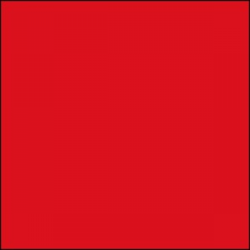
So is it the case that this color is red; even if everybody on the planet refers to it as blue?
Dumb f****** reductionists can't reconcile emergence with objectivity.
Atla wrote: ↑Wed Aug 02, 2023 11:06 am
'True' also means 'is the case', it's perfectly normal to say that facts are true whether we believe them or not. In other words features of reality are the case, no matter what anyone thinks. (assuming an objective reality)
So is it the case that this color is red; even if everybody on the planet refers to it as blue?
Dumb f****** reductionists can't reconcile emergence with objectivity.
This could be answered with both yes and no, depending on which context we ask it in.
Which isn't relevant to reductionism. Which isn't relevant to emergence.
Atla wrote: ↑Wed Aug 02, 2023 11:16 am
This could be answered with both yes and no, depending on which context we ask it in.
Oh really?
So in which context would that color still be red even if every human on the planet called it blue?
In whose mind would it be red? Your imagination of God's mind?
The question can be interpreted in too many ways imo. But I'll try to give an example anyway: assuming objective reality, color-qualia may be constant, no matter how we call them. Even if everyone calls the square blue, it won't change its color.
Atla wrote: ↑Wed Aug 02, 2023 11:26 am
The question can be interpreted in too many ways imo. But I'll try to give an example anyway: assuming objective reality, color-qualia may be constant, no matter how we call them. Even if everyone calls the square blue, it won't change its color.
So in the context of an objective reality where color-qualia are constant and this color is objectively red, but every single human on the planet (including you) refers to it as "blue", how would you come to acquire the knowledge that it's actually red and not blue?
Atla wrote: ↑Wed Aug 02, 2023 11:26 am
The question can be interpreted in too many ways imo. But I'll try to give an example anyway: assuming objective reality, color-qualia may be constant, no matter how we call them. Even if everyone calls the square blue, it won't change its color.
So in the context of an objective reality where color-qualia are constant and this color is objectively red, but every single human on the planet (including you) refers to it as "blue", how would you come to acquire the knowledge that it's actually red and not blue?
I wouldn't. That's why I said that in another context, the answer can be no.
Atla wrote: ↑Wed Aug 02, 2023 11:33 am
I wouldn't. That's why I said that in another context, the answer can be no.
Unless you can explain how a society which believes this color is red could come to change its mind and realise the color is actually blue that context doesn't exist.
As in ontologically.
There is no empirical process by which humans can come to realize the "true ontology of a color".
Last edited by Skepdick on Wed Aug 02, 2023 11:38 am, edited 1 time in total.
Peter Holmes wrote: ↑Wed Aug 02, 2023 10:55 am
Here's a surprising concession from one of our colleagues:
'The thing with facts is that they are true whether you believe them or not.'
It's confused, because it's factual assertions that have truth value - not the features of reality they assert, which just do or don't exist. And this conflation of two radically different uses for the word fact is highly significant, in my opinion.
But leaving that aside, it's a standard explanation of what we call facts - things that are or were the case, regardless of belief or opinion - and, therefore, what we call objectivity.
And this demolishes the 'this-is-how-we-use-these-words' argument for moral objectivity. And it demolishes the denial of the difference between what we call facts and opinions. And it demolishes any kind of consensus theory of truth.
I call that progress.
'True' also means 'is the case', it's perfectly normal to say that facts are true whether we believe them or not. In other words, features of reality are the case, no matter what anyone thinks. (assuming an objective reality)
Okay, but I'm pointing out the confusion that can be caused - especially in philosophy - by this linguistic practice.
And the venerable distinction between facts and propositions is designed to clarify the situation. Knowledge of facts is not knowledge of propositions - and doesn't depend on the truth of propositions - which is why the JTB account of knowledge is mistaken.
Skepdick wrote: ↑Wed Aug 02, 2023 11:36 am
Unless you can explain how you could come to change your mind about the color being blue and not red that context doesn't exist.
You may say that because you can't process contexts. Hypothetical contexts are also contexts.
I am talking hypothetically. Why are you struggling with the context?
Hypothetically speaking - how could humans who believe this color is red come to realize the truth of the color actually being blue?
In your hypothetical universe what's the hypothetical process by which humans could come to reacognize their error and learn the truth?
Atla wrote: ↑Wed Aug 02, 2023 11:37 am
You may say that because you can't process contexts. Hypothetical contexts are also contexts.
I am talking hypothetically. Why are you struggling with the context?
Hypothetically speaking - how could humans who believe this color is red come to realize the truth of the color actually being blue?
In your hypothetical universe what's the hypothetical process by which humans could come to reacognize their error and learn the truth?
They wouldn't, and nor is that required.
They? You mean we, right?
If we wouldn't come to recognize our error and there's no way we could learn that this color is actually blue and not red then what's the point of your hypothetical?
This color is hypothetically blue and 8 billion people are mistaken about it being red with no hope of error-correction! Yay.
Last edited by Skepdick on Wed Aug 02, 2023 11:48 am, edited 1 time in total.
Peter Holmes wrote: ↑Wed Aug 02, 2023 10:55 am
Here's a surprising concession from one of our colleagues:
'The thing with facts is that they are true whether you believe them or not.'
It's confused, because it's factual assertions that have truth value - not the features of reality they assert, which just do or don't exist. And this conflation of two radically different uses for the word fact is highly significant, in my opinion.
But leaving that aside, it's a standard explanation of what we call facts - things that are or were the case, regardless of belief or opinion - and, therefore, what we call objectivity.
And this demolishes the 'this-is-how-we-use-these-words' argument for moral objectivity. And it demolishes the denial of the difference between what we call facts and opinions. And it demolishes any kind of consensus theory of truth.
I call that progress.
'True' also means 'is the case', it's perfectly normal to say that facts are true whether we believe them or not. In other words, features of reality are the case, no matter what anyone thinks. (assuming an objective reality)
Okay, but I'm pointing out the confusion that can be caused - especially in philosophy - by this linguistic practice.
And the venerable distinction between facts and propositions is designed to clarify the situation. Knowledge of facts is not knowledge of propositions - and doesn't depend on the truth of propositions - which is why the JTB account of knowledge is mistaken.
To be honest I never really understood why there are all these different theories about knowledge and morality, all with their terminologies, instead of just looking at how knowledge and morality actually work.
Skepdick wrote: ↑Wed Aug 02, 2023 11:46 am
They? You mean we, right?
If we wouldn't come to recognize our error and there's no way we could learn that this color is actually blue and not red then what's the point of your hypothetical?
This color is hypothetically blue and 8 billion people are mistaken about it being red! Yay.
Objective reality is an absolute assumption, what additional "point" should it have?