HexHammer wrote:
So far your sales pitch about this cozy chat has brought nothing solid, and wouldn't sell much without any solid evidense of what you try to push on me, rather you try to convince me with silly rethorics.
If you can't use philosophy out in the real world, then it's a delusion of relevance. It has been around for thousands of years, yet you can't bring a single useful thing.
Our legal system is based on practical ethics, philosophers have contributed to science particularly in grounding it in a methodology, in fact there are millions of ways in which philosophy has contributed to society that are way to numerous to name, why you seem so down on it and yet hang around it so much is pretty odd though.
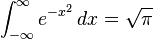
Archimedes was a famous inventor who built weapons based on his theories of ballistics and weight and maths which helped when the Romans invaded Sicily who also solved the volume of a sphere using a primitive form of calculus and advanced concrete mechanical engineering with his use of levers and the famous archimedes screw. Also the mathematics and principles used by The Egyptians and Greeks are so intrinsic to architecture and just about anything designed and built in the modern age. Without a maths philosopher called Heron invented the imaginary numbers, which were later refined by an Italian and later accepted when euler wrote the famous equation:

Which can be used to derive every trigonometric function. And is merely a 4th axis perpendicular to x,y,z allowing hence 4d models to be plotted such as where a ball bouncing will stop and so on.
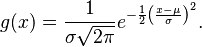
Which lead Gauss to his stochastic solutions in spherical mediums as outlined in probability distribution maths above, although it didn't find much use until the 19th century when scientists made great use of probability mechanics in electrodynamics and the unification hence of magnetism.
They would reach a height of utility in the 20th century though when they were used by Einstein to model his General theory of gravity and by Bohr and Schrödinger and Dirac to produce equations which could model the wave/particle duality of matter. Incidentally Bohrs Copenhagen interpretation of quantum mechanics drew heavily on Kant's ideas of realism, and Schrödinger keenly explored many philosophers in many works both inside and outside physics, as did Einstein.
So I'd say philosophy being the father of science has had and still has a lot to contribute, it has lead to the French revolution and American independence, it has also created some of the most diverse and popular literature in history, and it is used as a means of political polemics to this day.
Any big wig in politics has a think tank or two to turn to, and seldom do they lack a philosopher.