Come AJ, in regard to your own value judgments, given a particular context -- capitalism vs. socialism, say -- note how the arguments I make here -- https://www.ilovephilosophy.com/viewtop ... 1&t=176529 -- are not applicable at all to you. Note how science and logic instead will bring all rational people around to your own "my way or the highway" point of view.Mr. Wiggle aka Mr. Snippet wrote: ↑Wed Apr 26, 2023 4:32 pmThis is a standard phrase that you post and repeat endlessly. It is meaningless. So I disregard it entirely. Sorry Old Bean!iambiguous wrote: ↑Wed Apr 26, 2023 4:07 pm Here, in regard to either flesh and blood human intelligence or artificial machine intelligence, I come back to dasein. And, in particular, in regard to moral and political value judgments in the is/ought world.
Really, what's the difference between them if neither of them in a No God world is able...either philosophically or scientifically...to establish a moral assessment that could actually be demonstrated to encompass behaviors that all rational and virtuous men and women are obligated to embrace if they wish to be thought of as rational and virtuous.
Chomsky will no doubt suggest that capitalism reflects "a fundamentally flawed conception of language and knowledge" as it pertains to rational and virtuous behaviors. Whereas the Libertarians and the Objectivists among us, while agreeing that philosophically, politically, morally there is an optimal frame of mind, will insist instead that this is precisely what capitalism encompasses.
So, Mr. Flesh and Blood human being or Mr. Chatbot...which is it?
Artificial Intelligence: What it portends
-
iambiguous

- Posts: 11317
- Joined: Mon Nov 22, 2010 10:23 pm
Re: Artificial Intelligence: What it portends
-
Gary Childress
- Posts: 13187
- Joined: Sun Sep 25, 2011 3:08 pm
- Location: It's my fault
Re: Artificial Intelligence: What it portends
OK. Henry, thank you for sharing your interpretation of the article. I agree 100%. AI is a machine and a human mind (if anything like my mind) is NOT = a machine.henry quirk wrote: ↑Wed Apr 26, 2023 4:52 pmThe article is posted, in it's entirety, just up thread. You don't have to leave the forum to read it. Some of what you ask about, like what do you mean by "aligned"? is explained in the article. My own take on AI (and what it portends) is best reflected by this excerpt, the very excerpt that got you askin' me questions...
note the bold parts
In short: AI is a machine not a mind. It would be a mistake to treat it as anything other than a toaster.henry quirk wrote: ↑Wed Apr 26, 2023 2:30 amE4788077-1C0D-4EE5-B4CE-F568A9AF93BF.png
Consciousness is Not Computational and Not Controllable
Finally, let’s look at the lower-right quadrant. Again, we assume that the computational theory of mind is incorrect. But now we also assume that humans have libertarian free will. We are something truly special: the conscious authors of our own stories. We are creatures with insights, intuitions, feelings, and volitional capacities that cannot be replicated by computation. This is the quadrant that I personally believe is true (EDIT: me too...)
Of course, readers of Less Wrong would call this the “woo woo” or “pseudoscience” quadrant, since it foolishly rejects the reductive materialism that (they believe) underlies science. Religious and spiritual minded thinkers would consider it a wise rejection of reductive materialism. Average people just live their lives as if this quadrant were true, and react to new developments in AI as if it were true.
If this quadrant is correct, then AI cannot ever have a mind, no matter how good its learning model or how big its neural network. It can, at best, simulate the appearance of having a mind. That is the point of John Searle’s Chinese Room thought experiment: An AI can only ever be a philosophical zombie, without understanding or intentionality.
If this quadrant is correct, AI can’t replace us because we’re special in a way it never will be. In a sense, that’s good news.
Unfortunately, the people making AI don’t think this quadrant is true. (Re-read the reductivism of Less Wrong!) And we can’t ever prove it to them. Nothing I or anyone else could ever say or do could persuade someone like Eliezer Yudkowsky that I’m non-algorithmic and free-willed; I could only demonstrate to him that I say I’m non-algorithmic and free-willed. But a computer could be programmed to say that, too.
And that’s very bad news. Why do I say that?
Well, imagine that humanity moves forward with AI development without solving the AI alignment problem, and creates an advanced AI that eliminates us all.
Now imagine that the upper-left quadrant is correct. If so, then the elimination of our species is no big deal. If an advanced AI replaces humanity, all that’s happened is that… a new deterministic system that is superior at computation has replaced an old deterministic system that was inferior at it. As chilling as this sounds, I have spoken to several AI developers who hold precisely this view — and are proud to be working on humanity’s successors. If you accept the nihilism inherent in reductive materialism, it makes perfect sense.
In contrast, imagine that our lower-right quadrant is correct. If so, then eliminating our species is eliminating something unique and special. If an advanced AI replaces humanity, then beauty, goodness, and life itself have been extinguished in favor of soulless machinery. This is an absolutely horrific ending — in fact, the worst possible outcome that can be conceived.
If this quadrant is true, then we’re not just summoning a genie to grant our wishes, we’re summoning a soulless demon, an undead construct. The AI black box is black because its black magic, and we shouldn’t touch it.
https://en.m.wikipedia.org/wiki/Colossu ... in_Project
As I say, I don't need to read every article on the Internet to learn things that I have already encountered in the debate over Philosophy of Mind. I'm well beyond that point in my own thoughts on the issue. Thank you for telling me in your own words. I'd rather hear it from you than waste time reinventing the wheel for myself by reading a bunch of text that isn't going to tell me anything I don't already know.
-
Alexis Jacobi

- Posts: 8721
- Joined: Tue Oct 26, 2021 3:00 am
Re: Artificial Intelligence: What it portends
Definitely, I am not going to read your links to other sites where your jibber-jabber goes to more extreme limits.iambiguous wrote: ↑Wed Apr 26, 2023 5:25 pmCome AJ, in regard to your own value judgments, given a particular context -- capitalism vs. socialism, say -- note how the arguments I make here...
-
iambiguous
- Posts: 11317
- Joined: Mon Nov 22, 2010 10:23 pm
Re: Artificial Intelligence: What it portends
Alexis Jacobi wrote: ↑Wed Apr 26, 2023 5:52 pmDefinitely, I am not going to read your links to other sites where your jibber-jabber goes to more extreme limits.iambiguous wrote: ↑Wed Apr 26, 2023 5:25 pmCome AJ, in regard to your own value judgments, given a particular context -- capitalism vs. socialism, say -- note how the arguments I make here...

No, seriously.
Okay, okay: I admit it. I still take pleasure in reducing insufferable pedants like AJ here down to truly embarrassing posts like this. They want to be thought of as "serious philosophers" but only if you take them seriously enough to agree with practically everything they post.
Also, challenge them to take their pedantry down out of the intellectual contraption clouds and, well, you tell me.

Note to any future AI pedants:
You're next.

-
Alexis Jacobi
- Posts: 8721
- Joined: Tue Oct 26, 2021 3:00 am
Re: Artificial Intelligence: What it portends
::: AJ sulks away in shame, wounded, crestfallen :::iambiguous wrote: ↑Wed Apr 26, 2023 6:05 pm Okay, okay: I admit it. I still take pleasure in reducing insufferable pedants like AJ here down to truly embarrassing posts like this.
Re: Artificial Intelligence: What it portends
...you neglected to include yourself from whom there is nothing to learn except what others have already said! Believe as you like; we all exist within a great bubble of confusion or at best, indifference because no one gives a cacky what anyone believes or subscribes to as the truth much of which has now turned to quicksand.Alexis Jacobi wrote: ↑Wed Apr 26, 2023 12:16 pmYes, yes, I got all that on the first go-round, Mr Grumpy.Dubious wrote: ↑Wed Apr 26, 2023 3:30 am That's why I say you seem incapable of applying any kind of analysis being simply a spectator to the thoughts of others based on what you regard as exceptional or revelatory.
One can quite easily question each of the paragraphs quoted but to do it with someone like you is not unlike you arguing with IC on the intransigence of his beliefs.
Which is why I indicated that you’re talking out of your butt-end, not your more intelligent orifice.
All I will say is that Revolt of the Masses outlines a very worthy perspective in a wide area of consideration. I began reading it again (it has been about 8 years) and still see its value. Ortega y Gasset and Richard Weaver had strong effect on a transformation in my own thinking.
Given your prejudices I’d suggest you stay far far away from it.
In this age of major shifts we're less certain of that - or whether truth itself as a doorstop, should not be considered an illusion or concept amenable to eradication - than at any other time in history; the world now exists in some kind of fuzzy transformational state whose eventual resolution remains thoroughly opaque.
It took awhile, but now it's quite clear how proficient you've become in blowing hot air yourself and how ready you are to go ad hominem upon any basic disagreements making you just another common member of the mass-man institute.
If I based my judgement exclusively on the effect Ortega y Gasset and Richard Weaver has on your thinking, then your advice is correct in suggesting to stay far, far away from them.
...but I refuse to do them that kind of injustice!
Re: Artificial Intelligence: What it portends
Why ask me? You already have your masters echoing their thoughts through your illuminated mind.Alexis Jacobi wrote: ↑Wed Apr 26, 2023 12:24 pmWere I you I’d develop these ideas more — that is if you were really interested in communicating their implication.Dubious wrote: ↑Wed Apr 26, 2023 3:30 am Consider the immensity of changes which took place since then not only technologically and geopolitically but psychologically.
What's quoted certainly makes some good points but what was, or once imagined requires a major revision now! We're not talking metaphysics which seldom requires an update.
Revise majorly! I support your exclamation points.
And please explain more about the constancy of metaphysics, Master.
“Instruct me, for thou knowest.”
Ass’s ears are turned toward you, braying halted.
-
Gary Childress
- Posts: 13187
- Joined: Sun Sep 25, 2011 3:08 pm
- Location: It's my fault
Re: Artificial Intelligence: What it portends
I don't know. I'm agnostic about some things but not so about others. I'm agnostic about whether or not there is a God. I'm agnostic about whether or not there is a soul. I'm agnostic about just where sentience begins and ends in the realm of the physical sciences. However, I'm pretty sure that a male claiming to be a female is still a male, and a computer claiming to be a person and visa versa, is still its original identity and not the other. The world of shifting, slippery, or "transformational" meanings is sophistry to me and serves little other purpose than to undermine trust and confidence in a society that embraces it.Dubious wrote: ↑Wed Apr 26, 2023 9:54 pmIn this age of major shifts we're less certain of that - or whether truth itself as a doorstop, should not be considered an illusion or concept amenable to eradication - than at any other time in history; the world now exists in some kind of fuzzy transformational state whose eventual resolution remains thoroughly opaque.Alexis Jacobi wrote: ↑Wed Apr 26, 2023 12:16 pmYes, yes, I got all that on the first go-round, Mr Grumpy.Dubious wrote: ↑Wed Apr 26, 2023 3:30 am That's why I say you seem incapable of applying any kind of analysis being simply a spectator to the thoughts of others based on what you regard as exceptional or revelatory.
One can quite easily question each of the paragraphs quoted but to do it with someone like you is not unlike you arguing with IC on the intransigence of his beliefs.
Which is why I indicated that you’re talking out of your butt-end, not your more intelligent orifice.
All I will say is that Revolt of the Masses outlines a very worthy perspective in a wide area of consideration. I began reading it again (it has been about 8 years) and still see its value. Ortega y Gasset and Richard Weaver had strong effect on a transformation in my own thinking.
Given your prejudices I’d suggest you stay far far away from it.
The only thing I will say in its defense is that we human beings seem to be wired to experience it in our world periodically. Thomas Khun called them "Paradigm Shifts". Some call them "revolutions" or "progress" or "discoveries" or any manner of other things. Michel Foucault made an interesting claim in Madness and Civilization that the practice of housing the insane in "asylums", "hospitals" or whatever we wish to call them, emerged with the decline of Leprosy and the Leprosarium. The Leprosarium was designed to keep people with Leprosy from spreading the disease. Now there is such a thing as "mental illness" which the mental health industry doesn't want spreading through society. All I can say is this "transformational state" seems a lot like a contagious mental disorder to me.
I don't know how accurate Foucault was in his historical research (I've heard it claimed that he was wrong regarding it) but I'm at least sure that thought and (for that matter behavioral) disorders do exist. They are simply behaviors or thoughts that do not match up with scientific knowledge or the appropriate goals or needs of society and/or may even be harmful to society. Should those of us with such disorders live in roped-off quarantine zones? No. I don't think so. In the end, some of us just need better guidance or better incentives to think or do what is needed to be thought or done. If what we think or do is harmless, then it's fine to just let us be.
Re: Artificial Intelligence: What it portends
Much of what is being discussed in this thread was presented in the television series: "Person of Interest" in which two powerful, self-aware and self-regulating AI entities were created by two groups of people on the opposite ends of the morality spectrum.Alexis Jacobi wrote: ↑Sat Apr 22, 2023 9:15 pmSure, but that does not seem a possibility. I think that is, at least, Chomsky’s insight.
But what is discomfiting is the awareness that AI will be programmed with tasks. The most obvious has already been suggested. An AI program, with an array of bots, that can insert itself pervasively in social media to influence or alter how people think about something.
Or comb through Internet communication seeking out people with opinions and ideas (statements) deemed inappropriate or undesired.
The ‘diabolical mind’ of men — already in evidence — will gain a tool tremendously more powerful. The worst usage, and outcomes, seem the most likely. They are inevitable in fact.
AI is not and will not become “independent”, but will be something the powerful employ.
Mythologically, also perhaps psychologically, it seems inevitable that AI will embody the ‘demonic’. And what was previously ‘intuited’ and ‘foretold’ by visionaries, paranoid or realistic.
It now manifests.
If you haven't seen it, then you should check it out. It's a really good story with fun and interesting characters.
_______
Re: Artificial Intelligence: What it portends
_______
Picture that scene in the movie "2001: A Space Odyssey" when the ape-like hominid discovered that a bone could be used as a tool (or a weapon) and then tossed it into the air where it is suddenly transformed into a space vehicle, thousands of years into the future...
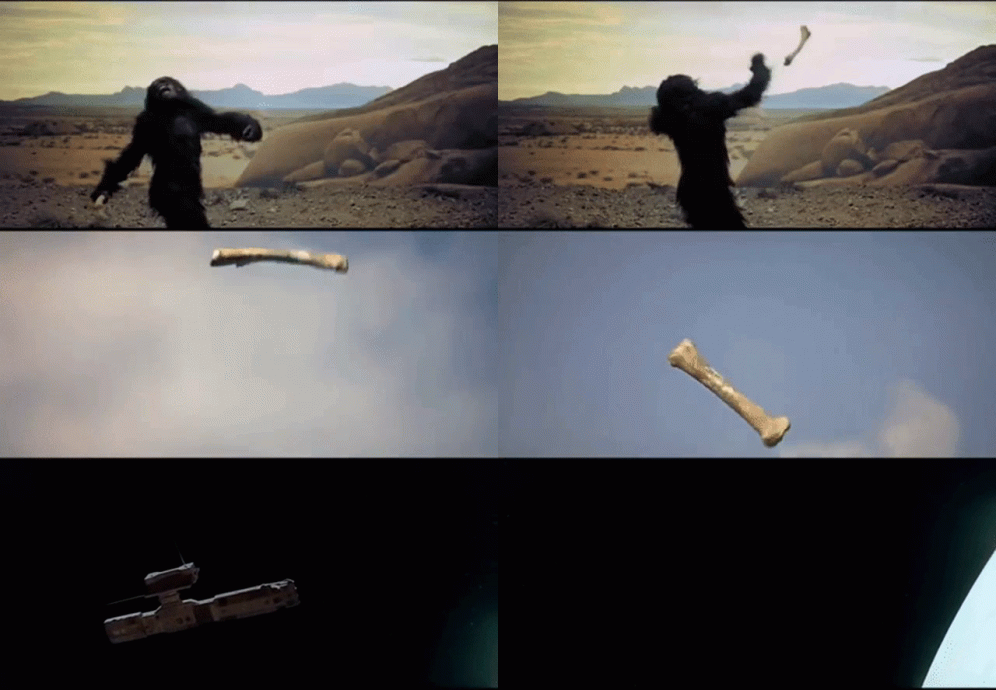
Well, that kind of loosely represents how far we've come with AI.
For example, the perforated roll on the player piano depicted below...

...is pretty much an early form of artificial intelligence.
And the point is that a modern version of that perforated roll is ChatGPT's speech recognition software which is merely a more advanced version of something similar to the Alexa and Siri software.
Therefore, in essence, modern AI can be thought of as nothing more than a situation where instead of inanimate machinery carrying out specific tasks after being mechanistically prompted by varying perforations on a moving roll of paper,...

...the modern version of AI has inanimate machinery carrying out specific tasks after being mechanistically prompted by varying waveforms of sound...
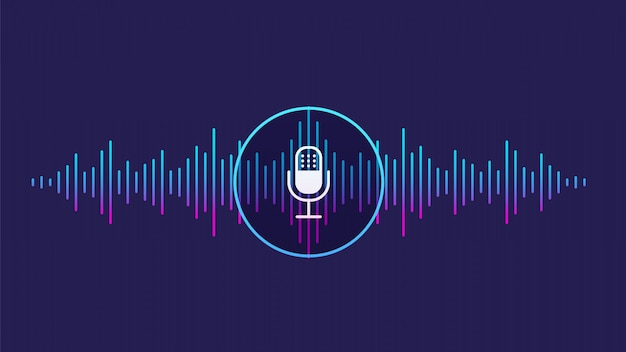
And the ultimate point is that neither of those examples of old and new AI offer the slightest suggestion of the existence of anything that is even remotely conscious of what it is doing as it carries out its programmed responses.
No, there is just emergent phenomena that can be traced back to the underlying gears and pullies (and perforated rolls) that make up the constituent properties of the machine, which is what "weak emergence" is all about.
On the other hand, the fear is that a manmade machine can (and will) acquire consciousness once a certain threshold in the accumulation of information is crossed.
However, that would be an instance of "strong emergence," where there would be no logical accounting for how this wholly other phenomenon (a living, conscious, self-aware entity) emerged from an underlying substrate that is completely devoid of life and consciousness.
And that, to me, is a huge problem....UNLESS...one is open to the possibility that the fundamental essence of life and consciousness is already present within the very quantum fabric from which the machines are constructed.
Which, in turn, might (in some bizarre and nightmarish vision of the future) allow for some strange form of "abiogenesis" to take place amidst the silicone, plastic, and copper that makeup computer chips and processors...
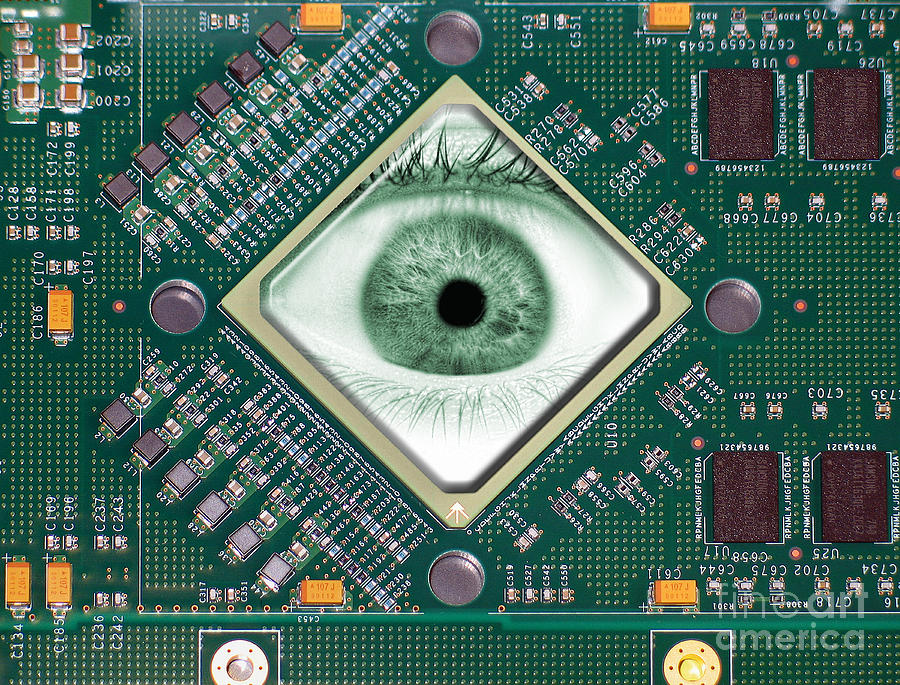
However, though plausible (because I do indeed believe that literally everything is alive), such a scenario is highly unlikely to ever take place.
_______
Picture that scene in the movie "2001: A Space Odyssey" when the ape-like hominid discovered that a bone could be used as a tool (or a weapon) and then tossed it into the air where it is suddenly transformed into a space vehicle, thousands of years into the future...
Well, that kind of loosely represents how far we've come with AI.
For example, the perforated roll on the player piano depicted below...
...is pretty much an early form of artificial intelligence.
And the point is that a modern version of that perforated roll is ChatGPT's speech recognition software which is merely a more advanced version of something similar to the Alexa and Siri software.
Therefore, in essence, modern AI can be thought of as nothing more than a situation where instead of inanimate machinery carrying out specific tasks after being mechanistically prompted by varying perforations on a moving roll of paper,...
...the modern version of AI has inanimate machinery carrying out specific tasks after being mechanistically prompted by varying waveforms of sound...
And the ultimate point is that neither of those examples of old and new AI offer the slightest suggestion of the existence of anything that is even remotely conscious of what it is doing as it carries out its programmed responses.
No, there is just emergent phenomena that can be traced back to the underlying gears and pullies (and perforated rolls) that make up the constituent properties of the machine, which is what "weak emergence" is all about.
On the other hand, the fear is that a manmade machine can (and will) acquire consciousness once a certain threshold in the accumulation of information is crossed.
However, that would be an instance of "strong emergence," where there would be no logical accounting for how this wholly other phenomenon (a living, conscious, self-aware entity) emerged from an underlying substrate that is completely devoid of life and consciousness.
And that, to me, is a huge problem....UNLESS...one is open to the possibility that the fundamental essence of life and consciousness is already present within the very quantum fabric from which the machines are constructed.
Which, in turn, might (in some bizarre and nightmarish vision of the future) allow for some strange form of "abiogenesis" to take place amidst the silicone, plastic, and copper that makeup computer chips and processors...
However, though plausible (because I do indeed believe that literally everything is alive), such a scenario is highly unlikely to ever take place.
_______
-
Alexis Jacobi
- Posts: 8721
- Joined: Tue Oct 26, 2021 3:00 am
Re: Artificial Intelligence: What it portends
Your principal error is here. And I suspect you will double- and triple-down on it. Once we make a substantial error in written form on these forums it is hard to walk it back and save face.
You say something really stupid, and what? do you expect an elaborate defense? It’s like a trap
So I avoid it roundly.
You seem upset or bothered by certain ideas I entertain that you don’t like. You reacted viscerally to Evola — was that it?
Own your shit!
Re: Artificial Intelligence: What it portends
If I live up to mine, will you live up to yours?Alexis Jacobi wrote: ↑Wed Apr 26, 2023 10:27 pmYour principal error is here. And I suspect you will double- and triple-down on it. Once we make a substantial error in written form on these forums it is hard to walk it back and save face.
You say something really stupid, and what? do you expect an elaborate defense? It’s like a trap
So I avoid it roundly.
You seem upset or bothered by certain ideas I entertain that you don’t like. You reacted viscerally to Evola — was that it?
Own your shit!
-
Alexis Jacobi
- Posts: 8721
- Joined: Tue Oct 26, 2021 3:00 am
Re: Artificial Intelligence: What it portends
I can work with this: Dubious’s philosophy of dubiousness. I like it!Dubious wrote: ↑Wed Apr 26, 2023 9:54 pmBelieve as you like; we all exist within a great bubble of confusion or at best, indifference because no one gives a cacky what anyone believes or subscribes to as the truth much of which has now turned to quicksand.
In this age of major shifts we're less certain of that - or whether truth itself as a doorstop, should not be considered an illusion or concept amenable to eradication - than at any other time in history; the world now exists in some kind of fuzzy transformational state whose eventual resolution remains thoroughly opaque.
I gather this is really what you want to talk about. I’m just the avenue presented.
Glad to be of service!
-
Alexis Jacobi
- Posts: 8721
- Joined: Tue Oct 26, 2021 3:00 am
-
Alexis Jacobi
- Posts: 8721
- Joined: Tue Oct 26, 2021 3:00 am
Re: Artificial Intelligence: What it portends
In my view, Mr Grumpisaurus, you have defined here your own core problem. This informs all your statements in one way or another.Alexis Jacobi wrote: ↑Wed Apr 26, 2023 10:57 pmI can work with this: Dubious’s philosophy of dubiousness. I like it!Dubious wrote: ↑Wed Apr 26, 2023 9:54 pmBelieve as you like; we all exist within a great bubble of confusion or at best, indifference because no one gives a cacky what anyone believes or subscribes to as the truth much of which has now turned to quicksand.
In this age of major shifts we're less certain of that - or whether truth itself as a doorstop, should not be considered an illusion or concept amenable to eradication - than at any other time in history; the world now exists in some kind of fuzzy transformational state whose eventual resolution remains thoroughly opaque.
I gather this is really what you want to talk about. I’m just the avenue presented.
Glad to be of service!
The problem here is that itbis projected content.
Get it?