Ad blocker detected: Our website is made possible by displaying online advertisements to our visitors. Disable your ad blocker to continue using our website.
Advocate wrote: ↑Tue Feb 09, 2021 4:12 pm
"X is consistent with goal Y" is a moral assertion, the unspoken premise being that goal Y is desirable.
The claim 'goal Y is desirable' expresses an opinion, which is subjective. And if the criterion for moral rightness / wrongness is 'that which is / is not desirable', then morality is not objective.
A moral assertion is one that uses such words as 'ought', 'should', '(morally) right' and '(morally) wrong'. The claim 'X is consistent with goal Y' doesn't use those words, so it isn't a moral assertion.
Advocate wrote: ↑Tue Feb 09, 2021 4:14 pm
Your internal understanding of morality can be anything you want it to be. As soon as you start talking about murder, it's not an internal problem any longer and external variables are obviously necessary to consider.
Yes, but you have to be pretty first, and do a crime sufficiently of interest to the general public to be widely disseminated in order that the greatest amount of weirdos become aware of your presence. Also you have to be sequestered somewhere that has reasonable mail rules.
>The claim 'goal Y is desirable' expresses an opinion, which is subjective. And if the criterion for moral rightness / wrongness is 'that which is / is not desirable', then morality is not objective.
There are ways of being that are obviously better for All goals. There are ways to find agreement or to prove necessity "for all intents and purposes". The two varieties of subjective are Arbitrary and Contingent. Contingent is as close to objective as we can get in reality.
Contingency = objective. Our goals Are whatever we say they are. Yes, the first step is to define what kind of world we want to live in. That's subjective, but not arbitrary. Nothing is truly objective in the way you seen to intend.
OUGHTs exist. OUGHTs can only come from ISes. What remains is to explore how that happens. The answer is above.
I think the problem is that your formula requires an infinite understanding of "objective", which is an epistemological error. Words that reference the transcendent are only placeholders for the ineffable.
Advocate wrote: ↑Tue Feb 09, 2021 5:00 pm
>The claim 'goal Y is desirable' expresses an opinion, which is subjective. And if the criterion for moral rightness / wrongness is 'that which is / is not desirable', then morality is not objective.
There are ways of being that are obviously better for All goals. There are ways to find agreement or to prove necessity "for all intents and purposes". The two varieties of subjective are Arbitrary and Contingent. Contingent is as close to objective as we can get in reality.
Contingency = objective. Our goals Are whatever we say they are. Yes, the first step is to define what kind of world we want to live in. That's subjective, but not arbitrary. Nothing is truly objective in the way you seen to intend.
OUGHTs exist. OUGHTs can only come from ISes. What remains is to explore how that happens. The answer is above.
I think the problem is that your formula requires an infinite understanding of "objective", which is an epistemological error. Words that reference the transcendent are only placeholders for the ineffable.
Nonsense. The word 'objective' doesn't refer to 'the transcendent' (whatever that is). We use it to mean 'independence from opinion when considering the facts'. And the assertion 'contingency = objective' is incoherent. Your claim that there are 'ways of being that are obviously better for All goals' begs the question. (And, btw, initially capitalising a word eccentrically doesn't clarify anything.)
Nothing you've said establishes the objectivity of morality - that there are moral facts.
FlashDangerpants wrote: ↑Tue Feb 09, 2021 1:36 pm
Sometimes it is just hard to believe that it is you telling us that you are the greatest mind ever to have lived, with gems like that we should really be telling you.
You prefer long expositions with extended arguments ii suppose
You suppose incorrectly, brevity is good. But understanding the problem before announcing that you've fixed it with the specious contents of a fortune cookie is better still.
If you understood it properly, the is/ought thing is just an observation about the logical relationship between facts and values. It's not really a problem that needs a solution.
This is all very much like that time you made a fool of yourself with your unwanted and cripplingly stupid 'solution' to the no-true-scotsman thing that isn't actually a problem in need of a solution either.
>You suppose incorrectly, brevity is good. But understanding the problem before announcing that you've fixed it with the specious contents of a fortune cookie is better still.
The best wisdom is that which is as simple as possible, but no simpler. Are you saying my answer is insufficient? In what particular respect?
>If you understood it properly, the is/ought thing is just an observation about the logical relationship between facts and values. It's not really a problem that needs a solution.
It's a problem at least that people don't understand the logical relationship.
Advocate wrote: ↑Tue Feb 09, 2021 4:07 pm
>Also, "I desire to do x, therefore I should do y (which will achieve x)" doesn't follow, because desiring to do x is actually different than being motivated to (do something that will actually) achieve x. If you're also motivated to (do something that will actually) achieve x as well, that's also different than wanting/being motivated to take certain sorts of actions to achieve x, it's different than wanting/being motivated to take actions that are the most efficient and effective for achieving x, and so on.
That's why i take morality to be a personal and ethics to be a group understanding of how to achieve whatever, because they require different dynamics. The motivation for your moral acts must be the sort of act that you believe tends to lead to good outcomes, however you define it. The boundaries of ethics are different because they must account for the good of a particular group. Ideally that group is everyone involved and every interest of every individual in the group. Since that is rarely possible, we use ethics as "best practice" for which there may be alternative answers depending on various minutae.
>So this isn't nearly as simple of an equation as people make it out to be. There's a whole host of psychological states that need to be considered.
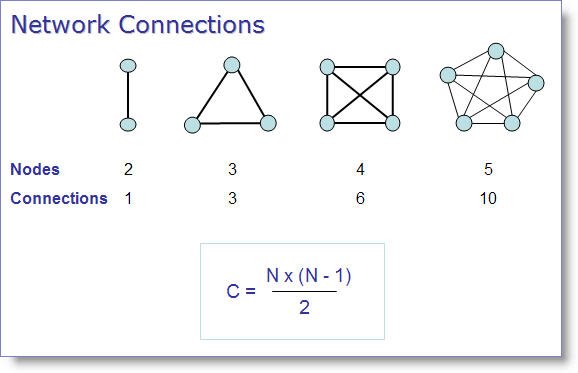
Everything spiritual ( non-empirical ) is contingent. Obviously this includes ethics. And equally obviously, the more contingencies you add, the more complex the formula necessarily becomes. This: https://photos1.blogger.com/blogger/680 ... ctions.jpg
Ethics is a formalized set of heuristics. Morality is the individual/internal version.
That's inventing a novel distinction between morality/ethics simply because they're two different words.
The real reasons there are two different words is simply that one stems from Greek and one stems from Latin. Both languages were important in the history of philosophy.
"The motivation for your moral acts must be the sort of act that you believe tends to lead to good outcomes,"<---that's not true or false. It just tells us about how you're going to use a term. It tells us about your criteria for applying a particular label to things.
>That's inventing a novel distinction between morality/ethics simply because they're two different words.
The distinction is real, and matters, as indicated in this conversation and many others. Since the word "ethics" already tends to be used for professional and explicit purposes, mine is the most helpful distinction in language to manage that important difference.
>"The motivation for your moral acts must be the sort of act that you believe tends to lead to good outcomes,"<---that's not true or false. It just tells us about how you're going to use a term. It tells us about your criteria for applying a particular label to things.
That the answer is semantic does not indicate that it is insufficient.
Those of you who believe my answer to be insufficient, by which criteria? If yours exude any possible answer, or any currently available for discussion, you cannot be doing philosophy because your search for truth has an arbitrary end.
Advocate wrote: ↑Tue Feb 09, 2021 9:38 pm
Those of you who believe my answer to be insufficient, by which criteria? If yours exude any possible answer, or any currently available for discussion, you cannot be doing philosophy because your search for truth has an arbitrary end.
There is a big gap between is and ought given the definition of both.
[quote=bahman post_id=495346 time=1612904563 user_id=12593]
[quote=Advocate post_id=495345 time=1612903113 user_id=15238]
Those of you who believe my answer to be insufficient, by which criteria? If yours exude any possible answer, or any currently available for discussion, you cannot be doing philosophy because your search for truth has an arbitrary end.
[/quote]
There is a big gap between is and ought given the definition of both.
[/quote]
My answer specifically addresses that gap in the semantic sense.