WHo's Phil?Jaded Sage wrote:You'd've thanked me. Phil is a cigar not a ciggarette.
According to Freud, sometimes a cigar is just a cigar.
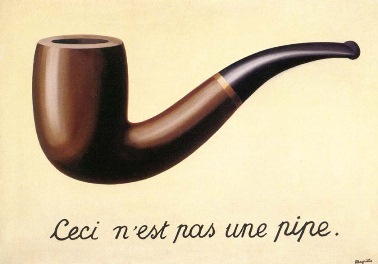
I prefer a pipe.

WHo's Phil?Jaded Sage wrote:You'd've thanked me. Phil is a cigar not a ciggarette.
Since you ordinarily express your views far more stridently this is an uncharacteristically restrained comment from you, Hobbes, so I'll take the liberty of translating it into the modern parlance for you. Platonist philosophy is a crock of mystical horseshit which has polluted over two millennia of philosophical thought with disastrous consequences.Hobbes' Choice wrote:Philosophy is not a footnote to Plato in any meaningful sense. Plato is mostly moribund and ossified.
I agree. What little is of worth in Plato is only hinted at by his record of his own mentor Socrates who sadly wrote nothing down.Obvious Leo wrote:Since you ordinarily express your views far more stridently this is an uncharacteristically restrained comment from you, Hobbes, so I'll take the liberty of translating it into the modern parlance for you. Platonist philosophy is a crock of mystical horseshit which has polluted over two millennia of philosophical thought with disastrous consequences.Hobbes' Choice wrote:Philosophy is not a footnote to Plato in any meaningful sense. Plato is mostly moribund and ossified.
It is interesting that Kant used Platonic terminology here. My view and the view of most people was that he was deliberately challenging Plato.Obvious Leo wrote:The Allegory of the Cave is a useful little parable but it only makes sense when understood from a Kantian perspective, which of course is the antithesis of Platonism.
I agree. There's no way that Kant's Noumenon could be mistaken for Plato's Forms but Platonism was still very much the prevailing philosophical stance in Kant's era so it's unsurprising that many would detect an analogy when no real analogy exists.Hobbes' Choice wrote: My view and the view of most people was that he was deliberately challenging Plato.
Very much so, which is why I referred to the Cave story as a useful insight into the Kantian metaphysic. However Plato's Forms are explicitly defined as being of transcendent origin whereas Kant's Noumenon is formally based on the Leibnizian and Spinozan traditions of immanent cause. There is an interesting parallel to be found here with modern physics, where David Bohm, perhaps the most insightful quantum theorist of them all, spoke of implicate and explicate order.Hobbes' Choice wrote: But you can see how the realm of Forms could be seen as another way of looking at the idea of the Noumenon.
I can read your question in two ways.Hobbes' Choice wrote: :
I did read somewhere that because S.Kierkergaard examined "existentially" MH decided to examine "existentielly" - Maybe this encapsulates the difference but then what does EXISTENTIELL mean?
Inspiration is not linear, and Keirkergaard is not in any sense that matter Scandinavian. National boundaries are not relevant.Ansiktsburk wrote:I can read your question in two ways.Hobbes' Choice wrote: :
I did read somewhere that because S.Kierkergaard examined "existentially" MH decided to examine "existentielly" - Maybe this encapsulates the difference but then what does EXISTENTIELL mean?
The scandinavian(Danish is the uncouth variant) word means would mean maybe something less centered on the dasein himself, but existence in general.
Secondly, I would say that both brat Sörens and the old nazis versions are quite centered on the individual human. Which is a little funny, since they both depended so much on other people. Never understood why the guy who wrote Sein und Zeit flung himself into the Nazi party right from the beginning when Hitler came to power.
By the way, nazis, communists and WW's are extremely important to keep in mind when you read any 20 century phil. To understand the philosophy you have to know 19 and 20 centuty history.
But to really answer the question, there must be some map of who inspired who?
For the scandinavian part, I just wanted to make sure...Hobbes' Choice wrote:Inspiration is not linear, and Keirkergaard is not in any sense that matter Scandinavian. National boundaries are not relevant.Ansiktsburk wrote:I can read your question in two ways.Hobbes' Choice wrote: :
I did read somewhere that because S.Kierkergaard examined "existentially" MH decided to examine "existentielly" - Maybe this encapsulates the difference but then what does EXISTENTIELL mean?
The scandinavian(Danish is the uncouth variant) word means would mean maybe something less centered on the dasein himself, but existence in general.
Secondly, I would say that both brat Sörens and the old nazis versions are quite centered on the individual human. Which is a little funny, since they both depended so much on other people. Never understood why the guy who wrote Sein und Zeit flung himself into the Nazi party right from the beginning when Hitler came to power.
By the way, nazis, communists and WW's are extremely important to keep in mind when you read any 20 century phil. To understand the philosophy you have to know 19 and 20 centuty history.
But to really answer the question, there must be some map of who inspired who?
M H was a survivor, and a social climber. Attachment to the Nazi party was necessary to keep his social standing. Being an individualist is not incompatible with being part of an authoritarian group, because guile, cunning, and self deception are some of the useful traits of the self possessed; so flinging yourself into the Nazi party is an act of self preservation and self promotion at the same time. It demonstrated an utter disregard for the fortunes of his fellow country men, and the neighbouring countries that Germany was crushing: perfect self regard.
Jaded Sage wrote:Also, I caution looking for shortcuts. You end up reducing philosophy to a bunch of opinions. That's foolish.

I agree with Russell. In my view Leibniz and Kant were outstanding exceptions but after that they were just a gang of long-winded political sycophants who were uniformly unreadable and excruciatingly boring.Ansiktsburk wrote:If you read Russell's history of philosophy, not too long after, you will not find too many superlatives regarding german philosophers,