Re: Kant and the Thing in Itself
Posted: Thu Jul 10, 2014 11:45 pm
Here's an excerpt from a Philosophy Now article about Kant, to help Hexhammer out:
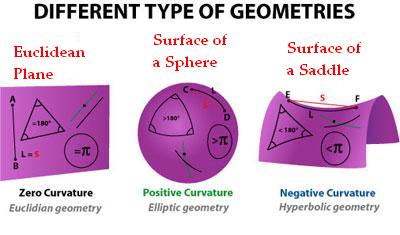
I think that Einstein's representation of space and time in non-Euclidean terms does damage to Kant's foundations.Appearances in Kantian language are called ‘Phenomena' and ‘things-in-themselves,' are called ‘Noumena'.
To support his theory, Kant gave several arguments. The fourth is based on the admitted validity of Geometry which forms the bedrock for his proof of the properties of space.
This can be inferred from his statement that: “The apodeictic certainty of all geometrical propositions and the possibility of their a priori construction is grounded in this a priori necessity of space.” (B/39), and: “Geometry is a science which determines the properties of space synthetically, and yet a priori,”(B/40).
The Trouble with Geometry
Kant's view of space (and time) is the groundwork of his Critique, However the inseparable bond he claimed between geometry and the nature of space serves to undermine his case rather than support it. The following arguments question the validity of Kant's linkage between geometry and space; I will try to show that it is inconsistent with his assertions about space.
When Kant refers to geometry, he must mean Euclidean geometry, since Non-Euclidean geometry, the brainchild of the 19th Century, was unknown to him. Hence space, in Kant's philosophical system must conform to Euclidean geometry. Norman Kemp Smith, in his Commentary on the Critique, remarked that for Kant “…space in order to be space at all, must be Euclidean.”