Alexis Jacobi wrote: ↑Thu Jan 18, 2024 3:13 pm
Immanuel Can wrote: ↑Thu Jan 18, 2024 6:15 am
Agnosticism fills the whole space between those two positions, because it's chief characteristic is undecidedness. But the measure of that undecidedness (from almost convinced to almost convinced against) is not fixed. It's not firm. It's very broad, and can vacillate. Even the individual agnostic would, rationally speaking, have to admit that he doesn't know from minute to minute whether he will continue to feel warranted in holding his current position. Maybe new data will appear. Maybe he will consider something new. Maybe he will have some experience he has not yet had. Maybe something will finally close his mind on one option or the other. Maybe not. He doesn't know, because he's undecided.
All he can know for sure is that he is at least a bit open both to Atheism turning out to be the case, or Theism. And he cannot decide on a firm position without becoming himself either a Theist or an Atheist. (Well, the one thing he could do is decide not to think anymore, and close his mind, and pretend that his indecision can never be shifted; but I'm guessing you don't think agnostics ought to be encouraged to do that.)
I believe that I understand Immanuel's position sufficiently. Either one *believes in God* and is a theist, or one doubts that God or gods exist or one states that one does not know, and is agnostic.
One is somewhat at a loss to know how Immanuel interprets those who, located in other cultures and traditions, do certainly *believe in God* but are not Christian. To clarify matters I will say that 1) he could not accept their god-belief as being either real or genuine, and 2) that belief in any other god or gods is, given the metaphysical predicates of Hebrew and Jewish belief-system, a form of Devil worship.
What I say here is fundamental to Christian Evangelical fundamentalism and cannot be ignored.
Be that as it may I can present something of an alternative to his
either you are/or you are not paradigm, and I would say that what I describe is a confession of my own position:
Try as I may I cannot arrive at any sufficient definition of what God actually
is. Neither can I understand (if such a God exists) what I am
to do in my relation to that God. Why is there a God who is so *invisible* and so absent from the world when it is conceivable that, in a truly god-world, that everything would be made totally plain. Why such a tricky and shadowy God who sets things up in such a strange manner? The Christian presupposition (certainly the Calvinist one) is that *the believer* had been chosen long before he became decisive in belief. That some are destines to believe and to *be saved* and others to be sent to eternal torment. I know that Immanuel's belief is different. Yet, in fact, you have to be able to explain why some do not *get the message*, or get the message very differently, and do not, and cannot, go along with the strict Christian program.
So there really is another position altogether, and that position is for people who may have had all sorts of *spiritual experiences*, which have both instructed them and also puzzled them (I am thinking of Bahman here), but do not seem to prompt the individual to take up the strictly defined Christian path such as Christian Evangelicalism is.
There is actually a further dimension as well: those who recognize that there is no way,
within our modern structure, to either explain or to demonstrate (prove) God, but who yet, as to a vestige, cling in some sense to the myriad former descriptions about what God is, what God does, what God wants, and a great deal more, and so have no other choice if they are to remain authentic but to hold to a non-decisive position.
It is different than the
either you do/or you do not position that Immanuel outlines. It is as if one says: I have lost all sense of a genuine description of God that I can believe in. The entire platform of human life has shifted so dramatically that any *description* is not possible if I am to remain authentic and coherent. So I must forge a new sense of what *religiousness* and also *spirituality* are to be. But this view has not coalesced enough for me to have certainty or confidence.
There is another side to all of this as well. We must clearly see and recognize that in any decisions I would or can make as an individual, and certainly when it pertains to the mass, that religiousness is intimately tied up with politics. Need I point out how Evangelicals in America must take a position on Israel and "God's original children* there who are fighting God's fight? That is just one aspect of the intrusion of politics into religious belief and into cultural issues.
One thing that Immanuel has referenced in the past is that
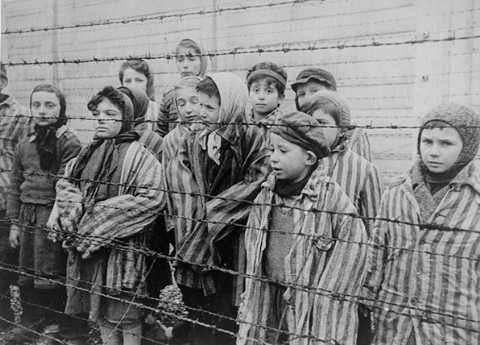
the Nazis rejected Christianity. I have done the research and I have no doubt that this is true. In a way similar to myself, through I was raised as I say *on the fringes of Reform Judaism in California*, I see it
as a necessary step to reject both Judaism and Christianity at the most elemental and fundamental level. In a general sense, in an evolving way, Northern Europe received Christian missionaries from the Roman/Mediterranean world, but they significantly modified the belief-system. They made it (in many but not all ways) not an
otherworldly religious system but a
this-worldly religious and existential system. This has to do with fundamental ways that different people, or different races and climes,
situate themselves within this Earth existence.
One sign of the beginning of a vast change was, naturally, Luther's rebellion against the Roman Church. And it is true what Roman Catholics say: this rebellion represented a radical and a fundamental shift in how religiosity and spirituality
were conceived. It is something of a reduction but when you push it forward (Luther's rebellion) you do eventually arrive at a position of not being able to define what God is anymore -- unless you resort back to outrageous faith-based belief in complex phantasy-pictures.
I have to say that to best understand the argumentation and conflict that has taken place on this forum (certainly since I reappeared here and engaged with Immanuel for months on the Christianity thread), that we have to acknowledge what the *rejection of Christianity* really and truly is, and I mean at the metaphysical and the most fundamental level. I have my own way of describing it. Or to put it differently I see myself as being on the cusp of a newer solidification of what *religiousness* and *spirituality*
should be.
It should
not be an *otherworldly profession*. It should not be seeing *God* as an exterior element who has *invaded* the world and *taken slaves* (those who will bow their knees eventually). If you are going to define a Divine Figure (an Avatar of God) you cannot (should not) define a Master who comes to rule you. But rather a friend who
is similar to you in essential orientation. Further, it is substantially erroneous and misleading to paint a picture of a God who comes from a radically different locality within the Cosmos and *imposes* his will on the Earth. That is one of the principle motivations in historical Christianity, is it not? The Christian confronts other peoples and enforces the view on them that what they are, and what they believe, is the stuff of deviltry. Christianity is enormously imperialistic. But the real root of that imperialistic attitude was developed in Hebraism. The Hebrew is really & truly God's chosen. And the Goyim are, essentially, the devilish material that Yahweh is molding to his historical purposes and ends.
It is not at all difficult for me to understand and respect the general European will to throw off these imposing, slave-making ideas.
Now, what is the relation of *all this* to the events and the situations of today? Political upset, deadly battles, talk of civil war, irreconcilable social, political and existential differences, wars popping up like mushrooms, the sense of things careening out of control, the deninciation of *elites* who control the fate of peoples and nations, globalist projects and on and on and on? In so many ways we are dealing in, and we are subsumed in, octaves of the same conflict and upset of the Interwar Period.
This is why, in my view, the potential for conversation (here) is so intriguing. That is, if one can get sufficiently dis-invested of one's own partisan position and get enough above the fray to talk about oneself, ones; orientation, one's situation, with a certain detachment.
 (I say "out" rather that "up" since that is the perspective from out here.