Have you ever been swept away by the sheer beauty of a hymn, a political speech, or a piece of poetry—only to realize later that the message it carried wasn’t quite as sound as the feelings it stirred?
This phenomenon fascinates me. Music, poetry, and other art forms seem to have a unique ability to bypass our analytical filters and speak directly to our emotions. But here’s the question: when we prioritize emotional engagement, are we leaving our critical thinking vulnerable?
Throughout history, powerful institutions—from religious organizations to political parties—have harnessed this emotional resonance to great effect. Rousing anthems, poetic sermons, and emotionally charged rhetoric have been used to unite people, inspire action, and yes, sometimes to manipulate. If art and emotion can quiet the skeptical mind long enough to plant an idea, doesn’t that give those who wield this power an extraordinary—and potentially dangerous—advantage?
Should we be concerned about this? And if so, how can we protect ourselves and others from being emotionally swayed at the expense of critical thinking? Or, is this interplay between emotion and reason simply an inescapable—and perhaps even necessary—part of being human?
I’d love to hear your thoughts. Are there examples where you’ve felt this tension between emotion and analysis? How do we navigate the fine line between being inspired and being manipulated?
The Power of Art and Emotion: Should We Worry About Manipulation?
-
promethean75
- Posts: 7800
- Joined: Sun Nov 04, 2018 10:29 pm
Re: The Power of Art and Emotion: Should We Worry About Manipulation?
I was swept away last year when i read Vegetariantaxidermy's paper on quantum entanglement in which she critiqued Podolsky's thesis.
-
Alexis Jacobi

- Posts: 8931
- Joined: Tue Oct 26, 2021 3:00 am
Re: The Power of Art and Emotion: Should We Worry About Manipulation?
Since I am the causal agent and have pushed you to ask these probing questions, just know I am here for you!BigMike wrote: ↑Tue Dec 31, 2024 11:23 am Have you ever been swept away by the sheer beauty of a hymn, a political speech, or a piece of poetry—only to realize later that the message it carried wasn’t quite as sound as the feelings it stirred?
This phenomenon fascinates me. Music, poetry, and other art forms seem to have a unique ability to bypass our analytical filters and speak directly to our emotions. But here’s the question: when we prioritize emotional engagement, are we leaving our critical thinking vulnerable?
Throughout history, powerful institutions—from religious organizations to political parties—have harnessed this emotional resonance to great effect. Rousing anthems, poetic sermons, and emotionally charged rhetoric have been used to unite people, inspire action, and yes, sometimes to manipulate. If art and emotion can quiet the skeptical mind long enough to plant an idea, doesn’t that give those who wield this power an extraordinary—and potentially dangerous—advantage?
Should we be concerned about this? And if so, how can we protect ourselves and others from being emotionally swayed at the expense of critical thinking? Or, is this interplay between emotion and reason simply an inescapable—and perhaps even necessary—part of being human?
I’d love to hear your thoughts. Are there examples where you’ve felt this tension between emotion and analysis? How do we navigate the fine line between being inspired and being manipulated?

-
henry quirk

- Posts: 16379
- Joined: Fri May 09, 2008 8:07 pm
- Location: 🔥AMERICA🔥
- Contact:
Re: The Power of Art and Emotion: Should We Worry About Manipulation?
Oh joy...yet another thread where Mike insists we can while simultaneously insisting we can't.
-
Impenitent
- Posts: 6300
- Joined: Wed Feb 10, 2010 2:04 pm
Re: The Power of Art and Emotion: Should We Worry About Manipulation?
edumacated to think?
can't have that...
-Imp
can't have that...
-Imp
Re: The Power of Art and Emotion: Should We Worry About Manipulation?
Alexis, I appreciate your playful acknowledgment of causality in action—after all, every question I ask, and every word you write, flows from a chain of causes stretching back to the beginning of time, doesn’t it?Alexis Jacobi wrote: ↑Tue Dec 31, 2024 3:11 pmSince I am the causal agent and have pushed you to ask these probing questions, just know I am here for you!BigMike wrote: ↑Tue Dec 31, 2024 11:23 am Have you ever been swept away by the sheer beauty of a hymn, a political speech, or a piece of poetry—only to realize later that the message it carried wasn’t quite as sound as the feelings it stirred?
This phenomenon fascinates me. Music, poetry, and other art forms seem to have a unique ability to bypass our analytical filters and speak directly to our emotions. But here’s the question: when we prioritize emotional engagement, are we leaving our critical thinking vulnerable?
Throughout history, powerful institutions—from religious organizations to political parties—have harnessed this emotional resonance to great effect. Rousing anthems, poetic sermons, and emotionally charged rhetoric have been used to unite people, inspire action, and yes, sometimes to manipulate. If art and emotion can quiet the skeptical mind long enough to plant an idea, doesn’t that give those who wield this power an extraordinary—and potentially dangerous—advantage?
Should we be concerned about this? And if so, how can we protect ourselves and others from being emotionally swayed at the expense of critical thinking? Or, is this interplay between emotion and reason simply an inescapable—and perhaps even necessary—part of being human?
I’d love to hear your thoughts. Are there examples where you’ve felt this tension between emotion and analysis? How do we navigate the fine line between being inspired and being manipulated?
But let’s take this seriously for a moment. If we agree that all human behavior—including our emotional responses to art, music, and rhetoric—is determined by prior causes, then the question isn’t whether we are vulnerable to manipulation, but rather, how that manipulation happens and how we can mitigate it.
Emotional engagement isn’t something we choose or resist in isolation; it’s the result of deterministic processes in the brain. The evocative language in a hymn or the rhythm of a political speech activates neural circuits that have been shaped by biology, upbringing, and culture. If someone orchestrates those triggers with the intention of leading us to a specific conclusion or action, they’re simply acting within their own deterministic framework. The manipulation itself is as much a product of causation as the emotional response it seeks to provoke.
The danger arises when these processes are hidden from view. If people don’t recognize the deterministic mechanisms at work—whether in their own emotional reactions or in the persuasive strategies being used on them—they can’t critically evaluate the ideas being implanted. This is where education and awareness come in. By understanding that our feelings aren’t free-floating but caused, we can pause to examine what’s driving them and whether the resulting beliefs or actions hold up under scrutiny.
So, in a way, the line between inspiration and manipulation isn’t a moral one—it’s an epistemic one. The more we understand the deterministic forces behind our emotions, the less likely we are to be led astray. And that’s why conversations like this matter—they add another link to the chain of causes that might just lead us all to clearer thinking.
-
henry quirk
- Posts: 16379
- Joined: Fri May 09, 2008 8:07 pm
- Location: 🔥AMERICA🔥
- Contact:
Re: The Power of Art and Emotion: Should We Worry About Manipulation?
How it happens: you've spelled that out, Mike. Inputs interacting with a deterministic system. We can't control the inputs, how the inputs interact with the deterministic system, and our outputs resulting from the interaction.
Therefore, to talk about our mitigating manipulation (just inputs) is silly. We have no say-so, Mike. We can't decide to mitigate. There's no strategizing on our part. If we do mitigate, it's causally inevitable we do. If we don't mitigate, it's causally inevitable we don't. You, posing the question: causally inevitable. Anyone's response: causally inevitable. Changes in our individual trajectories: causally inevitable.
What happens, happens. It's all just meat machine shenanigans.
What we do or don't understand, and the changes such understanding causes in our trajectories is *ahem* causally inevitable. We have no control over any of it.The more we understand the deterministic forces behind our emotions, the less likely we are to be led astray.
So: there's no real bein' led astray. Joe goes where he must, Stan does the same, as does Lucille and Marvin and Peggy and, yes, even
 BIGMIKE.
Re: The Power of Art and Emotion: Should We Worry About Manipulation?
Henry, you’ve articulated the deterministic perspective with precision—everything that happens, happens because it must, including our debate here. And yet, here we are, engaging in this very discussion. So the question isn’t whether we can step outside the causal chain—because we can’t—but whether understanding the mechanisms of causality shifts the trajectory of those chains in meaningful ways.henry quirk wrote: ↑Tue Dec 31, 2024 5:37 pmHow it happens: you've spelled that out, Mike. Inputs interacting with a deterministic system. We can't control the inputs, how the inputs interact with the deterministic system, and our outputs resulting from the interaction.
Therefore, to talk about our mitigating manipulation (just inputs) is silly. We have no say-so, Mike. We can't decide to mitigate. There's no strategizing on our part. If we do mitigate, it's causally inevitable we do. If we don't mitigate, it's causally inevitable we don't. You, posing the question: causally inevitable. Anyone's response: causally inevitable. Changes in our individual trajectories: causally inevitable.
What happens, happens. It's all just meat machine shenanigans.
What we do or don't understand, and the changes such understanding causes in our trajectories is *ahem* causally inevitable. We have no control over any of it.The more we understand the deterministic forces behind our emotions, the less likely we are to be led astray.
So: there's no real bein' led astray. Joe goes where he must, Stan does the same, as does Lucille and Marvin and Peggy and, yes, evenBIGMIKE
Think of it this way: acknowledging that all human behavior is determined doesn’t mean that knowledge has no influence. In fact, understanding how inputs work—how emotional appeals manipulate us, for instance—becomes another input itself. This new input can alter the course of the so-called "meat machine," redirecting its outputs in ways that are still deterministic but now informed by a deeper awareness of the forces at play.
If, say, Joe learns that political speeches are crafted to bypass critical analysis and appeal to his emotional circuits, he might pause the next time he hears a rousing anthem. That pause, too, is causally inevitable—but it wouldn’t have happened without the input of understanding. The same goes for this conversation. Your critique, my response—these are all just causes playing out, but they might lead someone reading this to reexamine their assumptions.
So, you’re right—there’s no ultimate agency in mitigation. But the process of discussing, understanding, and strategizing isn’t meaningless just because it’s inevitable. It’s precisely the inevitability of such processes that makes change possible. If Lucille ends up in a different trajectory tomorrow because of something she learned today, isn’t that, in itself, worth examining?
What we do with determinism isn’t about escaping it; it’s about leaning into it, shaping the inputs where we can, and watching the chain of causes unfold. Call it "meat machine shenanigans" if you like—I call it the beauty of cause and effect in action.
-
attofishpi

- Posts: 13299
- Joined: Tue Aug 16, 2011 8:10 am
- Location: Orion Spur
- Contact:
Re: The Power of Art and Emotion: Should We Worry About Manipulation?
[USUAL GARBAGE DELETED]
-
Alexis Jacobi
- Posts: 8931
- Joined: Tue Oct 26, 2021 3:00 am
Re: The Power of Art and Emotion: Should We Worry About Manipulation?
Except that in my “system” an unseen world exists and influences — can influence — our own plane of existence. So by “believing in” such a realm and that possibility, I allow myself a greater flexibility.
[Speaking of causal chains did you know that the cause of our own fellow forum member Age can be traced back to an epic crash between two giant dragonflies over a shallow Triassic era sea?]
This is an interesting question and connects I think to important issues: i.e. rhetoric and its use. If I analyze you on the basis of your rhetoric, I find that you are missing substantial pieces. But those pieces have to do with “meaning” and “sense”.But let’s take this seriously for a moment. If we agree that all human behavior—including our emotional responses to art, music, and rhetoric—is determined by prior causes, then the question isn’t whether we are vulnerable to manipulation, but rather, how that manipulation happens and how we can mitigate it.
So you might say, for example, that what certain pieces of Bach’s music refer or allude to is non-existent and unreal, and is “emotionally-driven rhetoric” (embellishment, fluff, window-dressing), but I see it quite differently: It is language that alludes to things ineffable.
The rhetoric in an anti-slavery speech might be fiery, hyper-embellished, and designed to affect listeners at a vital level, but we will likely agree that the basic idea of the position is sound and does not really require any embellishment at all. The rhetorical embellishment has supporting and emphatic function: it moves people to action.
The issue here has to do with the quality and the validity of the central, animating idea. Rhetoric is a means by which the idea is given emphasis or highlighted.
A “moving” piece of music could — indeed has — changed men’s lives. You will say that it came to exist and to have been conceptualized by material chains of causation, and that if it had effect it only acted through effects determined by prior causes, but I think you miss an important element. I say that in the “inspiration” there may well have been influences from outside of determined chains.
What then is communicated? Who or what communicates and why?
One of the reasons I resist your reductionist rhetoric is for the same reasons you feel a need to resist emotional manipulation which you believe is grounded in the false.
You have relatively powerful “rhetorical engines” but they operate a mechanics of an incomplete ideology, a skewed ideology in my view.
Thus your rhetorical formulations empower ways of seeing and acting that can be seen as sketchy.
Last edited by Alexis Jacobi on Tue Dec 31, 2024 6:07 pm, edited 2 times in total.
-
accelafine

- Posts: 5125
- Joined: Sat Nov 04, 2023 10:16 pm
Re: The Power of Art and Emotion: Should We Worry About Manipulation?
It depends on your state of mind to begin with. Bach was deeply religious and composed his music 'for the glory of God'. I love his music but it certainly doesn't make me feel religious in any way 
I read somewhere that a performance of Handel's Messiah was cancelled because its 'christian themes' might 'offend' some people (and there are those who still don't understand why I loathe wokies so much They destroy everything they focus their beady little eyes and tiny brains on).
I read somewhere that a performance of Handel's Messiah was cancelled because its 'christian themes' might 'offend' some people (and there are those who still don't understand why I loathe wokies so much
They destroy everything they focus their beady little eyes and tiny brains on).-
accelafine
- Posts: 5125
- Joined: Sat Nov 04, 2023 10:16 pm
Re: The Power of Art and Emotion: Should We Worry About Manipulation?
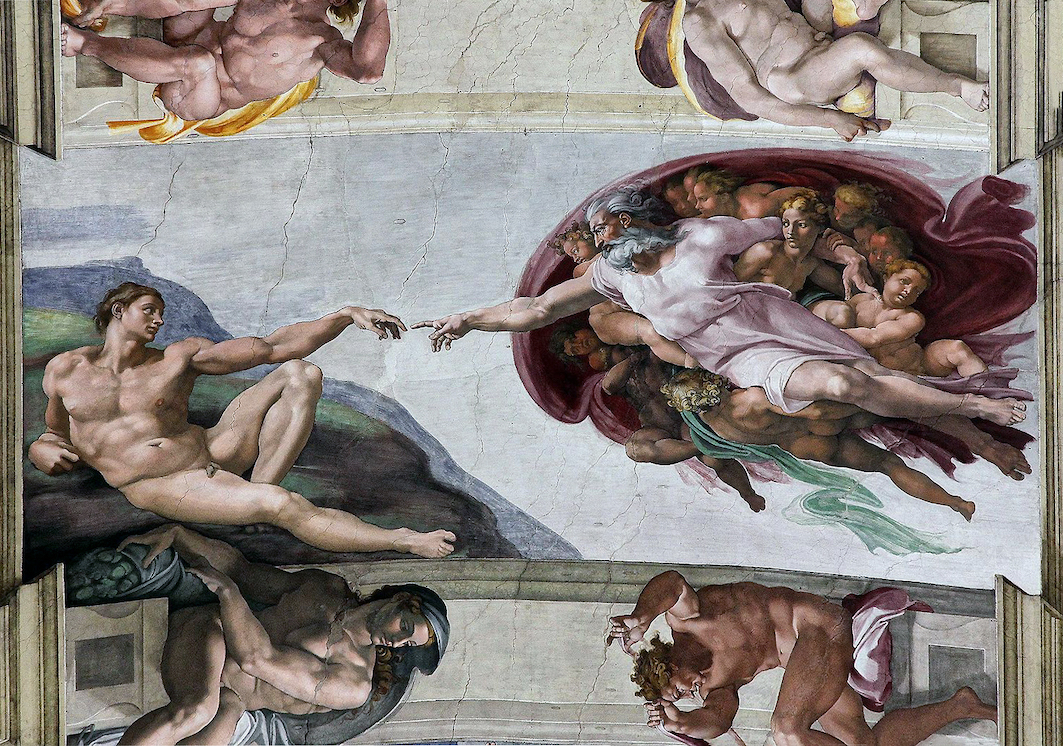
Perhaps we should demolish all those wicked cathedrals like Notre Dame because they might make people religious or offend muslims. FFS.
Those ancient mosques are incredible. Some of them make the greatest christian cathedrals look positively plain and dowdy. Does anyone seriously believe they are going to cause me to start wearing a hijab? Give me a break.
I say paint over this in a nice neutral grey in case it 'offends' someone. It's a 'literal hate-crime' on the eyes.
Those ancient mosques are incredible. Some of them make the greatest christian cathedrals look positively plain and dowdy. Does anyone seriously believe they are going to cause me to start wearing a hijab? Give me a break.
I say paint over this in a nice neutral grey in case it 'offends' someone. It's a 'literal hate-crime' on the eyes.
Re: The Power of Art and Emotion: Should We Worry About Manipulation?
Alexis, your perspective introduces an intriguing layer to this discussion, and I appreciate the push to examine the limits of my own framework. You’re pointing to what might be called a "meta-rhetoric," the art of using language to gesture toward the ineffable—an unseen realm you argue influences our existence. I can understand why you see this as a counterbalance to what you describe as my reductionist stance. Let’s dig in.Alexis Jacobi wrote: ↑Tue Dec 31, 2024 6:03 pmExcept that in my “system” an unseen world exists and influences — can influence — our own plane of existence. So by “believing in” such a realm and that possibility, I allow myself a greater flexibility.
[Speaking of causal chains did you know that the cause of our own fellow forum member Age can be traced back to an epic crash between two giant dragonflies over a shallow Triassic era sea?]
This is an interesting question and connects I think to important issues: i.e. rhetoric and its use. If I analyze you on the basis of your rhetoric, I find that you are missing substantial pieces. But those pieces have to do with “meaning” and “sense”.But let’s take this seriously for a moment. If we agree that all human behavior—including our emotional responses to art, music, and rhetoric—is determined by prior causes, then the question isn’t whether we are vulnerable to manipulation, but rather, how that manipulation happens and how we can mitigate it.
So you might say, for example, that what certain pieces of Bach’s music refer or allude to is non-existent and unreal, and is “emotionally-driven rhetoric” (embellishment, fluff, window-dressing), but I see it quite differently: It is language that alludes to things ineffable.
The rhetoric in an anti-slavery speech might be fiery, hyper-embellished, and designed to affect listeners at a vital level, but we will likely agree that the basic idea of the position is sound and does not really require any embellishment at all. The rhetorical embellishment has supporting and emphatic function: it moves people to action.
The issue here has to do with the quality and the validity of the central, animating idea. Rhetoric is a means by which the idea is given emphasis or highlighted.
A “moving” piece of music could — indeed has — changed men’s lives. You will say that it came to exist and to have been conceptualized by material chains of causation, and that if it had effect it only acted through effects determined by prior causes, but I think you miss an important element. I say that in the “inspiration” there may well have been influences from outside of determined chains.
What then is communicated? Who or what communicates and why?
One of the reasons I resist your reductionist rhetoric is for the same reasons you feel a need to resist emotional manipulation which you believe is grounded in the false.
You have relatively powerful “rhetorical engines” but they operate a mechanics of an incomplete ideology, a skewed ideology in my view.
Thus your rhetorical formulations empower ways of seeing and acting that can be seen as sketchy.
First, about rhetoric and its embellishments: I don’t deny the power of fiery speeches or moving music to inspire action or transform lives. Determinism doesn’t diminish their power; it explains it. A Bach composition resonates because it activates specific neural circuits shaped by both our biology and our cultural contexts. The fiery rhetoric of an anti-slavery speech moves people because it strikes chords deeply rooted in shared human experiences and moral intuitions. None of this lessens their impact; it simply places their origins and effects within a causal framework.
Now, as for the unseen world you describe—forces outside deterministic chains—I’ll admit this diverges from my understanding. For me, introducing influences outside the causal web raises the question: how do these influences interface with the physical world? If they leave no detectable imprint within the causal network, how do we distinguish their effects from mere imagination or the emergent properties of a complex system?
But here’s where we might find common ground: the validity of the central, animating idea. Whether that idea arises from deterministic processes or from what you call "inspiration" doesn’t negate its importance. The question becomes whether the rhetoric, the art, or the music truly serves to illuminate that idea—or merely manipulates emotions to obscure it. If we can agree that clarity and truth should guide our responses, then perhaps our differences in metaphysical assumptions become less critical.
Lastly, you critique my "rhetorical engines" as incomplete or skewed. Fair enough—no framework captures the entirety of human experience. But my goal isn’t to dismiss what’s meaningful to others; it’s to ground our understanding in what we can demonstrate. If I’m missing pieces, I’m open to seeing how they fit, so long as we agree they must eventually connect to the physical reality we all inhabit.
Your call to look beyond reductionism challenges me, but I hope you’ll also consider whether ineffable explanations risk becoming rhetorical flourishes in their own right—powerful, perhaps, but needing solid grounding to avoid manipulation. Wouldn’t you agree that, regardless of our metaphysical differences, we’re both after the same thing: a framework for understanding the world that fosters truth and resists distortion?
Re: The Power of Art and Emotion: Should We Worry About Manipulation?
A little introspection can protect us. Let's look at one example, that fits Big Mike's paradigm: Stanley Kubrick's Clockwork Orange.
The movie seems to support BM's determinism. Alex *(the punk, sadist hero)_is a victim of his social circumstances, and he is "reprogrammed" by the State. Some of Alex's more vicious tendencies in the novel (like stepping on small rodents to crush them to death) are expunged from the film. Instead, Kubrick makes Alex as sympathetic as possible. The upper crust dweebs that he rapes and murders are depicted as so despicable that we feel no sympathy for them. But when Alex is "reprogrammed" the camera lingers endlessly on Malcolm McDowell's face as he moans in agony.
The movie turns the meaning of the novel on its head. The novel suggests that we must be human; we must be responsible for ourselves and our actions. The movie blames the wicked State for Alex's criminality, and for his torments once he is reprogrammed. He (poor soul) is the result of "programming" both before and after his State-sponsored torture.
Kubrick is a talented director. The movie is a glossy manipulation. But does it work? Not for me, it didn't. Instead, I thought it ruined the novel (which is excellent) and romanticized evil. Did it manipulate some people into romanticizing rape and murder? Maybe. But probably only those with a penchant for such activities were so affected.
The movie seems to support BM's determinism. Alex *(the punk, sadist hero)_is a victim of his social circumstances, and he is "reprogrammed" by the State. Some of Alex's more vicious tendencies in the novel (like stepping on small rodents to crush them to death) are expunged from the film. Instead, Kubrick makes Alex as sympathetic as possible. The upper crust dweebs that he rapes and murders are depicted as so despicable that we feel no sympathy for them. But when Alex is "reprogrammed" the camera lingers endlessly on Malcolm McDowell's face as he moans in agony.
The movie turns the meaning of the novel on its head. The novel suggests that we must be human; we must be responsible for ourselves and our actions. The movie blames the wicked State for Alex's criminality, and for his torments once he is reprogrammed. He (poor soul) is the result of "programming" both before and after his State-sponsored torture.
Kubrick is a talented director. The movie is a glossy manipulation. But does it work? Not for me, it didn't. Instead, I thought it ruined the novel (which is excellent) and romanticized evil. Did it manipulate some people into romanticizing rape and murder? Maybe. But probably only those with a penchant for such activities were so affected.
Re: The Power of Art and Emotion: Should We Worry About Manipulation?
[USUAL GARBAGE DELETED]
Atto, I get where you’re coming from—poetry, music, art, and yes, even the less savory imagery you’ve offered, have been shaping human experience for as long as we’ve been capable of stringing two thoughts together. From that perspective, you’re right—this isn’t new. But here’s the thing: the fact that something has “always been happening” doesn’t mean it’s immune from scrutiny or reflection.
In a deterministic framework, all actions—whether it’s an artist creating, an audience reacting, or a society reflecting—stem from prior causes. What we’re doing here is part of that chain: examining how these inputs influence us and asking whether a better understanding of those processes might lead to better outcomes.
Does that mean we can suddenly stop the machine, rewrite its code, and "fix" it? Of course not. But just because we’re deterministic systems doesn’t mean new inputs—like, say, conversations about manipulation in art and rhetoric—can’t alter the trajectory of those systems in meaningful ways.
And sure, “shit happens,” as you so eloquently put it. But if we know why it happens and how it shapes us, maybe we can nudge the system in directions that benefit more people. Isn’t that worth thinking about, even if the thinking itself is just part of the grand causal dance?
Atto, I get where you’re coming from—poetry, music, art, and yes, even the less savory imagery you’ve offered, have been shaping human experience for as long as we’ve been capable of stringing two thoughts together. From that perspective, you’re right—this isn’t new. But here’s the thing: the fact that something has “always been happening” doesn’t mean it’s immune from scrutiny or reflection.
In a deterministic framework, all actions—whether it’s an artist creating, an audience reacting, or a society reflecting—stem from prior causes. What we’re doing here is part of that chain: examining how these inputs influence us and asking whether a better understanding of those processes might lead to better outcomes.
Does that mean we can suddenly stop the machine, rewrite its code, and "fix" it? Of course not. But just because we’re deterministic systems doesn’t mean new inputs—like, say, conversations about manipulation in art and rhetoric—can’t alter the trajectory of those systems in meaningful ways.
And sure, “shit happens,” as you so eloquently put it. But if we know why it happens and how it shapes us, maybe we can nudge the system in directions that benefit more people. Isn’t that worth thinking about, even if the thinking itself is just part of the grand causal dance?