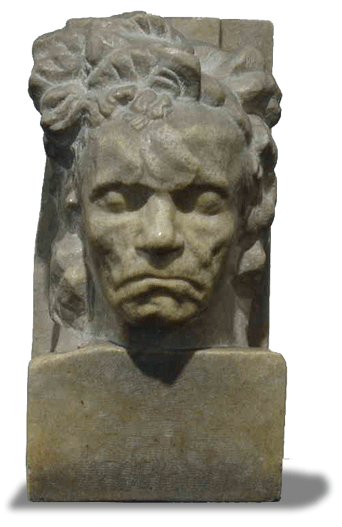
One of his masterful depictions of Beethoven.
Looks more like Hobbes' taking a crap outside.BradburyPound wrote:Yugoslavian Mestrovic, another student of Rodin.
His tragic image of Job.

Ah, and art lover. What a surprise!Philosophy Explorer wrote:
Looks more like Hobbes' taking a crap outside.
PhilX
Why don't you do that Hobbes like a good little boy like your mommy wanted you to be.BradburyPound wrote:Ah, and art lover. What a surprise!Philosophy Explorer wrote:
Looks more like Hobbes' taking a crap outside.
PhilX
Now run along and do your Bible Study..
https://www.lds.org/manual/old-testamen ... b?lang=eng
Philosophy Explorer wrote:Looks more like Hobbes' taking a crap outside.BradburyPound wrote:Yugoslavian Mestrovic, another student of Rodin.
His tragic image of Job.
PhilX
What a piece of garbage. Beethoven never looked like that. Should be given to the scrap heap.BradburyPound wrote:And then there is Bourdelle, who by his own account managed to "escape" Rodin's studios.
One of his masterful depictions of Beethoven.
Never saw so much junk. I've seen better in grade school.BradburyPound wrote:His most brilliant student was Camille Claudel who, in the opinion of many surpassed Rodin in her all too short career.Walker wrote:Also, Frank ...Philosophy Explorer wrote:Frankly his works don't impress me.
PhilX
Here’s the thing that grabbed my attention about a picture of a clay sculpture, I think it was clay, that I once saw, which can also be seen in Rodin’s work.
The face was asymmetrical and not only realistic, but therefore of a realistic human, and showed the tension of the movement towards the balance of symmetry in the mind that shapes the face. The artist isn’t an artist because he intended to mold that tension, though he may be conceptually aware of that tension in the process of shaping form with fingertips, and afterwards. Rather, the artist is an artist simply because he is faithful to reality, and has the technical skill to transfer reality from light reflecting off a source, through the optic nerve and into the brain, then through the nerves to the fingertips to reproduce in a particular three-dimensional medium, the same pattern of light reflections that can be objectively recognized by most any brain. The transference process involves as much observation as technique, and observation requires undistracted placement of attention. In the case of the bust, either the observation or the technique is rather pure, perhaps a combination of both, and that in itself is enough to deserve a measure of respect.
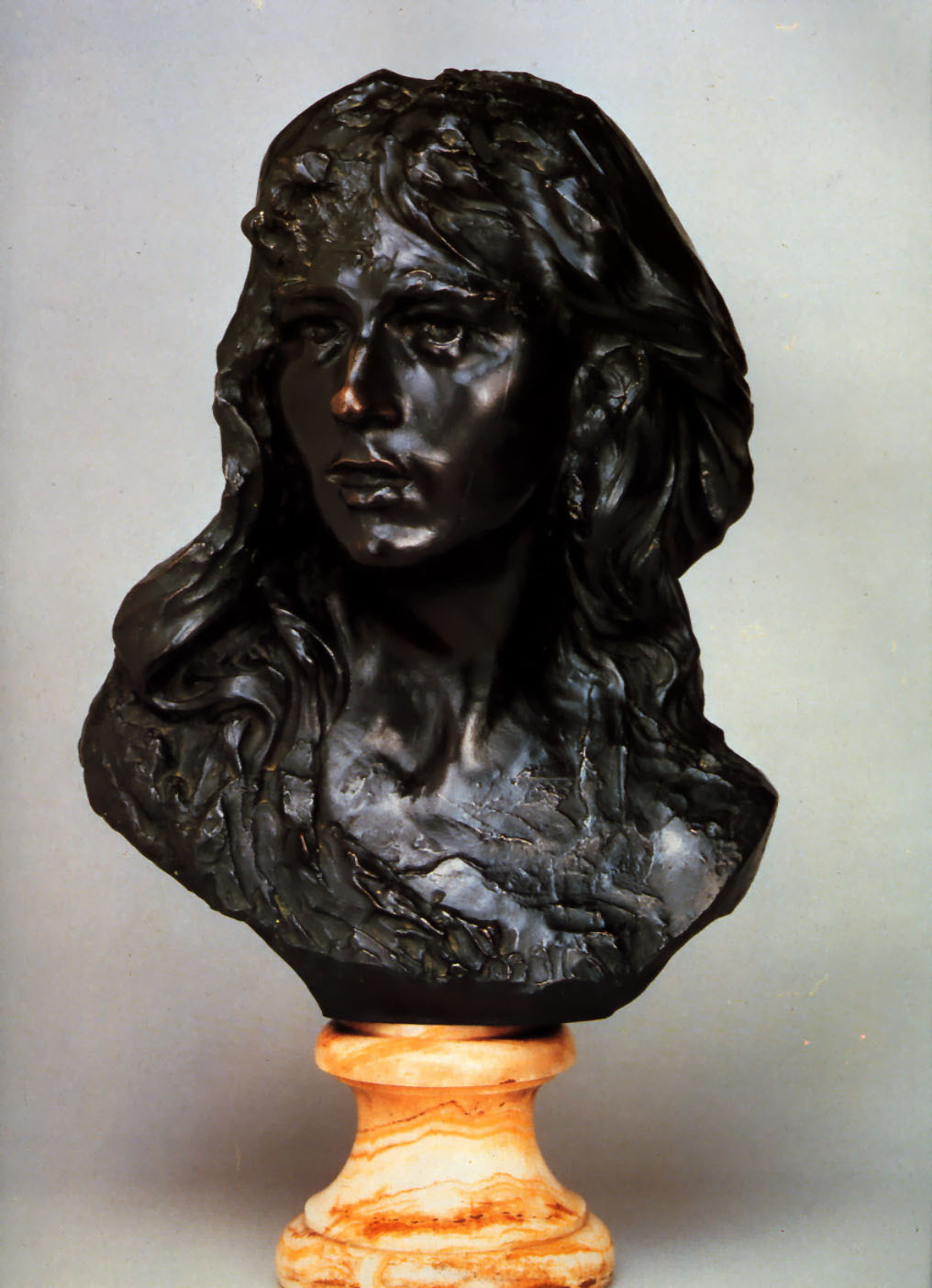
Rodin was also a teacher, with at least one student who sculpted him.
You are such a total moron.Philosophy Explorer wrote:Never saw so much junk. I've seen better in grade school.BradburyPound wrote:His most brilliant student was Camille Claudel who, in the opinion of many surpassed Rodin in her all too short career.Walker wrote: Also, Frank ...
Here’s the thing that grabbed my attention about a picture of a clay sculpture, I think it was clay, that I once saw, which can also be seen in Rodin’s work.
The face was asymmetrical and not only realistic, but therefore of a realistic human, and showed the tension of the movement towards the balance of symmetry in the mind that shapes the face. The artist isn’t an artist because he intended to mold that tension, though he may be conceptually aware of that tension in the process of shaping form with fingertips, and afterwards. Rather, the artist is an artist simply because he is faithful to reality, and has the technical skill to transfer reality from light reflecting off a source, through the optic nerve and into the brain, then through the nerves to the fingertips to reproduce in a particular three-dimensional medium, the same pattern of light reflections that can be objectively recognized by most any brain. The transference process involves as much observation as technique, and observation requires undistracted placement of attention. In the case of the bust, either the observation or the technique is rather pure, perhaps a combination of both, and that in itself is enough to deserve a measure of respect.
Rodin was also a teacher, with at least one student who sculpted him.
PhilX
As per usual, back to your name calling. Did you think you could fool me?BradburyPound wrote:You are such a total moron.Philosophy Explorer wrote:Never saw so much junk. I've seen better in grade school.BradburyPound wrote:
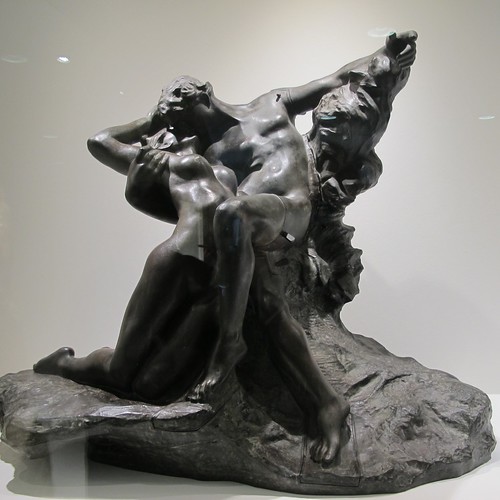
His most brilliant student was Camille Claudel who, in the opinion of many surpassed Rodin in her all too short career.
PhilX
I'm putting you on ignore following the advice of the moderators. So feel free to spew your poison, I ain't listening anymore.


Can you post a picture of some works you consider better?Philosophy Explorer wrote: Never saw so much junk. I've seen better in grade school.
PhilX
That is fantastic and fluid, the postures evoke tension and the diagonals evoke movement, tension and movement which manifests in the moment of cognition and emanates from the sculpture itself reflecting light and casting shadow, formed by fidelity to reality.BradburyPound wrote: His most brilliant student was Camille Claudel who, in the opinion of many surpassed Rodin in her all too short career.
"Tragic" is a bit strong, It's not all that bad for a student.BradburyPound wrote:Yugoslavian Mestrovic, another student of Rodin.
His tragic image of Job.
Obviously even Rodin was a student at some point.Harbal wrote:"Tragic" is a bit strong, It's not all that bad for a student.BradburyPound wrote:Yugoslavian Mestrovic, another student of Rodin.
His tragic image of Job.


 .......